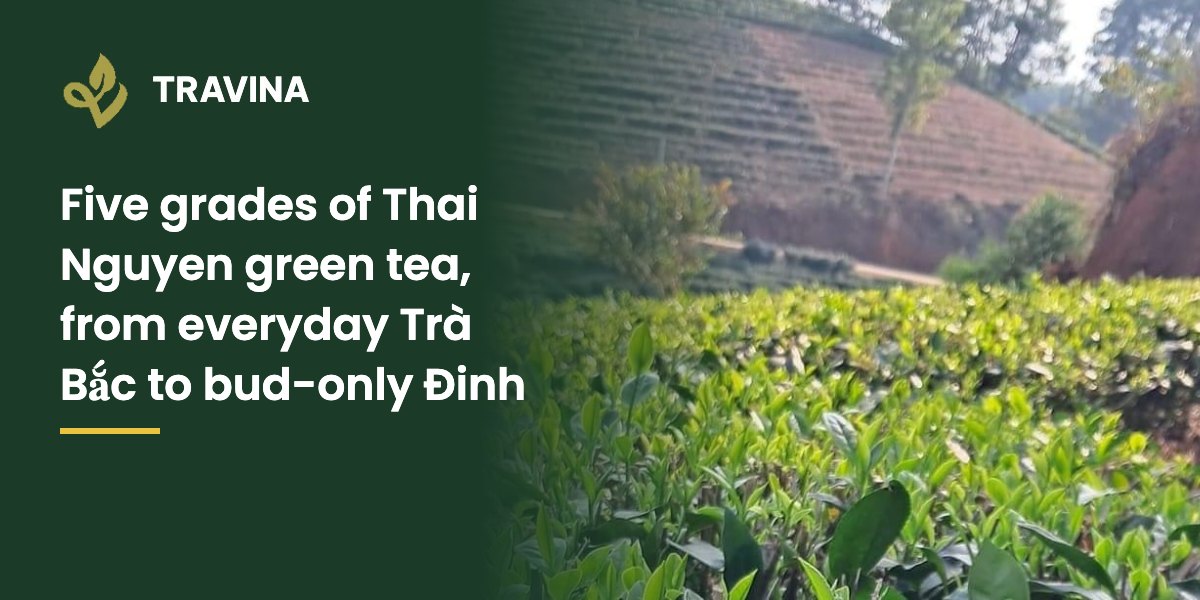
Vietnamese green tea grades are set mainly by how the shoot is plucked. In Thái Nguyên, the buyer’s ladder runs from Trà Bắc (one bud with two or three leaves) through Đặc Sản and Móc Câu to Nõn Tôm (one bud with one unopened leaf) and Đinh (the bud alone). The younger the shoot, the more fresh leaf it takes to make one kilogram, the clearer the liquor and the shorter the brewing time. This guide explains each grade, compares them in one table and shows which grade suits HoReCa, retail and gifts.
| Grade | Plucking | Leaf | Liquor | Suits |
|---|---|---|---|---|
| Trà Bắc | 1 bud + 2–3 leaves | Twisted, larger | Honey-yellow | Restaurants, iced tea, canteens |
| Đặc Sản | 1 bud + 2 leaves | More even than Trà Bắc | Green with a yellow tint | Table tea, entry retail, simple gift boxes |
| Móc Câu | 1 bud + 1–2 young leaves | Thin, hook-shaped | Bright green with a sheen | Core retail, tea rooms, everyday drinking |
| Nõn Tôm | 1 bud + 1 unopened leaf | Fine, tightly rolled | Very clear, golden-green | Premium retail, gifts, tea houses |
| Đinh | Bud only | Slim, needle-like | Very clear, pale | Luxury gifts, tea ceremonies |
How Vietnamese green tea grades work
Vietnam is a serious green tea origin. FAO data for 2020–22 put it second among green tea exporters, with about 65,300 tonnes a year on average, behind China. Yet buyers who look for a formal grade list, like the numbered grades of some other origins, usually find none. In Thái Nguyên, the trade uses names that describe the plucking standard and the shape of the finished leaf. These names are market conventions, not a legal grading scheme, so the same word can mean slightly different things from one seller to the next.
Three Vietnamese words make the ladder easy to read. Tôm is the unopened bud at the tip of the shoot. Nõn is the very young leaf still curled around the bud. Lá means leaf. “One bud, two leaves” therefore describes a shoot with the bud and the next two leaves. The lower you pick, the more volume you get; the higher you stay, the finer the cup and the more labour it takes.
At TRAVINA, the brand of Tam Tra Viet Cooperative (HTX Tâm Trà Việt) in Thái Nguyên, every grade is picked by hand, and each grade comes from gardens of our 90 member households in Đại Từ and La Bằng. Our Đại Từ facility makes Trà Bắc and Đặc Sản; the La Bằng facility, which holds ISO 22000:2018 certification, makes Móc Câu and the bud grades. For the full process, see how Thai Nguyen green tea is made.
Trà Bắc: the everyday northern green tea
Plucking: one bud with two or three leaves. It takes about 5.5–6 kg of fresh shoots to make 1 kg of dry tea.
Leaf and cup: a firmly twisted leaf, larger and less even than the grades above it. The liquor is honey-yellow. The taste is clearly astringent at first, followed by a sweet aftertaste, the classic Thái Nguyên profile that locals describe as “astringent first, sweet after”.
Who it is for: restaurants and hotels that serve tea at every table, iced tea stalls, canteens and staff pantries. It brews well in larger pots and holds up when served cold. Our Trà Bắc Truyền Thống (Traditional Northern Green Tea) is processed in volume on semi-industrial lines so that large orders stay consistent. Read more in our guide to Trà Bắc.
Đặc Sản: a step up for table tea
Plucking: one bud with two leaves, from selected VietGAP gardens. The fresh-to-dry ratio is close to that of Trà Bắc.
Leaf and cup: more even leaves than Trà Bắc, made by workers with three to five years of experience. The liquor is green with a yellow tint, and the sweet aftertaste is deeper and lasts longer.
Who it is for: restaurants that want a better table tea without a big jump in cost, shops starting a Vietnamese tea shelf, and simple gift boxes. See Trà Xanh Đặc Sản (Special Green Tea).
Móc Câu: the hook-shaped core grade
Plucking: one bud with one or two young leaves. Some posters describe it as “one bud, one curled young leaf, one leaf”; hand picking always varies a little, and both descriptions refer to the same young shoot. It takes about 6–8 kg of fresh shoots to make 1 kg of dry tea.
Leaf and cup: thin, even leaves that curl like a fish hook, which is what móc câu means. The liquor is bright green with a lustrous sheen, the taste cleaner, with a toasted young-rice (cốm) aroma, astringent on the tip of the tongue and then sweet.
Who it is for: the grade most Vietnamese drinkers know well, and the backbone of retail. It works for tea rooms, hotel rooms and daily drinking at home. Our Trà Móc Câu Đặc Biệt (Premium Moc Cau Green Tea) comes from selected gardens on the eastern side of the Tam Đảo range and is made by workers with more than five years of experience.
Nõn Tôm: bud-and-shoot grades
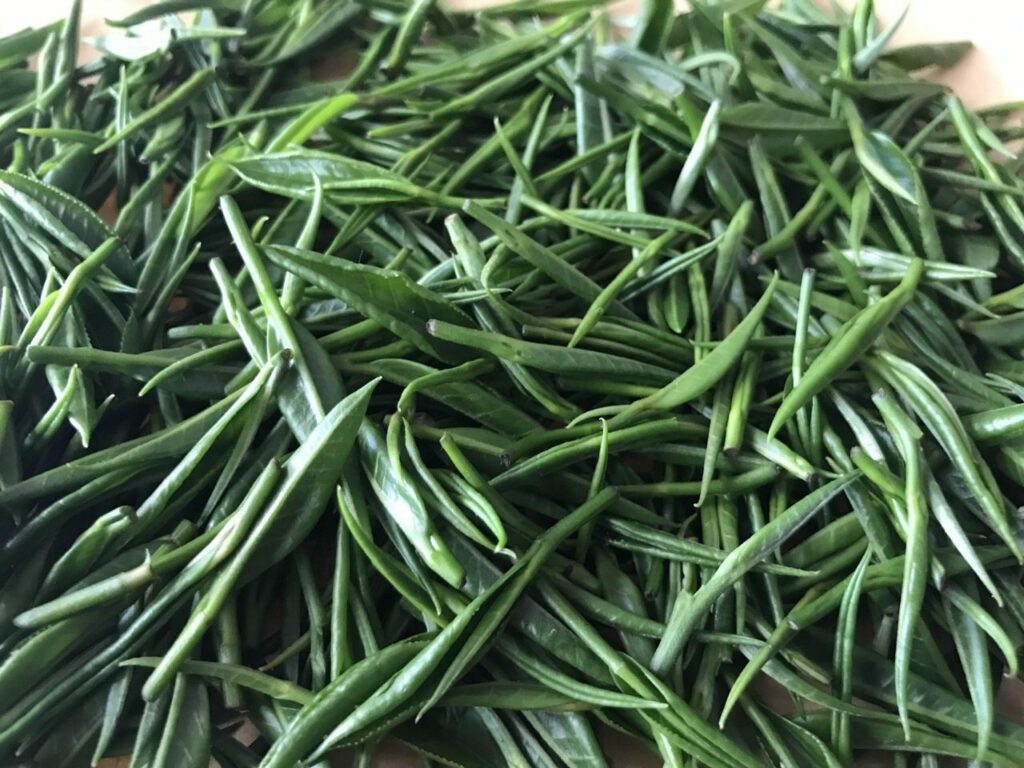
Plucking: one bud with one unopened young leaf, the “nõn”. It takes about 8–10 kg of fresh shoots to make 1 kg of dry tea, and the output is small.
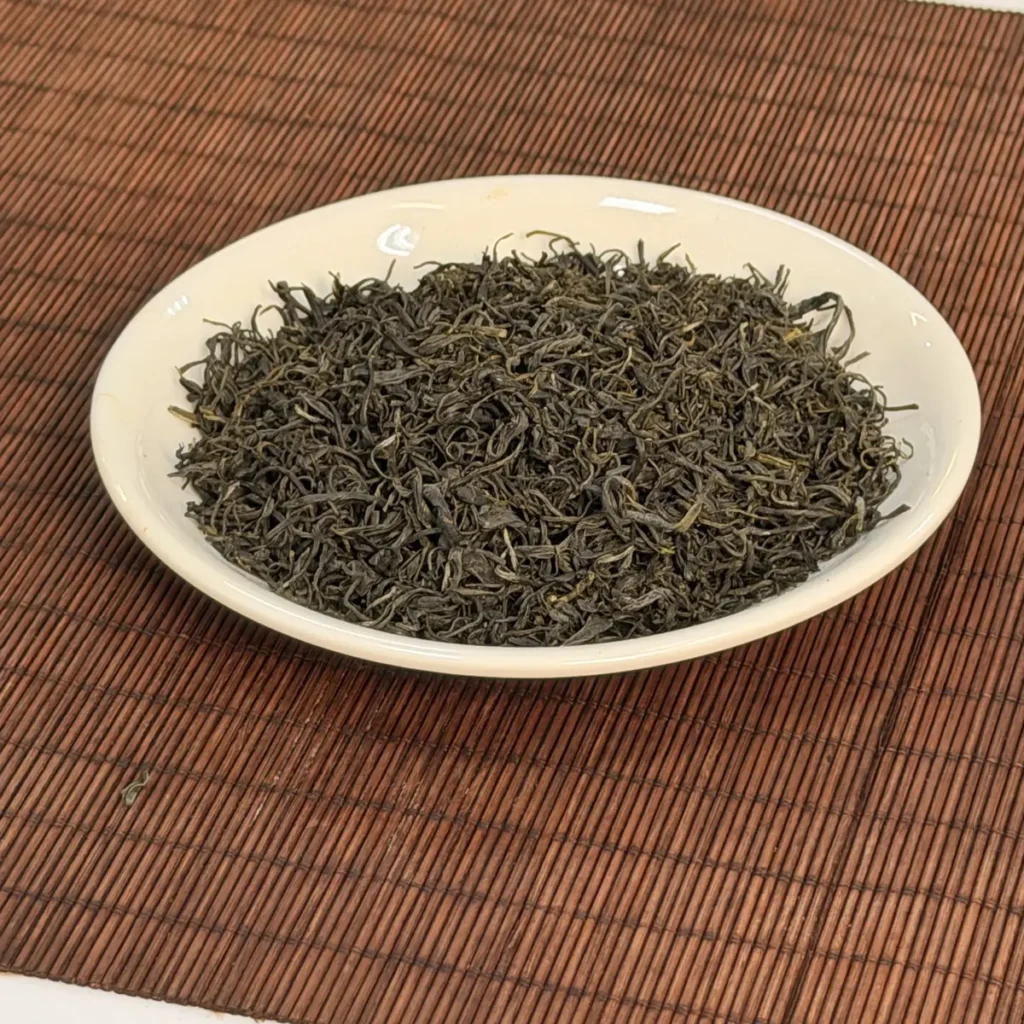
Leaf and cup: fine, tightly rolled leaves with a dark green, almost blue-black sheen and no white bloom on the surface. The liquor is very clear with a natural golden-green colour. Compared with Móc Câu, the cốm aroma is stronger and the body rounder.
Who it is for: premium retail shelves, corporate and festive gifts, and tea houses that serve by the pot. We make two bud grades: Trà Nõn Cánh Hạc (Canh Hac Bud Tea), from gardens farmed toward organic practice for three to five years, and Trà Nõn Hảo Hạng (Superior Bud Tea), picked from very young shoots on the eastern Tam Đảo slopes and processed by our tea artisans.
Đinh: the bud-only needle grade
Plucking: the bud alone, the tôm, before any leaf opens. It takes more than 10 kg of fresh buds to make 1 kg of dry tea, so volumes are limited every season.
Leaf and cup: slim, needle-like buds, which is why đinh (“nail”) is used. The liquor is very clear and pale; the taste is delicate and sweet, with gentle astringency. Because the buds are so young, a short steep is essential.
Who it is for: luxury gifts, tea ceremonies and collectors. We offer Trà Đinh Tiên Sơn (Tien Son Needle Tea), also known by its former name Trà Đinh Ngọc, and Trà Đinh Tiến Vua (Tien Vua Needle Tea). Our needle tea guide covers the grade in depth. Broken buds sorted out during processing are sold separately as Trà Tấm Đinh, including a tea-bag version for hotels.
Comparison table: five Vietnamese green tea grades
| Grade | Plucking standard | Fresh leaf per 1 kg dry | Leaf shape | Liquor colour | Taste | First steep (200–300 ml pot) | HoReCa | Retail | Gifts |
|---|---|---|---|---|---|---|---|---|---|
| Trà Bắc | 1 bud + 2–3 leaves | about 5.5–6 kg | Twisted, larger | Honey-yellow | Astringent, sweet finish | about 1 minute | Strong fit | Value packs | Rarely |
| Đặc Sản | 1 bud + 2 leaves | close to Trà Bắc | More even | Green, yellow tint | Deeper sweet finish | about 1 minute | Strong fit | Entry shelf | Simple boxes |
| Móc Câu | 1 bud + 1–2 young leaves | about 6–8 kg | Thin, hook-shaped | Bright green, lustrous | Clean, cốm aroma | 50–60 seconds | Tea rooms, hotel rooms | Core grade | Mid-range |
| Nõn Tôm | 1 bud + 1 unopened leaf | about 8–10 kg | Fine, tightly rolled | Very clear, golden-green | Rounder, stronger cốm | 40–45 seconds | Tea houses | Premium | Strong fit |
| Đinh | Bud only | more than 10 kg | Slim needles | Very clear, pale | Delicate, sweet | about 30 seconds | Ceremonies | Specialist | Luxury |
The steeping times are those we use for a normal pot, poured out completely after each steep. Younger leaf needs less time; a bud grade steeped for two or three minutes, the way older generations brewed coarse, unselected leaf, turns heavy and bitter.
Liquor colour: why it should never be vivid green
A natural Thái Nguyên green tea never brews a vivid, artificial green. Depending on the grade it ranges from honey-yellow to clear golden-green. A liquor that looks too green deserves a closer look, because it can be a sign of added colouring. Our teas contain no additives, which is part of our 6 Không (Six-No) practice, a production commitment. The dry leaf of a good lot, seen close up, has a dark green, slightly blue-black sheen. For more checks, read how to verify genuine Thai Nguyen tea.
Which grade for which buyer?
- HoReCa: Trà Bắc for volume, iced tea and staff; Đặc Sản for table tea in better restaurants; Móc Câu for hotel rooms and tea menus; Trà Tấm Đinh tea bags where guests brew their own cup.
- Retail: Móc Câu as the main shelf grade, Đặc Sản as the entry price point, a bud grade on the upper shelf.
- Gifts: Nõn Tôm grades for corporate gifts, Đinh for formal occasions. Gift boxes and sets are available in several formats.
Grades also differ in the gardens and processing behind them. Our VietGAP-certified gardens (certificate DVCL-VG-TT-24-19-68) supply Trà Bắc, Đặc Sản and Móc Câu. You can compare all of these with Chinese green teas in Vietnamese green tea vs Chinese green tea.
How to sample and order by grade
A fast way to choose is to taste two neighbouring grades side by side, for example Đặc Sản against Móc Câu, or Móc Câu against a bud grade. Our guide on how to request and judge tea samples explains what to look for. We do not publish export prices or a fixed MOQ: the minimum depends on the grade, the season and the packing format, as explained in MOQ, price tiers and lead times. Bulk and private label options are on our bulk tea export page.
Frequently asked questions
Is there an official grading system for Vietnamese green tea?
Not in the sense buyers often expect. Names such as Trà Bắc, Móc Câu or Đinh are trade conventions based on the plucking standard and leaf shape. Always confirm the plucking standard in writing and approve a sample.
What is the difference between Móc Câu and Nõn Tôm?
Móc Câu keeps one or two young leaves with the bud and has a hook-shaped leaf; Nõn Tôm keeps only the bud and the unopened leaf around it. Nõn Tôm brews clearer, with a stronger cốm aroma, and needs more fresh leaf per kilogram.
Is Đinh the same as needle tea?
Yes. Đinh means “nail”, after the slim shape of the bud. Our needle grades are Trà Đinh Tiên Sơn, also known as Trà Đinh Ngọc, and Trà Đinh Tiến Vua.
Which grade is used for Vietnamese iced tea?
Restaurants and street stalls mostly use Trà Bắc, which brews a full honey-yellow liquor and stays pleasant when cold. Đặc Sản is a smoother option for better venues.
Why is the brewing time so short for the higher grades?
Younger shoots release flavour faster. We brew Đinh for about 30 seconds and Nõn Tôm for 40–45 seconds; longer steeps make the cup heavy.
Can I buy every grade in bulk?
Yes, all grades are available as raw tea, including Trà Bắc. Volumes of the bud grades are limited each season, so contact us early with your quantity.
Sources
- FAO, Intergovernmental Group on Tea, “Current Global Market Situation and Medium-Term Outlook” (CCP:TE/24/2), January 2024: fao.org
- Nhân Dân newspaper, special feature on Thái Nguyên tea (in Vietnamese), 12 October 2022: nhandan.vn
- Nông nghiệp và Môi trường newspaper (Ministry of Agriculture and Environment), feature on the Trung du tea cultivar (in Vietnamese), 9 September 2025: nongnghiepmoitruong.vn
Compare the grades in your own cup. Request a sample set of Trà Bắc, Đặc Sản, Móc Câu, Nõn Tôm or Đinh through our Contact page. Tell us your market, your customers and your expected volume, and our export team will suggest the grades to taste first.