To sample Vietnamese tea properly, send the supplier a short written brief (grade, packing, target market, expected volume), ask for numbered samples that come with an information sheet, cup them side by side against your own purchase standard using a fixed method such as ISO 3103, check the documents that stand behind the lot, and keep a sealed reference sample so the shipped goods can be matched to what you approved. This guide walks through each step from the buyer’s side, using how TRAVINA – Tam Tra Viet Cooperative in Thai Nguyen handles sample requests as a practical example.
| Step | What the buyer does | What to ask the supplier for |
|---|---|---|
| 1. Request | Send grade, packing, target market, expected volume and timeline in writing | Confirmation of which grades and lots will be sent, plus sample and courier conditions |
| 2. Receive | Check that every pack is sealed, labelled and numbered | Lot number and an information sheet for each sample |
| 3. Cup | Brew with a fixed weight, water volume and time; judge dry leaf, liquor and infused leaf | Recommended brewing for daily use, so you can taste it both ways |
| 4. Compare | Score against your purchase standard and current supply, ideally blind | A second sample of the same lot if results are borderline |
| 5. Verify | Match certificates and test reports to the facility and the lot | ISO 22000, VietGAP and food safety certificates; lab tests for your market |
| 6. Record | Keep a sealed reference sample and a signed sample record | An agreement that the bulk order will conform to the approved lot |
| 7. Order | Request a quotation, sign the contract, pay the deposit | EXW or FOB quotation in USD based on the approved grade and packing |
Why samples matter so much with Vietnamese tea
Vietnamese green tea from Thai Nguyen is sold under grade names that sound precise but are used loosely across the market. One seller’s “special grade” can be another seller’s everyday tea, and the same name can cover leaf picked in spring or in late autumn, rolled by hand or by machine, from a single area or blended from several. Photos and grade names do not settle this. A numbered sample that you brew yourself does.
A sample also tests the supplier, not just the tea. How quickly they answer, whether they ask about your market, whether the pack arrives with a lot number and a clear information sheet, and whether they can show documents for the facility that produced it, all tell you how the relationship will run once real money is involved. Our guide on how to verify genuine Thai Nguyen tea covers the origin side of this question in more detail.
How to request samples: the information to send first
The most common reason a sample round is wasted is a vague request such as “please send your teas”. The supplier then picks what they think you want, and you end up cupping teas that will never fit your business. A short written brief solves this. Include the following points.
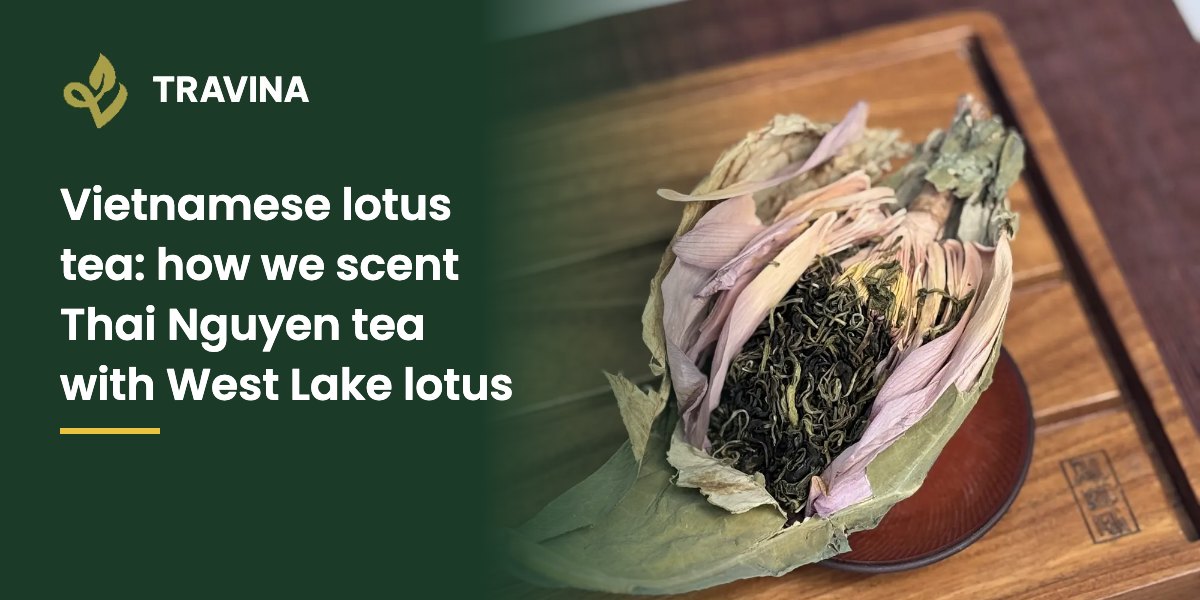
- Tea type and grade range. For example: Thai Nguyen green tea in Moc Cau (hook-shaped) or Non (young bud) grade, a single-bud tea such as Dinh Tien Son or Single-Bud Royal Tribute Tea (Dinh Tien Vua), Nui Coc black tea, Dong Tam Dao oolong, or a scented tea such as jasmine, pomelo blossom or Hanoi West Lake Hundred-Petal Lotus Anther-Scented Tea.
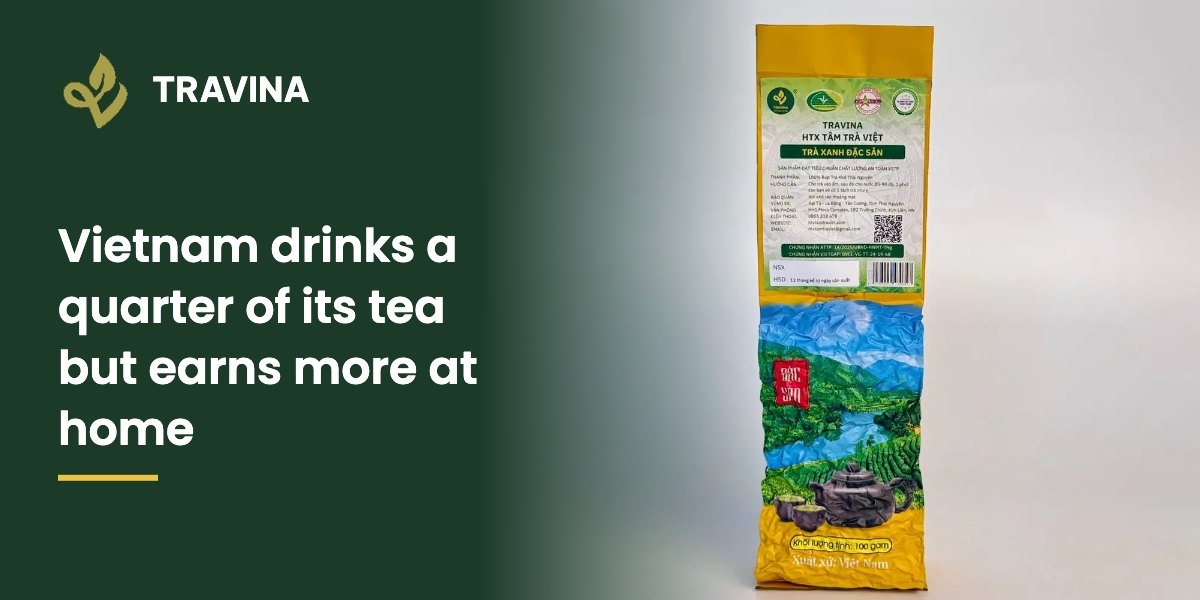
- Packing. Bulk bags or cartons for repacking, retail packs under the supplier’s brand, or private label (OEM) under your brand. Packing changes cost, lead time and the documents needed.
- Target market. China, the EU, the Middle East, North America and other markets apply different food safety limits and labelling rules. Telling the supplier your market early lets them advise which lots and which test reports make sense.
- Expected volume and frequency. A trial order of a few hundred kilograms and a yearly programme of several tonnes lead to different conversations about consistency and lot planning.
- Your timeline. When you need samples, when you plan to decide, and when the first shipment should leave.
- Your reference. If you are replacing an existing supply, describe it, or send a small portion of it, so the supplier can propose teas that sit close to it.
Ask the supplier to confirm in writing which grades and lots they will send, and what the conditions are for samples and courier delivery. At TRAVINA we send samples on request and state any sample fee and courier cost when you contact us, so there are no surprises on either side. If you are buying in volume, our page on bulk tea export and private label explains the order types we handle.
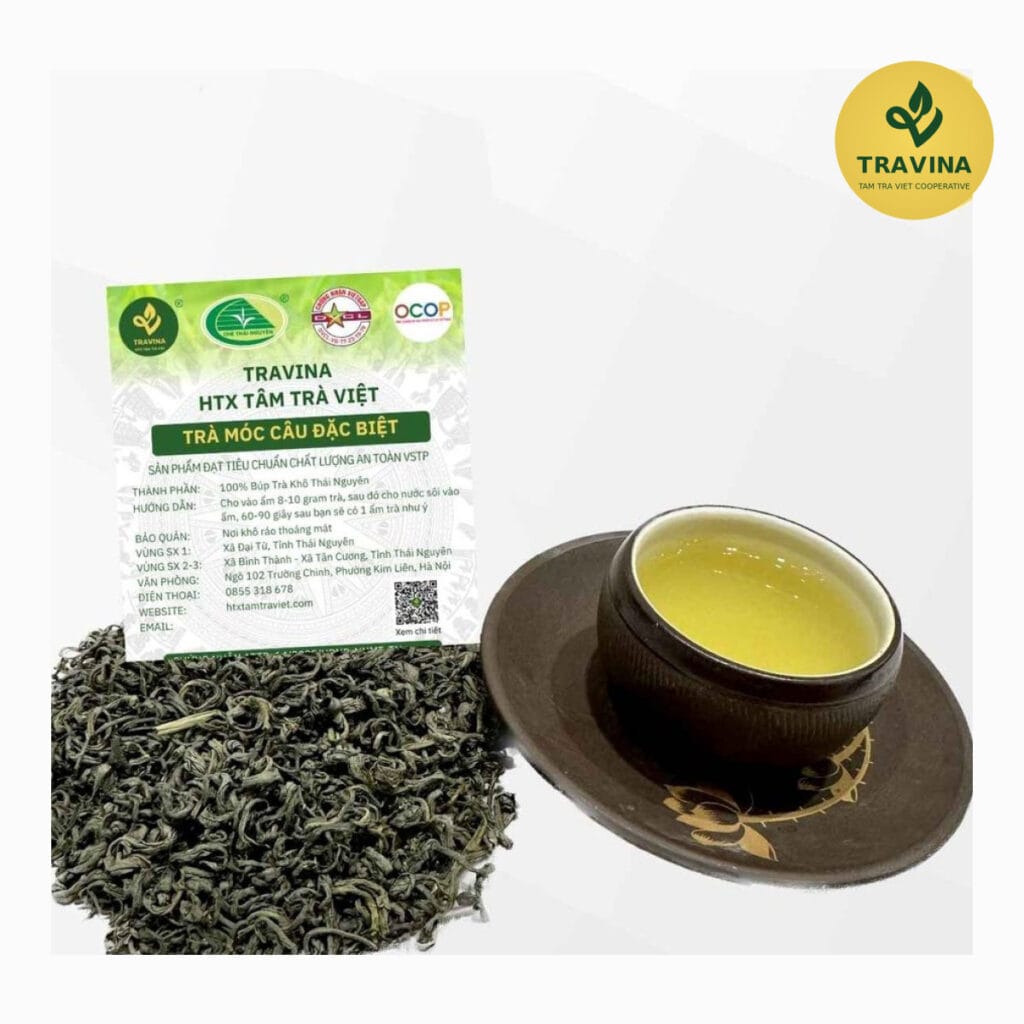
What a proper sample pack should contain
A sample is useful when you can trace it back to something the supplier can actually ship. Before you open anything, check that each pack carries the following.
- A lot number. This is the single most important line. At TRAVINA every lot carries a traceable lot number, and the sample you receive is labelled with the lot it was drawn from.
- Product name and grade, written the same way it will appear on the quotation and the contract.
- Production date and, where relevant, the harvest season.
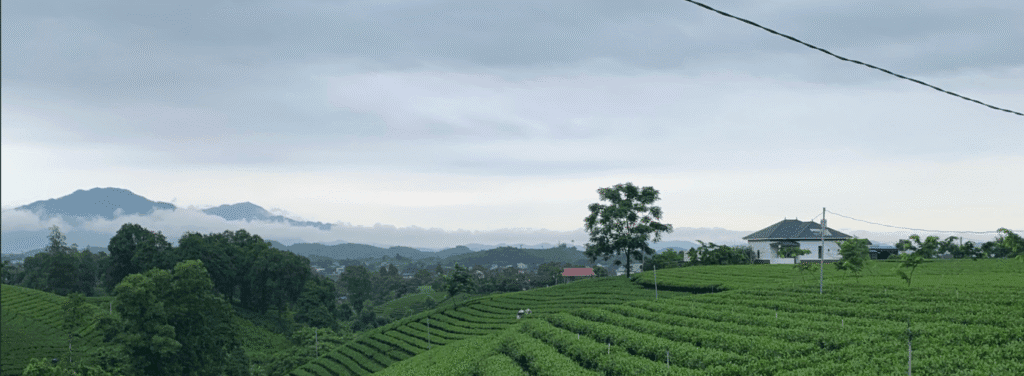
- Origin area and processing facility. For our green teas, the raw material comes from Dai Tu and La Bang at the foot of the Tam Dao range in Thai Nguyen province. You can read more about these tea growing areas in Dai Tu and La Bang.
- Net weight of the sample. Enough for at least two or three cuppings plus a retained reference portion.
- Suggested everyday brewing. Useful for your own staff and later for your customers, even though your formal cupping should follow a fixed method.
If you are comparing several grades, ask for two identical packs of each lot: one to open and cup, one to keep sealed as your reference. This small step makes the later stages much easier.
How to cup Vietnamese tea samples professionally
Cupping means brewing every sample in exactly the same way so that differences come from the tea, not from the person making it. You do not need a full laboratory. You do need consistency.
Use a fixed method
The international reference is ISO 3103, which sets out how to prepare a tea liquor for sensory tests. The commonly used approach is about 2 g of leaf per 100 ml of freshly boiled water, steeped for six minutes in a lidded white porcelain cup, then poured into a white bowl. Many Chinese buyers use the national sensory evaluation method GB/T 23776 instead, which for green tea typically uses 3 g of leaf in 150 ml of boiling water for four minutes. Either works, as long as every sample in the round is brewed the same way and you write down the method you used.
The strong standard brew is deliberately harsh. It exposes faults such as smoky or burnt notes, staleness and excessive bitterness that a gentle brew can hide. After the formal cupping, brew each tea once more the way your customers will, for example at 80 to 85°C for a shorter time for green tea, so you also know how it performs in daily use.
Judge in three stages: dry leaf, liquor, infused leaf
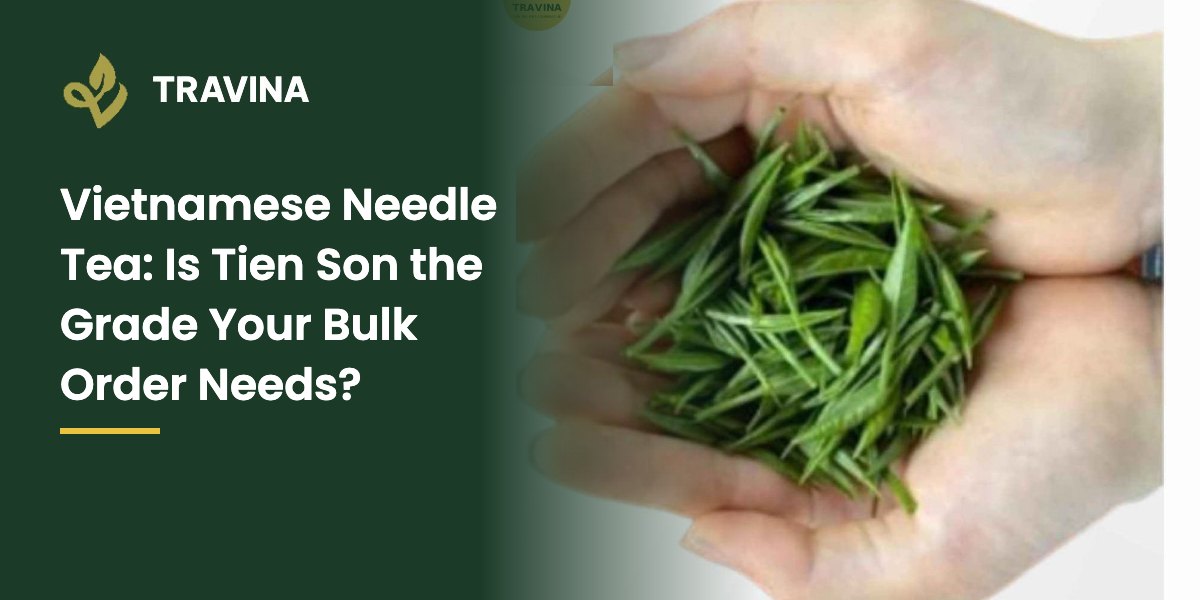
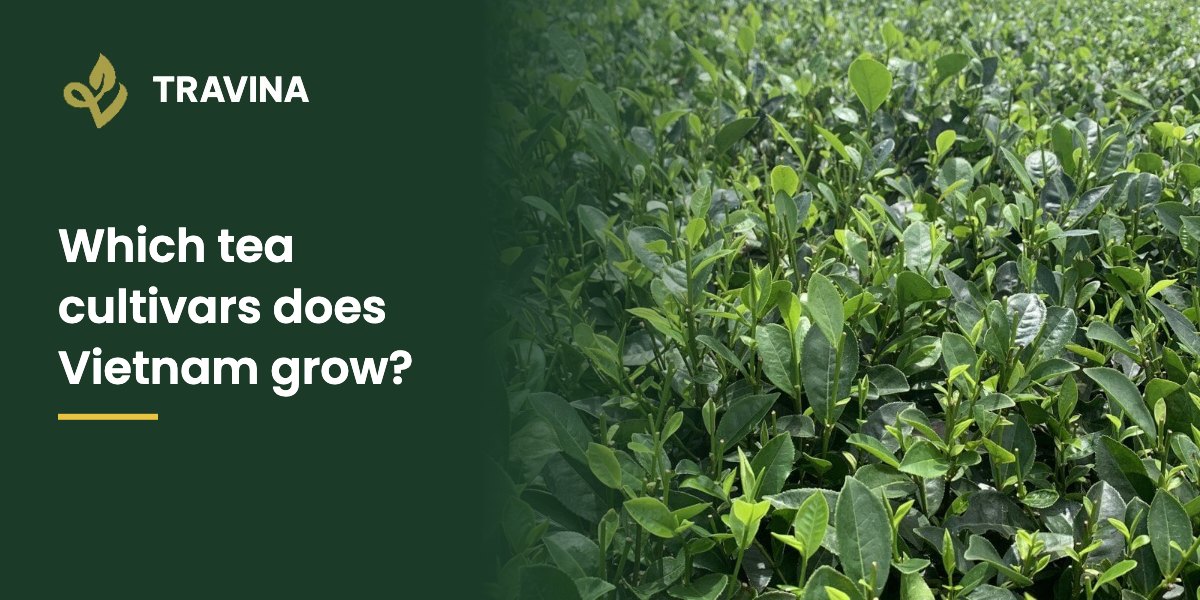
Dry leaf. Spread a portion on white paper. Look at shape, size uniformity, colour and the amount of broken leaf, stem and dust. Good Thai Nguyen Moc Cau is small, tightly twisted into a hook shape, dark green with a slight sheen. Single-bud teas should look like slim, even buds with fine down. Smell the dry leaf: it should be clean and toasty, never musty or smoky.
Liquor. Note colour and clarity first; Thai Nguyen green tea usually gives a bright green-yellow liquor. Then smell the lid and the cup while hot, warm and cool. Taste for body, briskness and astringency, and pay attention to the aftertaste. A well-made Thai Nguyen green tea is brisk at first and then leaves a returning sweetness (huigan) in the throat. Write down any off-notes: smoke, sourness, flatness, a cooked or stewed taste.
Infused leaf. Tip the wet leaf onto the lid or a white plate. It shows what the dry leaf cannot: whether the leaves are whole or chopped, whether buds and leaves are of even tenderness, whether there are red or dark edges from poor handling, and whether old leaf has been mixed into a higher grade.
Score it on paper
Use a simple scoring sheet with the same headings for every sample: dry leaf appearance, liquor colour, aroma, taste, infused leaf, overall, and comments. A ten-point scale for each heading is enough. What matters is that the scores are written down on the day, because memory of a tea fades quickly and tends to favour whatever was tasted last.

Compare against your purchase standard, not against your memory
A sample is not “good” or “bad” in itself. It is close to, or far from, what you need. Before you cup, write down your purchase standard: the grade, the appearance you expect, the taste profile your customers like, and the faults you will not accept. If you already buy similar tea, cup your current supply in the same round.
Wherever possible, cup blind. Have a colleague code the cups with numbers so you do not know which supplier or which price level each one represents. Rank the samples, then reveal the codes. Many buyers are surprised by the result, and it is far better to be surprised at this stage than after the container arrives.
If you are comparing Vietnamese and Chinese green teas for the same shelf, keep in mind that they are made with different processing traditions and will not taste the same. Our article on Vietnamese green tea vs Chinese green tea explains the main differences so you can judge each on its own terms.
Check the documents behind the sample
A pleasant cup is half of the decision. The other half is whether the supplier can show documents that match the facility, the raw material and your target market. Ask to see the following, and check that names, addresses and scopes match.
- Food safety management certification for the processing site. TRAVINA’s La Bang processing facility is certified to ISO 22000:2018 (certificate GOODVN91025.FSMS). This certificate applies to the La Bang facility, so ask which facility your lot was processed in.
- Good agricultural practice on the farm side. TRAVINA works with 90 member households on 40.5 ha. Of these, 17 households farming 9.7 ha hold VietGAP certification (DVCL-VG-TT-24-19-68). If you need VietGAP raw material specifically, say so in your request so the lot can be planned from those farms.
- Food safety eligibility certificate and trademark. TRAVINA holds food safety certificate 14/2025/UBND-NNMT-TNg and the TRAVINA trademark is registered under number 542996.
- Laboratory test reports for your market. Ask which tests your importer or authorities require, for example pesticide residues, heavy metals or contaminants under your market’s limits. Tests are arranged according to the target market’s requirements, and you are welcome to send the retained sample to an independent laboratory of your choice.
You can review our documents on the TRAVINA certificates and licences page, and our farming rules in the six-no clean tea standard. Buyers shipping to China should also read our guides on importing Vietnamese tea into China under GACC Decree 280 and on the Chinese label for imported Vietnamese tea, because registration and labelling decisions affect which packing you should sample. If you are still deciding on the trade route, our comparison of Vietnam–China border trade and formal export explains why formal export needs a fuller document set behind each lot.
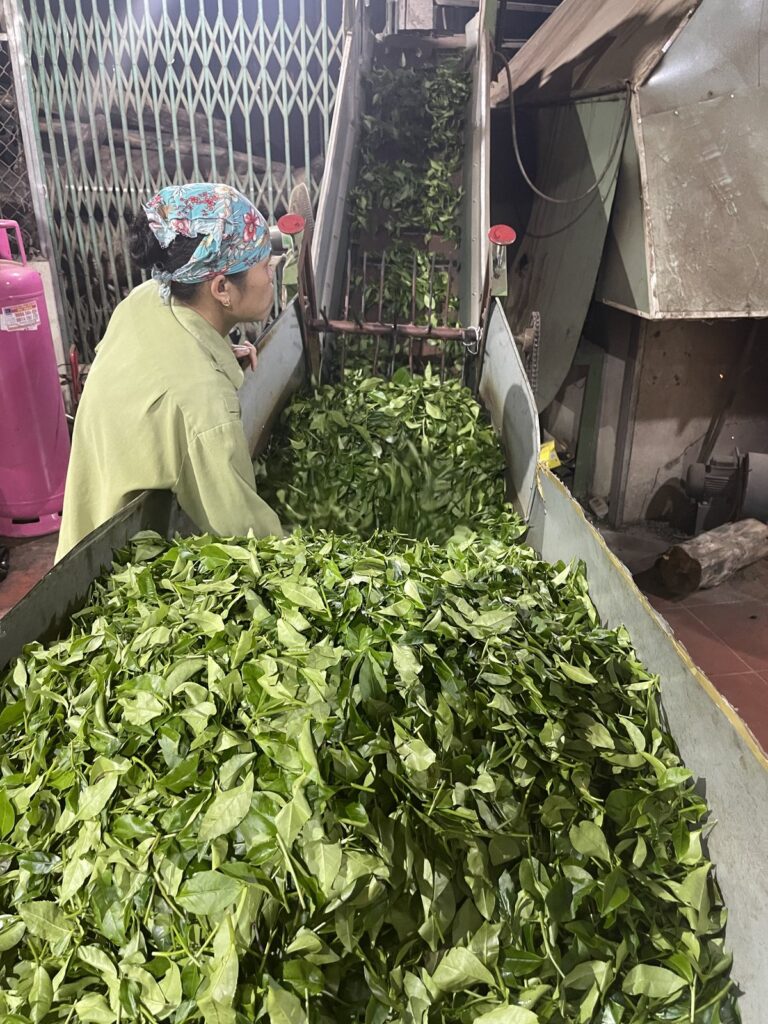
Keep a reference sample and write a sample record
The most expensive dispute in the tea trade is the one where the bulk shipment “does not taste like the sample” and nobody can prove what the sample was. You can avoid it with three habits.
Retain a sealed reference sample. Keep at least one unopened pack of the approved lot, stored cool, dry and away from strong odours. Agree with the supplier that they also keep a counter-sample from the same lot, so both sides hold the same reference.
Write a sample record. On one page, record the lot number, the date received, the brewing method, the scores and comments, photos of the dry leaf, liquor and infused leaf, and the name of the person who approved it. Send a copy to the supplier and ask them to confirm it. This takes ten minutes and gives both sides a clear reference.
Tie the contract to the approved lot. State in the contract that the goods must conform to the approved sample by lot number and description, and agree how a pre-shipment sample from the bulk lot will be checked before the balance is paid. For larger orders, many buyers ask for this pre-shipment sample to be cupped against the reference on the same day.
What happens after you approve a sample
Once you have chosen a tea, the process becomes straightforward.
- Quotation. TRAVINA does not publish export prices. We quote on request, usually EXW or FOB in USD, once we know the grade, the packing and the quantity. The approved sample’s lot number is written on the quotation so everyone refers to the same tea.
- Contract. The contract sets out grade, packing, quantity, Incoterm, documents, inspection, the reference sample and payment terms.
- Deposit. Payment terms are agreed in the contract. For private label orders, a deposit of 20 to 30 percent is required, the minimum order starts from 20,000,000 VND, the printed artwork must be signed off before production, and custom-printed goods cannot be returned unless there is a manufacturing defect. Private label takes longer than stock products.
- Preparation and dispatch. For stock products, goods leave our warehouse within 24 hours for orders under 100 kg and within 2 days for orders from 100 kg; orders from one tonne are scheduled by agreement. For export, add the time needed for documents and international transport, which depends on the destination and the shipping route, so we confirm it in each quotation.
TRAVINA produces around 120 tonnes of dried tea a year, so if you plan a regular programme, tell us early and we can discuss how lots will be planned to stay close to the approved sample over time.
Meeting TRAVINA in Tianjin or at the Thai Nguyen tea festival
Tasting at a trade fair is a good first impression, but it is not a substitute for cupping a numbered sample in your own office. The most productive approach is to taste with us, note which teas interest you, and then send a written brief so that we can follow up with proper samples and documents.
Founder Do Huu Thuan will be at the fair in Tianjin, China, from 25 to 28 October 2026; see our page on TRAVINA in Tianjin, October 2026. From 30 October to 7 November 2026, the Thai Nguyen International Tea Festival includes a La Bang booth, and you can find details on our Thai Nguyen Tea Festival 2026 page. Buyers who visit the festival can also see the growing areas and meet the member households who farm the tea.
FAQ
Are Vietnamese tea samples free?
It depends on the supplier and the request. TRAVINA sends samples on request and tells you any sample fee and courier cost when you contact us. Ask for these conditions in writing before samples are dispatched.
How much tea should a sample contain?
Enough for two or three formal cuppings, one everyday brew and a sealed reference portion. For each lot, ask for two identical packs: one to open and one to keep unopened.
Which brewing method should I use to judge samples?
Use a fixed method for every sample in the round. ISO 3103 is the international reference for preparing tea liquor for sensory tests, and many Chinese buyers use GB/T 23776. Write down the method so later comparisons are fair, then also brew each tea the way your customers will.
What should be written on each sample pack?
At minimum the lot number, product name and grade, production date, origin area and processing facility, and net weight. Without a lot number, a sample cannot be linked to the goods you will later receive.
How do I make sure the bulk order matches the sample?
Keep a sealed reference sample, ask the supplier to keep a counter-sample of the same lot, write a sample record that both sides confirm, and state in the contract that the goods must conform to the approved lot. Cup a pre-shipment sample against the reference before paying the balance.
Can I get a price before sampling?
TRAVINA quotes on request, usually EXW or FOB in USD, once grade, packing and quantity are known. Sampling first usually makes the quotation more accurate, because the grade is then fixed by lot number.
Sources
- ISO 3103:2019 – Tea – Preparation of liquor for use in sensory tests (International Organization for Standardization)
- Tea – Markets and Trade (Food and Agriculture Organization of the United Nations)
- General Administration of Customs of the People’s Republic of China (GACC)
Ready to start a sample round? Send us your tea type, grade range, packing, target market and expected volume, and we will confirm which lots we can send and the conditions for samples and delivery. Please contact TRAVINA and our team will reply with the next steps.