Why a cooperative in Thai Nguyen exports tea
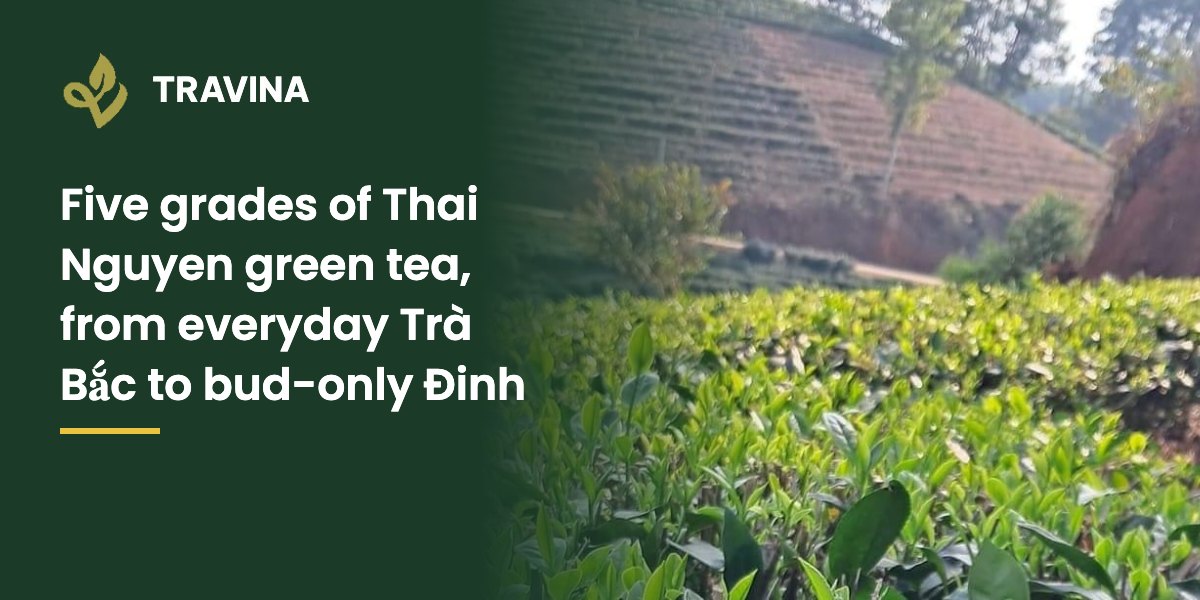
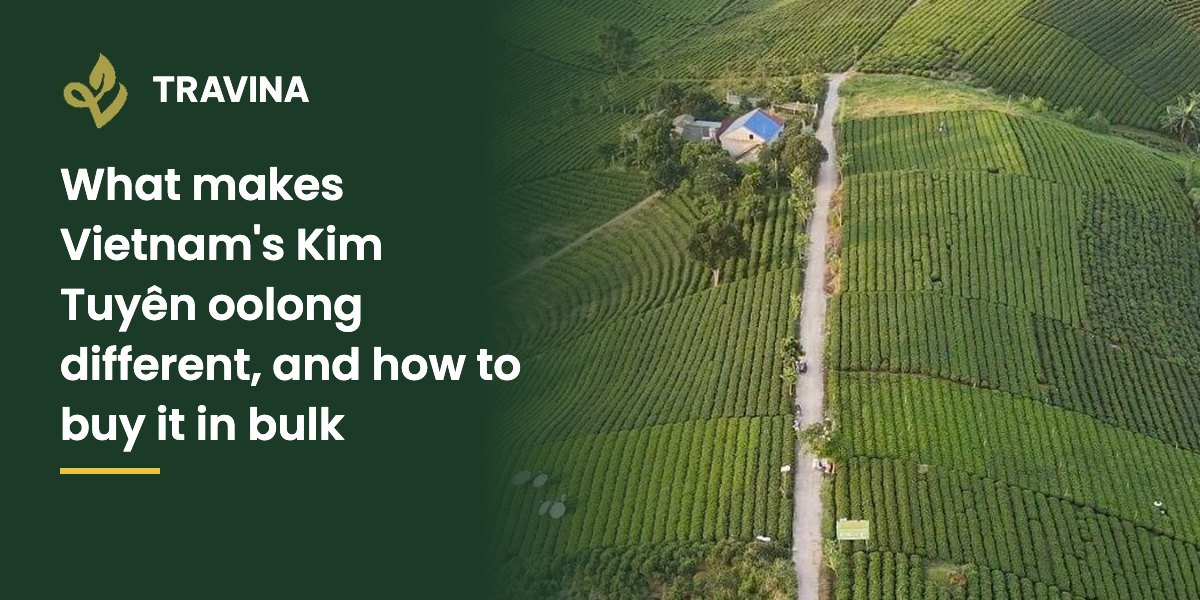
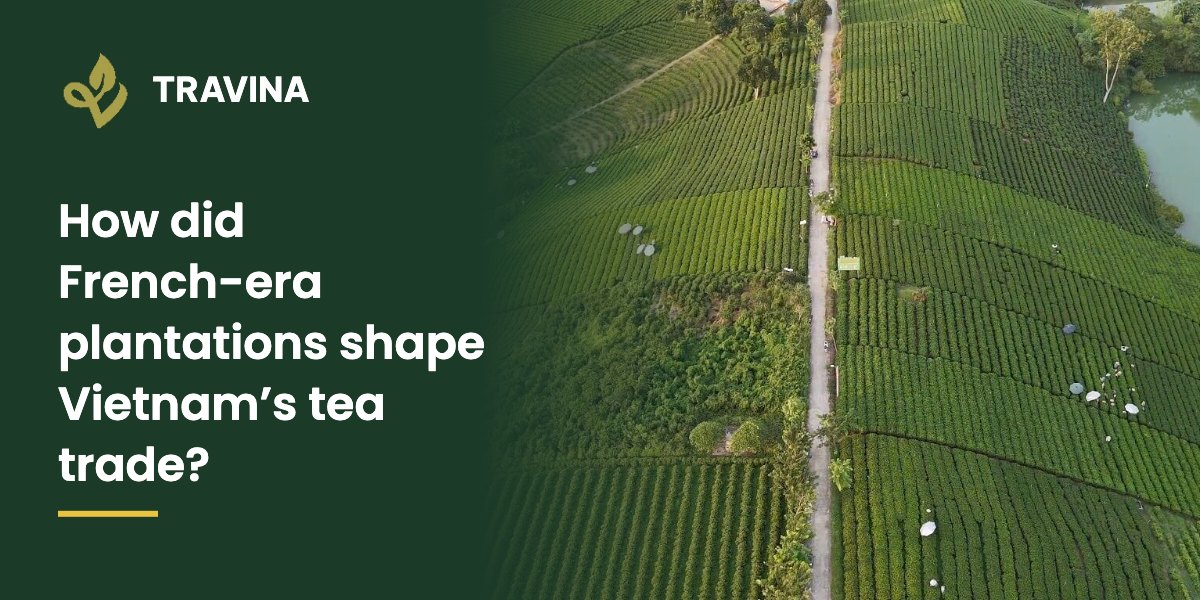
TRAVINA is the export brand of Tam Tra Viet Cooperative: 90 member households, two production facilities in Dai Tu and La Bang, Thai Nguyen province, working 40.5 hectares of tea gardens under a collective mark for “Che Thai Nguyen” tea. Between the two facilities the cooperative turns out roughly 120 tonnes of finished dry tea a year.
We have sold tea inside Vietnam since the cooperative’s households first started farming it. Selling it abroad — to a buyer who has never walked our gardens — means putting real numbers on the page instead of the usual reputation and postcard-history that every Thai Nguyen tea site leads with. That is what this page does.

Real capacity, in numbers
Processing capacity: around 10 tonnes of finished dry tea a month, run in batches through the harvest season — not a flat year-round line. Fresh leaf is best from roughly March through September; households stop picking toward the end of the year so the bushes can rest, so tea held over from late in the season costs more and is not our best quality.
Fresh-to-dry ratio: roughly 5 to 10 kg of fresh leaf per 1 kg of finished dry tea, depending on the grade — the more delicate the pick (single bud grades), the higher the ratio.
Processing labour: 10 to 15 people across both facilities.
Two facilities: Dai Tu handles Northern-style Tea and Special Green Tea; La Bang handles everything from Hook Tea upward — Hook Tea, Crane’s Wing Bud Tea, Premium Bud Tea, and Needle Tea.
Certifications actually on file:
- VietGAP (fresh tea leaf), certificate No. DVCL-VG-TT-24-19-68, issued 07 Nov 2024, valid to 06 Nov 2026
- ISO 22000:2018 food safety management, certificate No. GOODVN91025.FSMS, issued by GOOD Vietnam (a member of the International Accreditation Forum, carrying the ILAC-MRA mark for multilateral recognition), covering green tea, black tea, matcha, lotus tea, white tea and oolong tea, valid to 19 Oct 2028
- Food safety establishment certificate No. 14/2025/UBND-NNMT-TNg, issued by Dai Tu district authorities, valid to 19 Jun 2028
A real lab report, not a claim: our most recent pesticide-residue and heavy-metal test (report No. 78102025/KQKN, tested by a VILAS 1098-accredited laboratory carrying the ILAC-MRA mark) came back with all 10 tested pesticide residues below detection limit, and heavy metals well within food-safety limits (lead 0.095 mg/kg, cadmium 0.16 mg/kg, mercury not detected, arsenic 0.13 mg/kg). We are happy to share the full report on request.

Two ways to buy
| Form | What it is | Who it suits |
|---|---|---|
| Raw material tea (private label) | Loose tea by grade — every grade we make, from Northern-style Tea through to Needle Tea — for you to pack under your own brand | Overseas brands who want a Vietnamese tea line under their own name |
| TRAVINA finished goods, bulk | Our own packaged products, at volume | Distributors who want to sell the TRAVINA brand itself abroad |
Larger raw-material orders can run two ways: pooled with another order of the same grade in our regular batch schedule (more cost-efficient, needs to fit the harvest calendar), or as a dedicated batch run just for your order (more control over timing, needs enough volume to justify a standalone run). We work out which fits best when we talk through your order.
Long-term partnership: we grow toward your spec
Beyond the tea we already grow, TRAVINA also has 23 hectares of growing area in La Bang – Dai Tu open for a longer-term arrangement. Tell us the end product you are after — matcha, tea-seed oil, or a formula of your own — and we develop the garden and the processing toward it together, from the early stage through to an ongoing supply relationship.
Two ways to structure it: standing orders against agreed output once it is ready, or you invest directly in dedicated production for that specific output. This stays an open invitation until we find the right partner — in the meantime we keep developing the garden to our own standard. If you are looking for a long-term growing partner rather than a one-off order, this is where that conversation starts.

Specs, order quantities, payment
Packaging, port of export, lead time and Incoterms are all worked out to match what you need — we do not run one fixed export spec, because our buyers’ requirements vary too much for that to be honest.
Minimum order quantity is flexible: it depends on your requirement and on what grade and volume we have on hand at the time. We can start with a sample before you commit to a larger order.
Terms at a glance
The short version of how an order with us actually runs. Anything not fixed in this table is agreed per order and written into the quotation.
| Item | How it works |
|---|---|
| Samples | 100 g of each grade you want to taste. We agree the courier cost with you before anything ships. |
| Order size | Flexible by lot, from a few tens of kilograms for a trial up to container volumes, quoted per order. |
| Capacity | About 10 tonnes of finished dry tea a month across our two facilities in season, roughly 120 tonnes a year. Larger programmes are coordinated with partner cooperatives in our cooperative alliance, which together can supply 20–30 tonnes a month; each unit keeps its own records and lot codes, so you know who made which part of the order. |
| Season and lead time | The best fresh leaf comes from March to September; the bushes are pruned from November. For deliveries early in the year, confirm grade and volume in the third quarter. Lead time is confirmed in the quotation against the harvest calendar. |
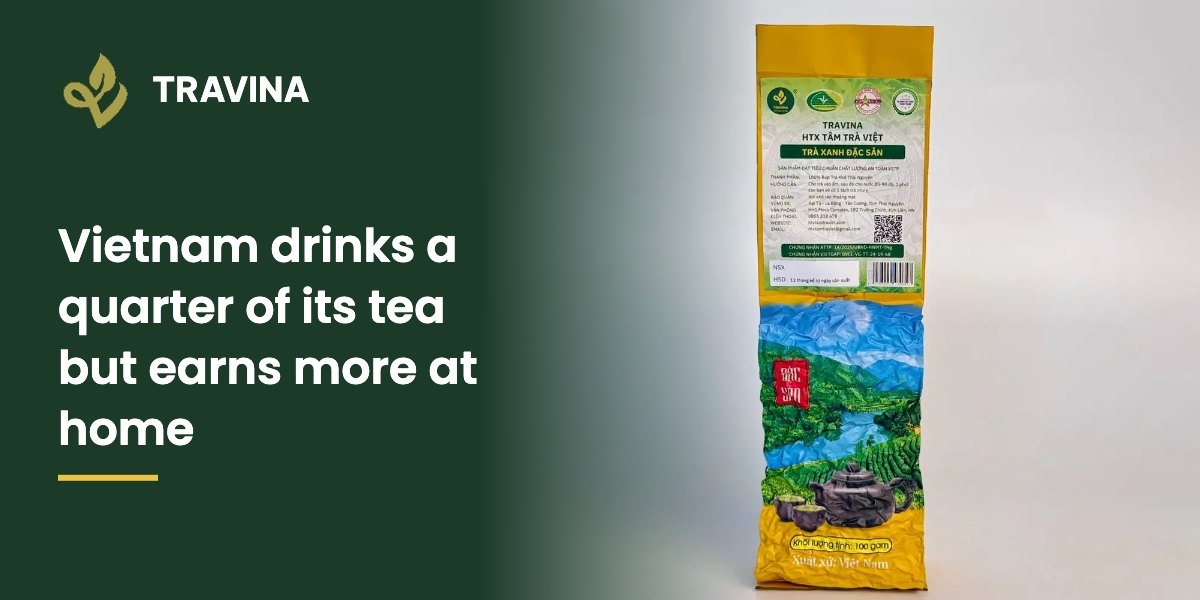
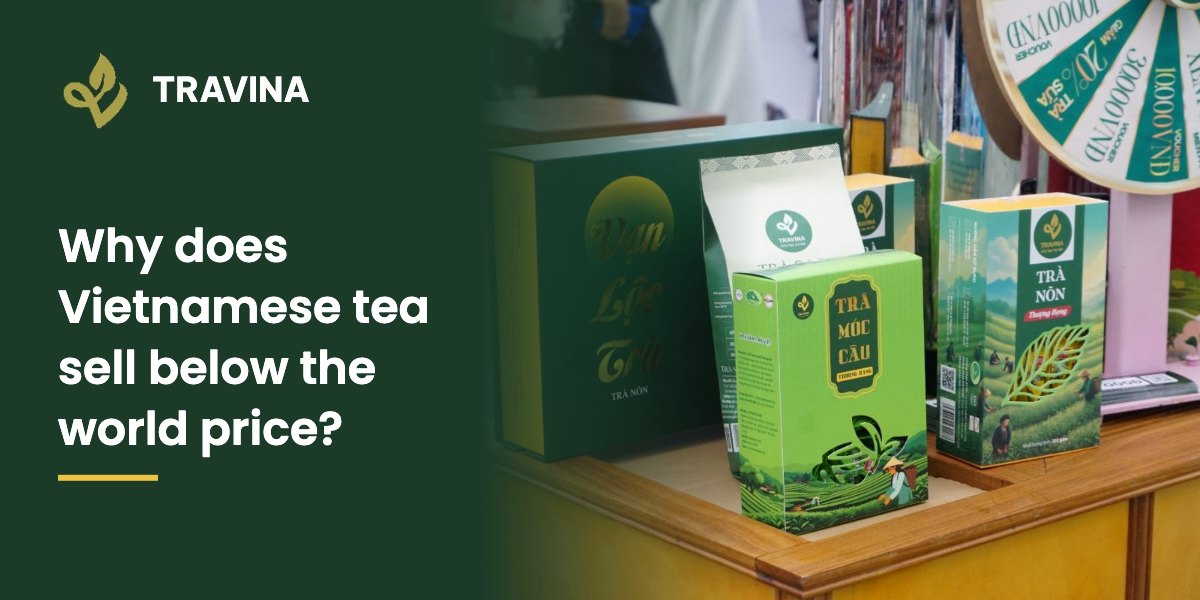
| Packing | Loose tea by grade for you to pack under your own label, or vacuum bags of 100 g and 200 g, zip bags, paper boxes and wooden boxes. Private label is quoted per order. Carton and pallet specifications are agreed per order. For sea freight we do not pack loose tea into large sacks and do not share a container with strongly scented goods. |
| Traceability | Every bag carries a lot code that traces back to the registered growing area and matches the code on our dispatch note. A retained sample of every lot stays at the factory so a claim can be checked against it. |
| Lab reports | The current reports screen 10 pesticide actives plus heavy metals for each tea line, from a VILAS 1098-accredited laboratory. They are not multi-residue screens. If your market needs a wider panel, we send a sample from the same lot for extra testing and quote the time and cost first. |
| Export documents | Certificate of Origin, phytosanitary certificate and fumigation are arranged per shipment where the destination or the contract requires them. HS codes commonly used for green tea: 0902.10 for packs up to 3 kg and 0902.20 for larger packs. |
| Market registration | TRAVINA is not registered with the US FDA or China’s GACC under its own name. For those markets we work through an importer or partner who holds the registration. |
| Price, payment, Incoterms | Quoted per order. Grade, packing, volume, season and the Incoterm you work to all move the number, which is why we do not publish a price list. |
What to ask when sourcing Vietnamese tea
If TRAVINA is one of several suppliers you are checking, here is what we would ask in your position — and our honest answer to each.
Does the growing region carry certification?
Yes. VietGAP certificate No. DVCL-VG-TT-24-19-68, valid to 06 Nov 2026.
Is there a food safety management system in place?
Yes. ISO 22000:2018, certificate No. GOODVN91025.FSMS, valid to 19 Oct 2028, covering six of our tea lines.
Is there a pesticide-residue test report?
Yes. Our most recent report, from a VILAS 1098-accredited lab, came back with all 10 tested pesticide residues below detection limit and heavy metals well within food-safety limits. Available on request.
What about phytosanitary certificates, Certificate of Origin, or HS code classification for a formal export shipment?
These are arranged per shipment once a formal export order is confirmed, not documents we hold on file in advance. To date most of our overseas sales have moved through hand-carried purchases and cross-border e-commerce; formal export has so far been limited to consolidated shipments rather than a standing container programme. We are set up to arrange the shipment-specific paperwork once an order is agreed.
What is the minimum order?
Flexible — based on what you need and what we have on hand, with samples available first.
What packaging, port, and Incoterms do you work with?
Whatever your shipment requires — there is no fixed standard, we agree it order by order.
Who TRAVINA is looking for
We are looking for import partners who want a long-term source of Vietnamese tea, private-label partners who want to build a tea line under their own brand, and buyers who want a second source alongside an existing one. If that is you, the next step is a conversation, not a contract.
And if what you are actually looking for is a growing partner rather than a supplier — see the 23-hectare offer above. It stays open until we find the right fit; until then, we keep developing that land to our own standard.

Get in touch
Tell us your target grade, approximate volume, and destination port, and we will come back with a quote.
Email: admin.travina@gmail.com
Ms. Thao (Export contact): +84 888 199 628