TRAVINA is proud of

Thai Nguyen Tea
developing
sustainable 6 Không growing areas
sustainable 6 Không growing areas
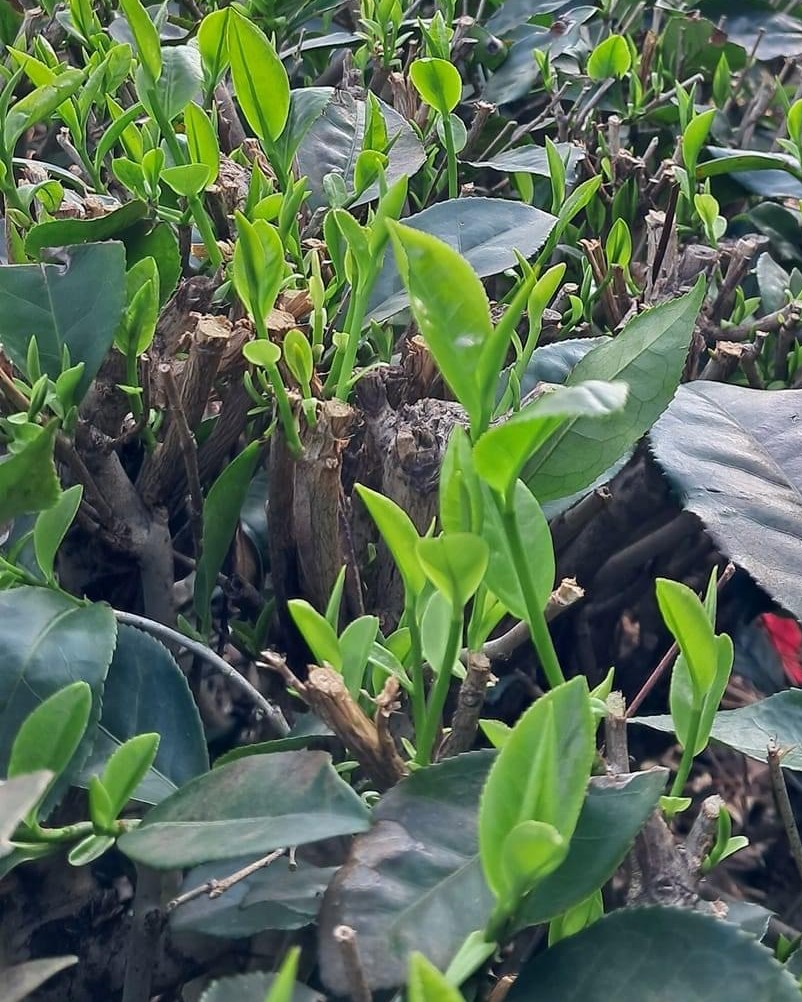
To build sustainable, 6 Không growing areas, TRAVINA works with the local authorities to choose blocks of land where farmers still cultivate the traditional way, mainly with composted manure, and where the air and the water are little touched by pollution.
Where tea grows in Viet Nam, and where TRAVINA sits in it
Tea is grown in 34 provinces of Viet Nam on roughly 130,000 hectares. Thai Nguyen alone holds 22,200 hectares, about 17 per cent of the national area, and brings in some 272,000 tonnes of fresh leaf a year. The 40.5 hectares TRAVINA works lie inside that province, in Dai Tu and La Bang.

The nine provinces marked on the map
- Thai Nguyen22,200 ha, about 17 per cent of the national area. TRAVINA grows here.
- Tuyen Quang (former Ha Giang)Old Shan tuyet trees at 800 to 1,200 m.
- Lao Cai (former Yen Bai)Suoi Giang Shan tuyet, picked from old trees.
- Lai ChauOver 10,500 ha of mountain tea.
- Dien BienTua Chua Shan tuyet.
- Son LaThe Moc Chau plateau, around 1,050 m.
- Phu Tho (with former Vinh Phuc and Hoa Binh)One of the oldest tea areas; black tea for export.
- Nghe AnLarge plantations at Anh Son and Thanh Chuong.
- Lam Dong (with former Dak Nong and Binh Thuan)About 26,000 ha; B’Lao tea and oolong.
Thai Nguyen, where TRAVINA growsOther well known tea provincesTRAVINA office in Hanoi
Shading marks whole provinces as they stand after the 2025 merger, not the planted area itself. Names in brackets are the pre-merger provinces, which is how they still appear on older certificates and shipping documents.
Our two sites
- Go Lon, Dai Tu. Head office and the first workshop.
- Dong Khuan, La Bang. The processing facility, certified to ISO 22000:2018, and the VietGAP growing area. Older certificates record this place as Suoi Chun hamlet, Hoang Nong commune.
- 40.5 hectares in total, 90 member households. Of that, 9.7 hectares across 17 households are covered by VietGAP certificate No. DVCL-VG-TT-24-19-68. The rest is farmed to the same 6 Không rules and is being prepared for certification.
- 120 tonnes of dry tea a year, about 10 tonnes a month in season, with 10 to 15 skilled workers on the line.
6 Không growing area
of TRAVINA in Dai Tu
of TRAVINA in Dai Tu
TRAVINA’s growing area in Dai Tu lies at the foot of the Tam Dao range, where the yearly average temperature is only about 18 to 20 degrees C – roughly 3 to 5 degrees cooler than the Red River Delta, which averages 23.5 degrees C – and the swing between day and night stays moderate. Nui Coc Lake nearby keeps the temperature steady and mild.


The tea bushes in Dai Tu grow at the foot of low hills, sheltered by Nui Coc Lake, and those conditions shape a taste you do not find elsewhere. The soil is loose and rich in humus with a pH between 5.5 and 8.0. It feeds the bushes naturally and helps them build up compounds such as tannins and polyphenols, which give the tea its warm aroma, its nutty body and its gentle sweet finish.
Every household we work with has grown tea for generations, and that shared craft is the foundation of every TRAVINA product.
6 Không growing area
of TRAVINA in La Bang
of TRAVINA in La Bang
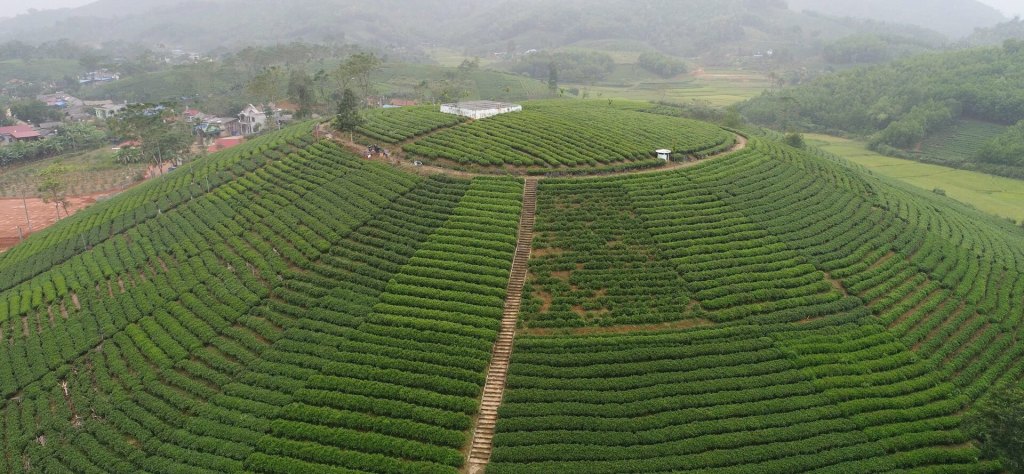
TRAVINA’s growing area in La Bang lies on the eastern slope of the Tam Dao range, one of the five great tea lands of Thai Nguyen. The commune averages about 18 to 20 degrees C the year round, and the streams coming down from Tam Dao supply clean water for both the households and the tea gardens.

Working with TRAVINA, the households follow the VietGAP process step by step. Certificate No. DVCL-VG-TT-24-19-68 covers 17 households and 9.7 ha. The rest of the cooperative’s 40.5 ha is farmed to the same 6 Không rules and is being prepared for certification.
The processing facility of
TRAVINA in La Bang
TRAVINA in La Bang
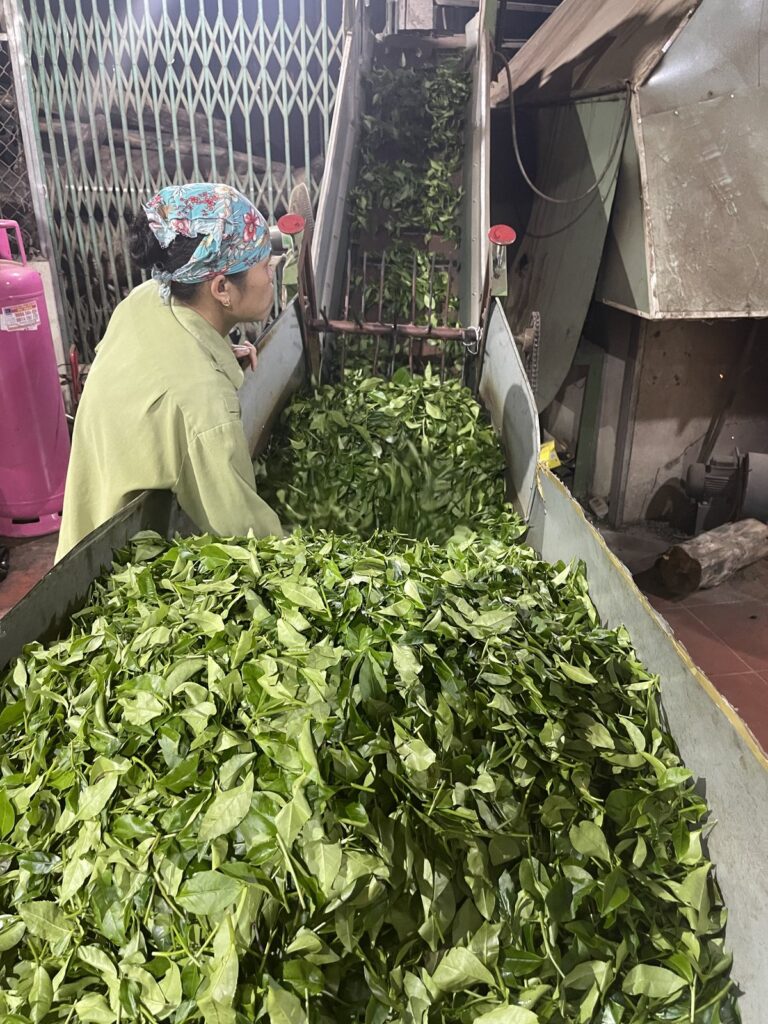
The factory in La Bang runs to ISO 22000:2018 (certificate GOODVN91025.FSMS) and holds food safety licence No. 14/2025/UBND-NNMT-TNg. It processes green tea, black tea, matcha, lotus tea, white tea and oolong – about 10 tonnes of dry tea a month in season, with 10 to 15 skilled workers.

The households have long experience with the tea varieties we grow: Trung Du for Tra Bac and green tea, the LDP1 and TRI 777 hybrids for Moc Cau and Canh Hac, and old Trung Du combined with Long Van for the finest grades. Year after year the soil is replenished with minerals from Nui Coc Lake and with natural humus, and that is what gives the leaf both body and fragrance.
TRAVINA HARVEST CALENDAR
Thai Nguyen has no winter crop worth picking. Our season opens in March and closes in October, and the heaviest months are May and June, when a plot can be picked again every seven to ten days. From November to February the gardens are pruned, fed and left to rest, and nothing is made.
| Month | What happens in the gardens |
|---|---|
| January – February | Pruning, composting, soil work. No picking. |
| March | First flush. Small volumes, the finest buds of the year. |
| April – May | Volume climbs. This is the spring crop most buyers ask for. |
| June | Peak month. |
| July – August | Steady picking through the rains. |
| September – October | Autumn crop. Sweeter, quieter cups. |
| November – December | The gardens rest. No picking. |
Across a season the cooperative finishes roughly 120 tonnes of dry tea from 40.5 hectares. Ask us for the current month before you plan a shipment: what is available in March is not what is available in September.
Monthly output at the cooperative
Finished dry tea, in tonnes, over a normal season. TRAVINA makes about 120 tonnes a year from 40.5 hectares in Dai Tu and La Bang. The gardens rest in the cold months, which is why the year opens and closes at zero.
- Jan0
- Feb0
- Mar11.3
- Apr14.6
- May19.6
- Jun20.9
- Jul17.6
- Aug14.0
- Sep12.0
- Oct10.0
- Nov0
- Dec0
Cooperative production records, rounded to one decimal. Peak month June, 20.9 tonnes. Buyers planning a shipment should book against the May to July window.
Annual output by tea type
The cooperative processes about 120 tonnes of dried tea a year. This is how that volume divides across the tea types we make, in tonnes of finished dried tea.
Curled green tea (Moc Cau style)
29.6 t
Northern-style green tea
23.8 t
Tender-bud green tea (Non Tom)
18.5 t
Oolong tea
17.8 t
Black tea
15.1 t
Clean 6 Không green tea
13.2 t
Single-bud tea (Tra Dinh)
2.0 t
About the 6 Không tea. 6 Không is our own clean-growing commitment for part of our tea gardens: no chemical pesticide, no herbicide, no growth stimulant, no chemical preservative, no artificial colouring and no artificial flavouring. It is a production commitment made and monitored by the cooperative, not an organic certification. TRAVINA does not hold organic certification for this tea and does not sell it as certified organic.
FROM GREEN, LIVING TEA GARDENS
TO A CERTIFIED PROCESSING FACILITY
TO A CERTIFIED PROCESSING FACILITY
The 6 Không growing area of
TRAVINA in Dai Tu
TRAVINA in Dai Tu
Cultivation here relies on organic fertiliser and on mulching with straw or forest leaves, with chemical intervention kept to a minimum. That is what lets Dai Tu tea keep its natural aroma, its nutty body and its sweetness, and it is what suits our highest grades. The area meets food safety requirements and the VietGAP standard.
A STRICT PROCESSING ROUTINE THAT PROTECTS PRODUCT QUALITY
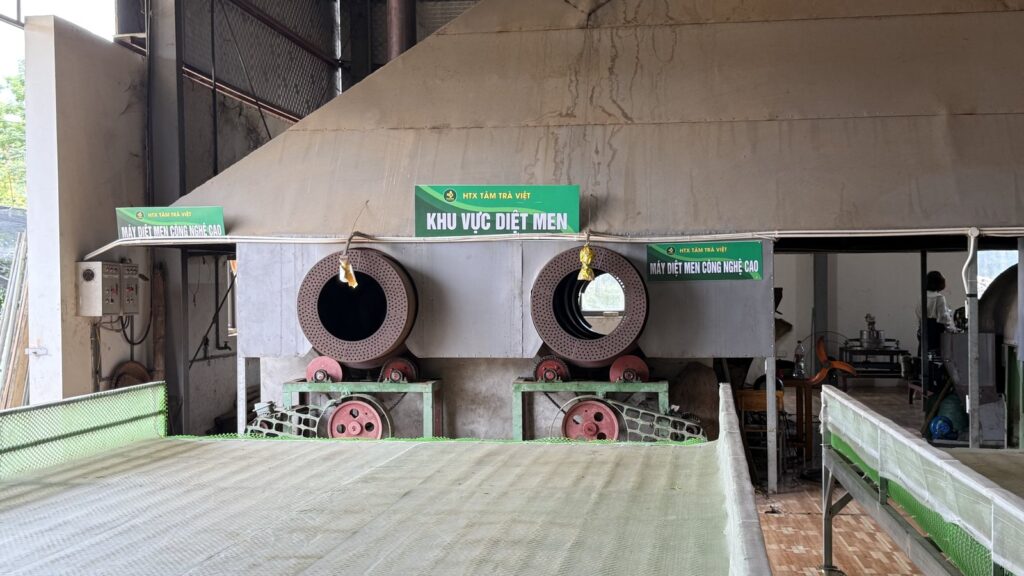
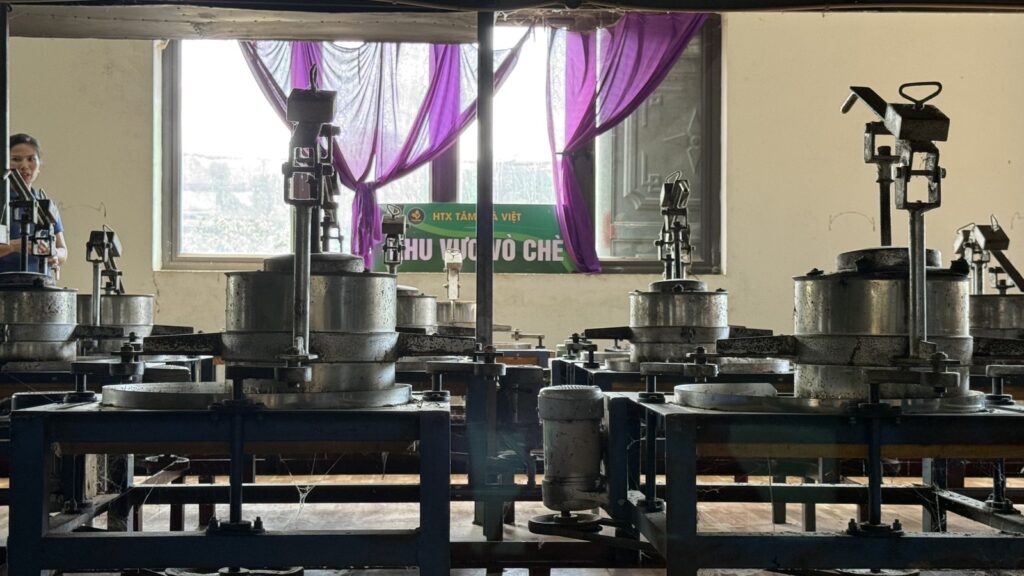
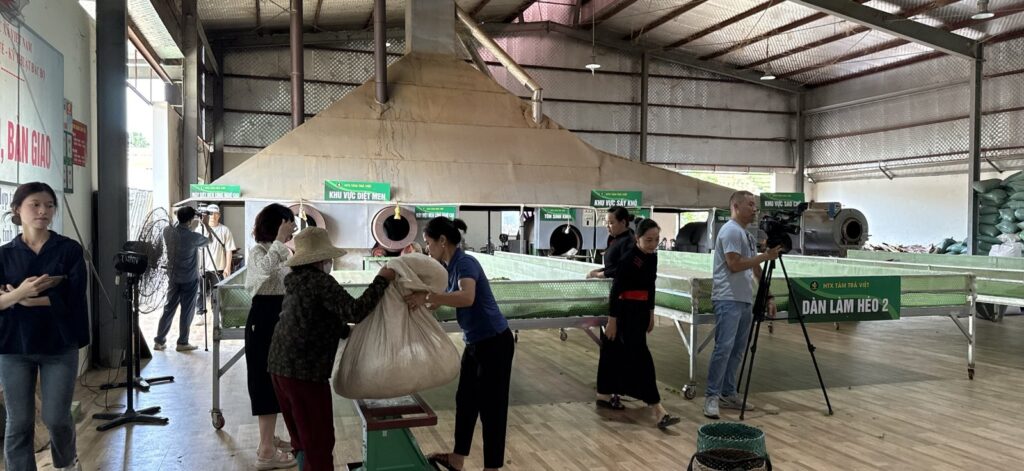
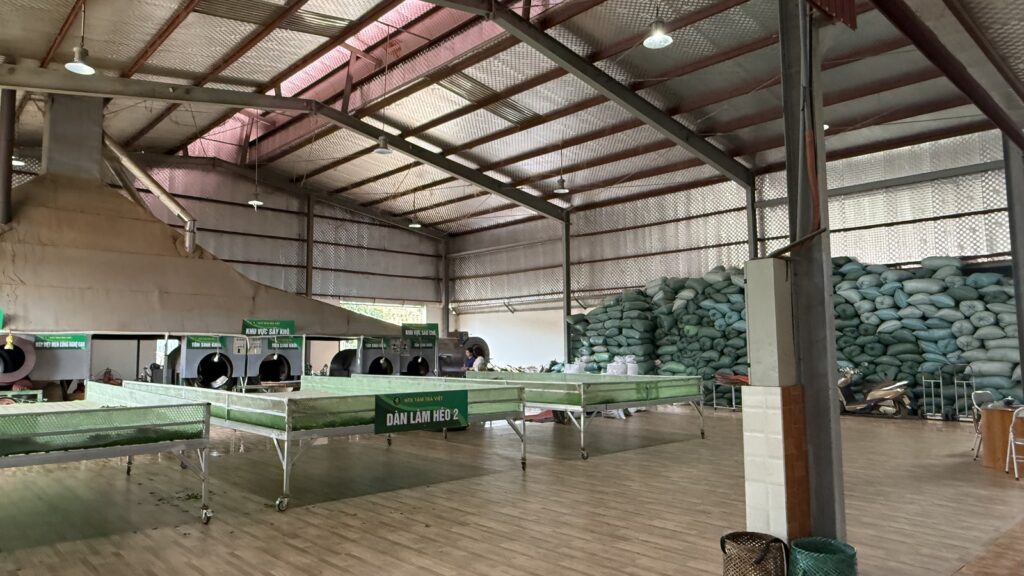
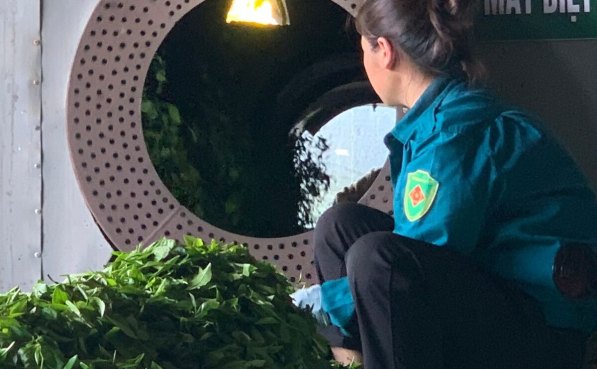
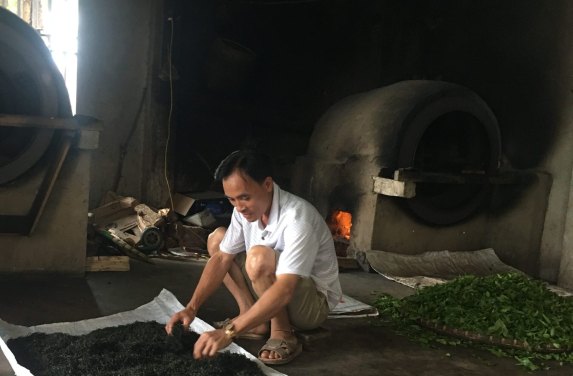
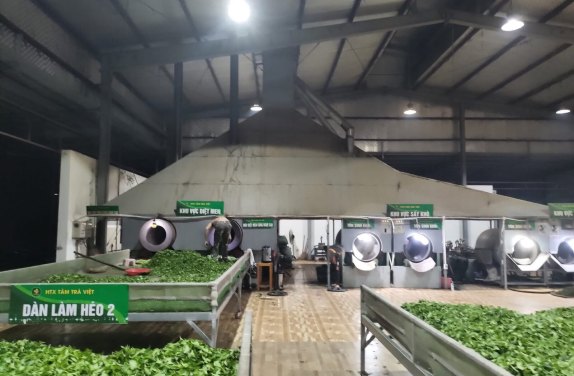
TRAVINA’s factory lays out its production line as a closed loop, from intake through to the finished product. Every processing step is carried out by skilled workers under the supervision of our quality control team.

Thai Nguyen, the province behind the cup
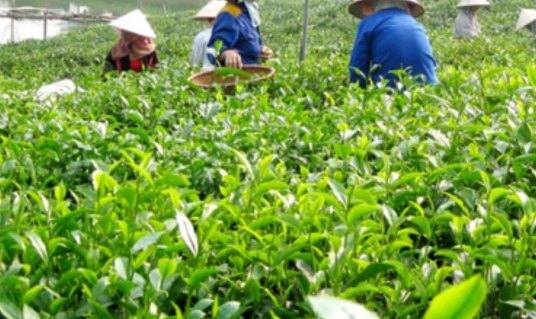
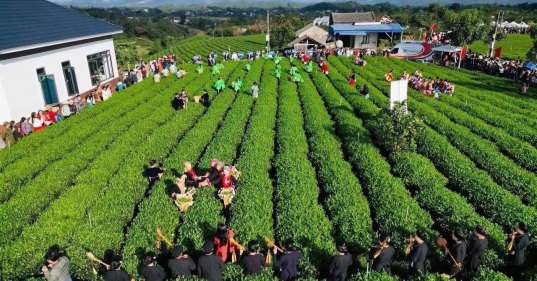
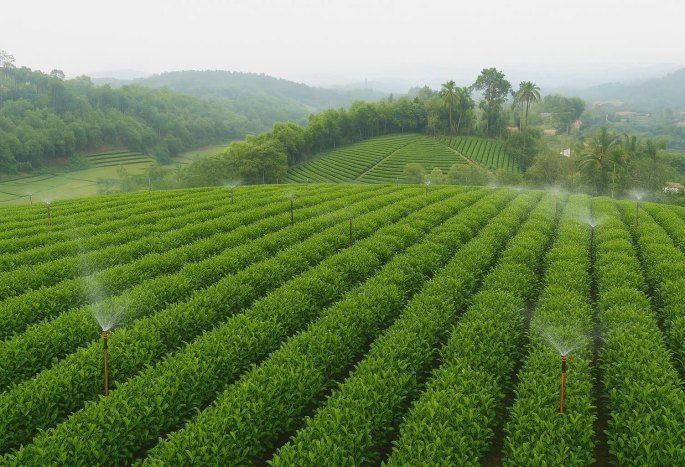
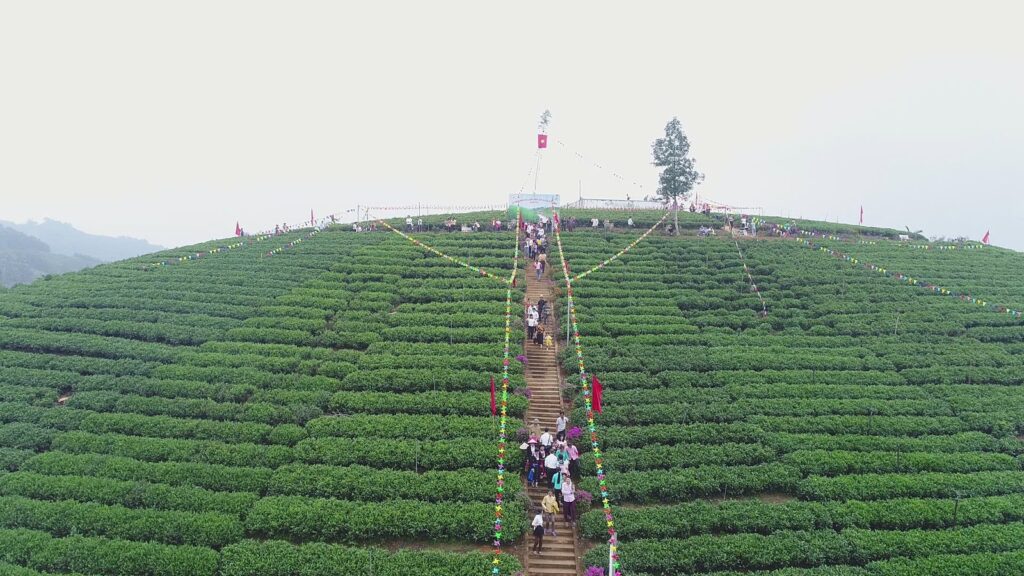
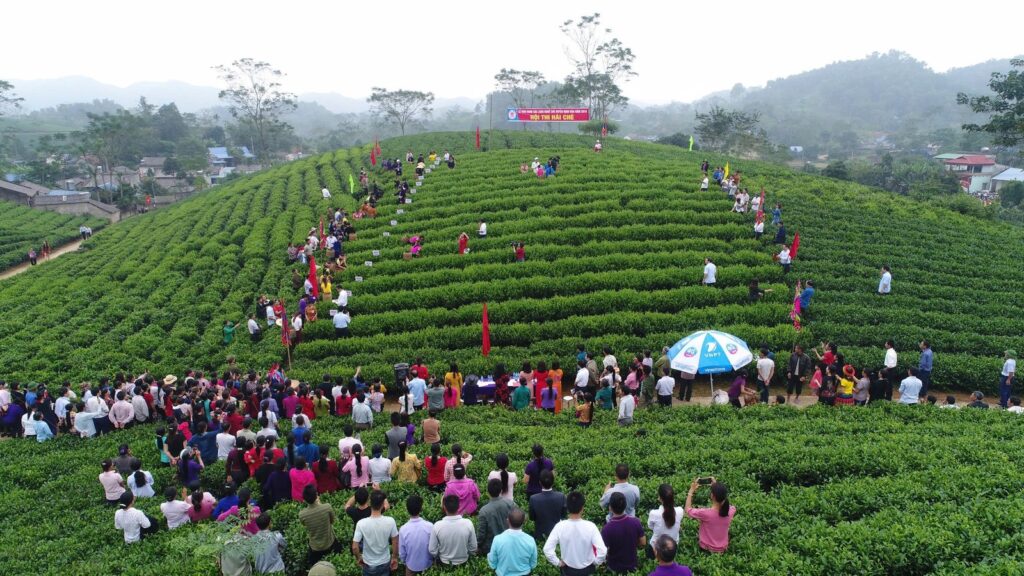
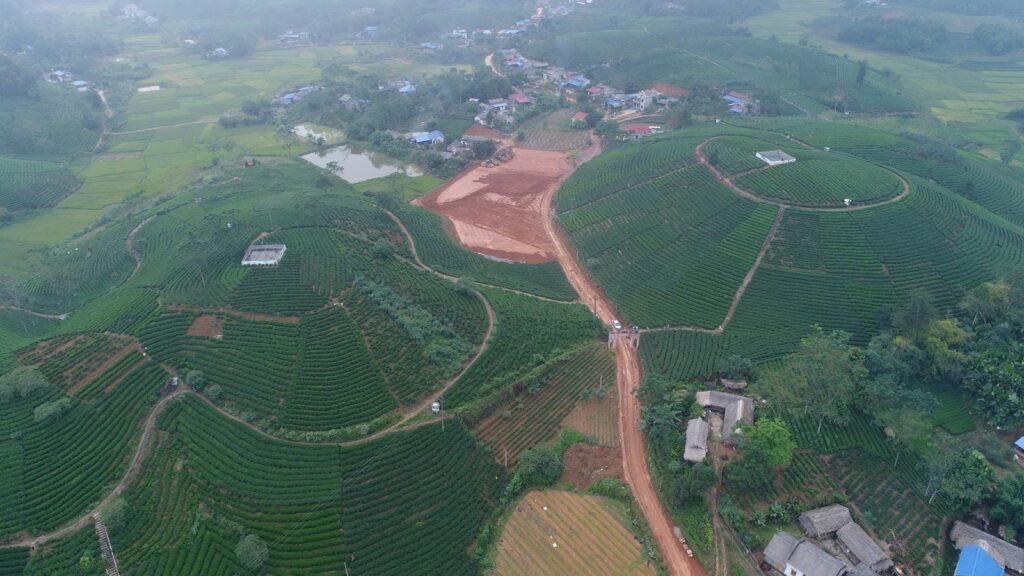
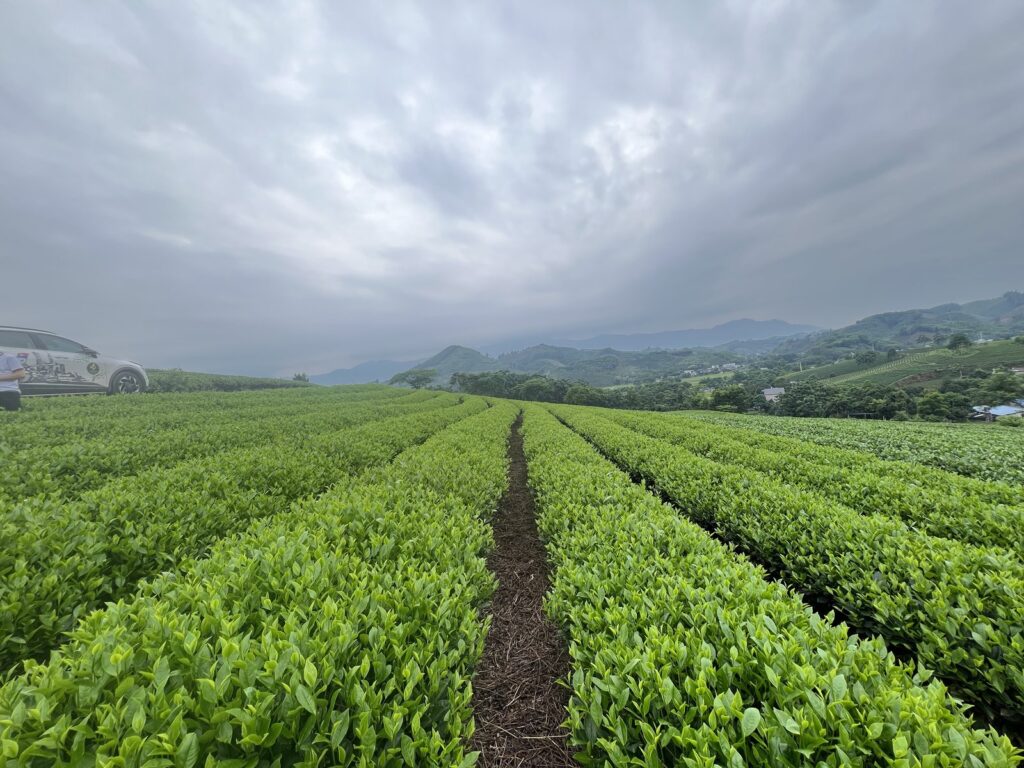
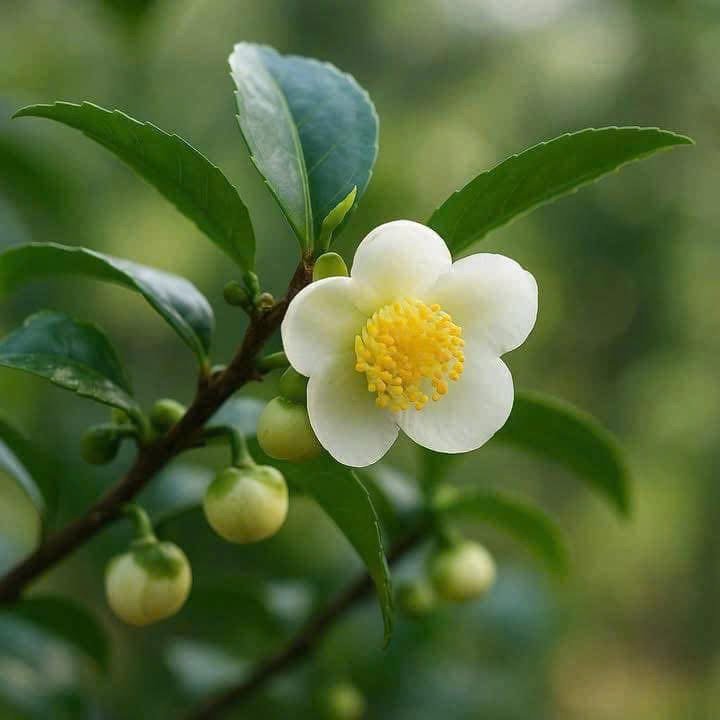
TRAVINA grows in Dai Tu and La Bang. Those two communes sit inside the largest tea province in northern Viet Nam, and the photographs immediately below are of Thai Nguyen tea country in general rather than of our own plots: the shape of the hills, the picking festivals held on them, and the villages that live off the leaf.
The people behind each tea grade
At TRAVINA, four different teams handle four different product families. A buyer comparing our price list will find the logic here: each grade is made by someone with a different level of craft, on equipment built for that grade alone.
Trà Bắc (Traditional Northern Green Tea) — TRAVINA’s production team
Handled by skilled operators with 3–5 years of experience. The line runs on biomass-fired pans for thermal efficiency, paired with high-technology rolling and drying machinery imported from Taiwan. The engineering target for this family is batch-to-batch consistency — the single specification that matters most for volume buyers and private-label orders.
Green Tea and Móc Câu (Fishhook Tea) — Mr. Đỗ Trí Quân, 10 years
Mr. Đỗ Trí Quân works at near-artisan level and has spent 10 years on the floor at our Đại Từ facility. His process starts before the factory: soil management, fertilisation regime and harvest timing. Inside the facility, gas-fired and electric pans are commissioned to his own specification; the rolling machines and drying pans run as an independent line, separate from the withering pans. Not sharing one pan between withering and firing allows tighter temperature control at each stage — visible in the finished leaf: tightly and evenly curled, a clear young-rice aroma, a clean taste with a sweet finish.
Bud grades — Cánh Hạc, Nõn Hảo Hạng and Trà Đinh — Artisan Ma Thị Tuyến, 35 years
Our three highest grades are made by Ms. Ma Thị Tuyến, who has spent 35 years in the tea trade at La Bằng. For bud grades, good raw material is only the entry requirement. The decisive variables are heat perception, withering duration and stage temperature — several of which cannot be read from an instrument and must be judged by hand. That judgement is accumulated experience, paid for with many ruined batches over the years, together with techniques handed down from the previous generation and still in use today.
The 6-No Clean Tea family — Mr. Phạm Hoàng Giang, Second Prize, Golden Hands 2025
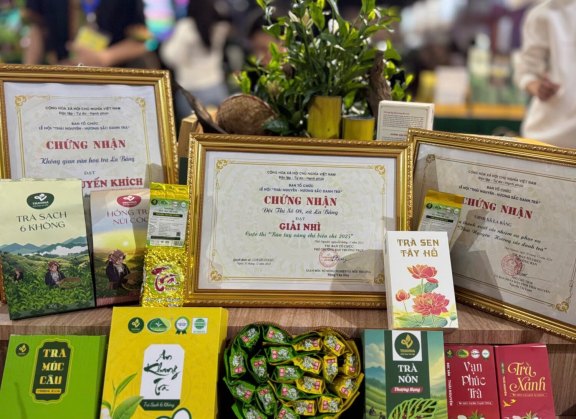
Núi Cốc Black Tea, Đông Tam Đảo Oolong, 6-No Clean Tea, White Peony (Bạch Trà Mẫu Đơn), Tam Đảo Tea Blossom and others are produced by Mr. Phạm Hoàng Giang, winner of the Second Prize at the 2025 Golden Hands tea-processing contest in Thái Nguyên. This family deliberately departs from the traditional Thái Nguyên green tea route — oxidation, natural withering and scenting — and requires its own process and equipment.
For importers and private-label partners, this is the practical point: every lot we ship can be traced not only to a growing area and a certificate, but to the person who fired it.
Grade sheet: what sets each grade apart
Our whole green tea range on one list, from tea-bag fannings to hand-roasted needle tea. Each line shows the plucking standard and what sets the grade apart; tap + for the site, the maker and the lab report we send with the quotation.
Broken Needle Tea Bags (Trà Tấm Đinh Túi Lọc)Sorted pieces of our bud and needle grades · filter bags, 1–2 minute brew
| Plucking standard and cultivar | Broken pieces sorted out of our bud and needle grades, packed in filter bags |
|---|---|
| Garden and site | Packed at the cooperative |
| Made by | Packing team |
| Dry leaf and cup | Infuses fast and keeps the character of the bud and needle grades |
| Lab report | Site food-safety certificate 14/2025 |
| Typical buyer | Hotels, offices, HoReCa, tea-bag private label |
Traditional Northern Green Tea (Trà Bắc)1 bud + 2–3 leaves · broad leaf, honey-yellow liquor, brisk then sweet
| Plucking standard and cultivar | 1 bud + 2–3 leaves; midland and hybrid cultivars |
|---|---|
| Garden and site | The cooperative’s 40.5 ha growing area, farmed to food-safety standards by member households |
| Made by | Member groups, supervised by Đỗ Trí Quân, production manager at Site 1 |
| Dry leaf and cup | Broad leaf, honey-yellow liquor, brisk opening, sweet finish |
| Lab report | 3082025/KQKN |
| Typical buyer | Volume buyers, restaurants, blending base, private label |
Special Green Tea (Trà Xanh Đặc Sản)1 bud + 2 leaves · finer leaf than Trà Bắc, green-gold liquor, light astringency
| Plucking standard and cultivar | 1 bud + 2 leaves; hybrid cultivars |
|---|---|
| Garden and site | Selected cooperative hills; fired at Site 1, Đại Từ |
| Made by | Long-serving tea makers, supervised by Đỗ Trí Quân |
| Dry leaf and cup | Finer, more even leaf; green-gold liquor; light astringency, sweet finish |
| Lab report | 5082025/KQKN (sensory and physico-chemical); NATEK KN141724023(a) |
| Typical buyer | Everyday retail green tea, Asian grocery |
Premium Móc Câu (Fishhook) Tea1 bud + 1 tender shoot + 1 leaf · hook-curled leaf, young-rice aroma, ISO 22000 — our best seller
| Plucking standard and cultivar | 1 bud + 1 tender shoot + 1 leaf; selected hybrid cultivars |
|---|---|
| Garden and site | VietGAP gardens; fired at Site 1 (ISO 22000) |
| Made by | Đỗ Trí Quân |
| Dry leaf and cup | Tight, even, hook-curled leaf; young-rice aroma; bright green liquor with a golden sheen; mellow, sweet finish |
| Lab report | 3182025/KQKN |
| Typical buyer | The safest first order for a new market |
Cánh Hạc Bud Tea1 bud + 1 tender shoot · hybrid and Long Vân cultivars, bright green liquor — customers’ favourite 2024–2025
| Plucking standard and cultivar | 1 bud + 1 tender shoot; hybrid and Long Vân cultivars |
|---|---|
| Garden and site | VietGAP gardens converting to our 6-No standard; La Bằng site (ISO 22000) |
| Made by | Supervised by artisan Ma Thị Tuyến (35 years at the pan) |
| Dry leaf and cup | Fine, even leaf; young-rice aroma; bright green liquor; smooth and sweet |
| Lab report | 3282025/KQKN (bud grade) |
| Typical buyer | Specialty retail, gifting |
Superior Bud Tea (Trà Nõn Hảo Hạng)1 bud + 1 tender shoot, selected · midland blended with hybrid, green-yellow liquor, Long Vân fragrance
| Plucking standard and cultivar | 1 bud + 1 tender shoot; midland blended with hybrid cultivars |
|---|---|
| Garden and site | Long-established VietGAP gardens farmed close to the 6-No standard; La Bằng site (ISO 22000) |
| Made by | Made by artisan Ma Thị Tuyến |
| Dry leaf and cup | Fine, even leaf; the green-yellow liquor typical of midland tea, lifted by Long Vân fragrance |
| Lab report | 3282025/KQKN (bud grade) |
| Typical buyer | Premium retail, gifting, travel retail |
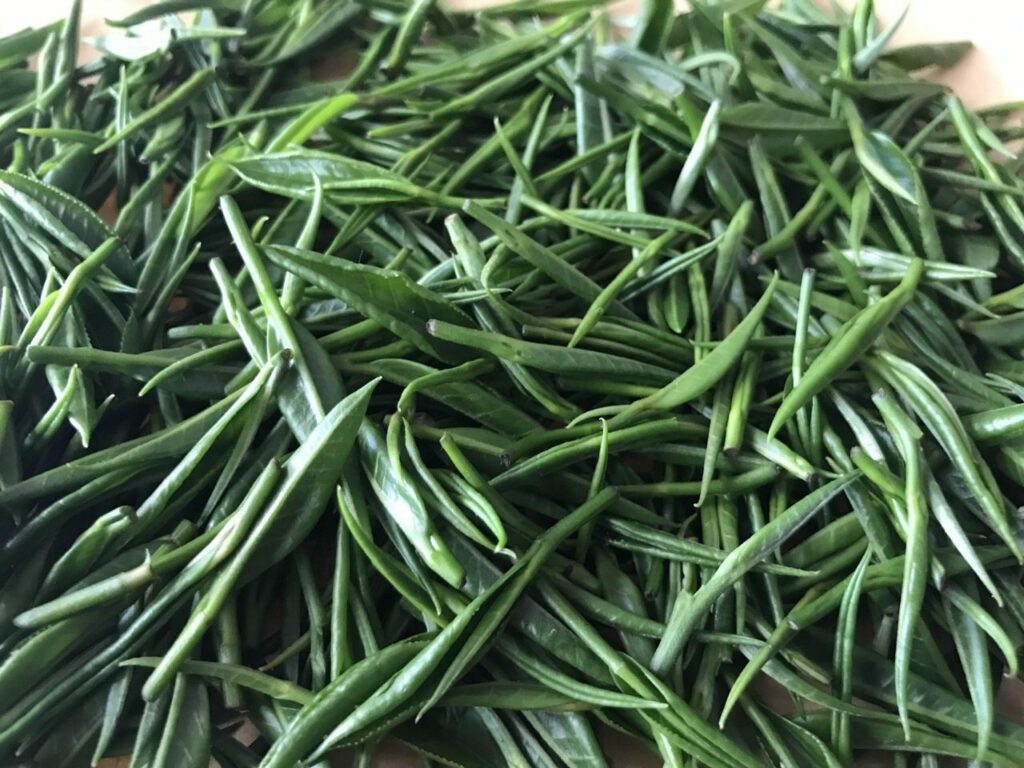
Tiên Sơn Needle Tea (formerly Ngọc Needle Tea)1 needle, or 1 needle + 1 unopened shoot · 6-No farming, rich body, clear liquor
| Plucking standard and cultivar | 1 needle, or 1 needle + 1 unopened shoot |
|---|---|
| Garden and site | A separate plot on the slopes of Tiên Sơn, the old canton covering La Bằng and Hoàng Nông, a tea area known since the late 19th century; 6-No farming; La Bằng site (ISO 22000) |
| Made by | Artisans Phạm Hoàng Giang and Ma Thị Tuyến |
| Dry leaf and cup | Young-rice aroma, rich body, clear liquor |
| Lab report | 78102025/KQKN (needle grade) |
| Typical buyer | Specialty tea shops, connoisseurs, premium gifting |
Tiến Vua Needle TeaSelected single needles, hand-roasted · five pickings a year, buttery body — made to order
| Plucking standard and cultivar | Selected single needles; hand-roasted |
|---|---|
| Garden and site | East Tam Đảo gardens, picked only five times a year, fed with ground soybean under 6-No farming |
| Made by | Cooperative artisans, in small batches |
| Dry leaf and cup | Needle-fine, uniform leaf; clear liquor; rich, buttery body |
| Lab report | 78102025/KQKN (needle grade) |
| Typical buyer | Top-tier gifting. One of the most expensive teas we make |
Oolong, White Peony, 6-No Clean Tea and Núi Cốc Black Tea sit outside this ladder. Mr. Phạm Hoàng Giang makes them on a separate line, as described above. Lab reports: Oolong 79102025/KQKN, 6-No Clean Tea 4982025/KQKN, Núi Cốc Black Tea 4782025/KQKN.
6-No is our own farming standard: no herbicide, no chemical pesticide, no chemical fertiliser, no growth stimulant, and in processing no flavouring and no preservative. It is not an organic certification.
*Lab reports are issued by the Thái Nguyên Centre for Agro-Forestry-Fishery Quality Technical Services and Training (VILAS 1098), except the NATEK report noted. In 2025 our team won Second Prize at the Golden Hands tea-processing contest held at La Bằng, Thái Nguyên; the contest’s second-prize tea was later sold at auction for VND 150 million (Báo Thái Nguyên, 14 December 2025).
Capacity beyond our own two sites
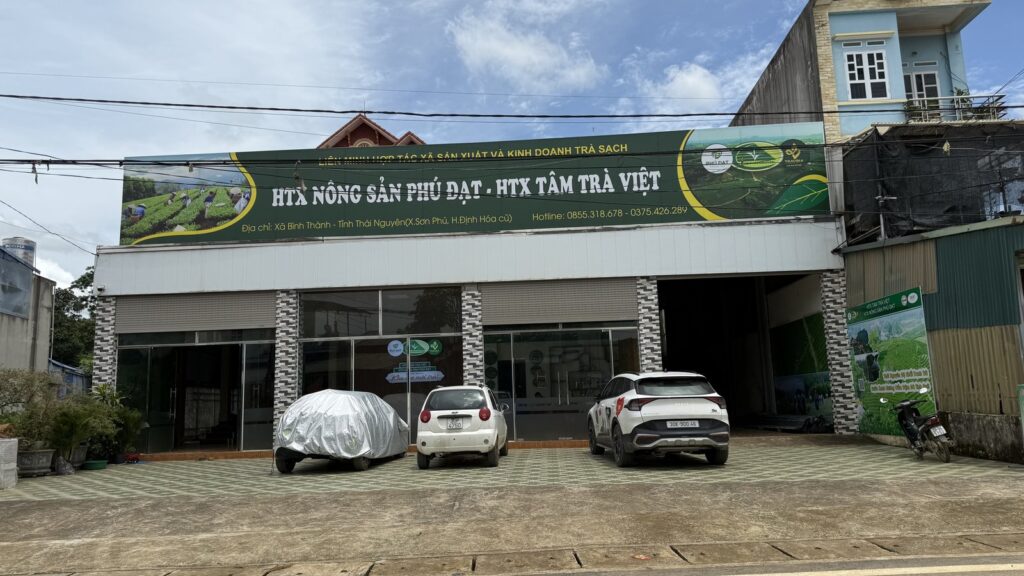
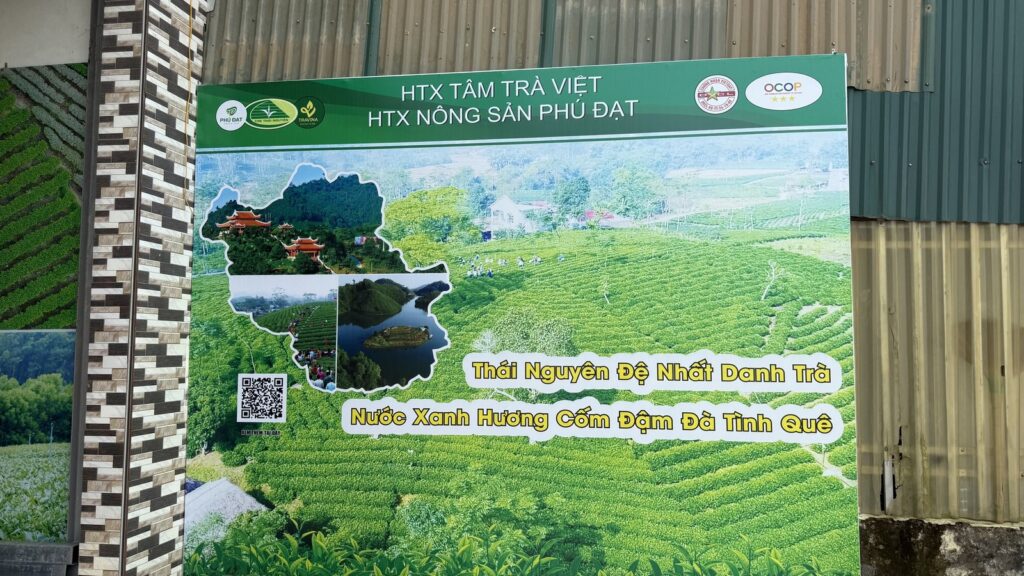
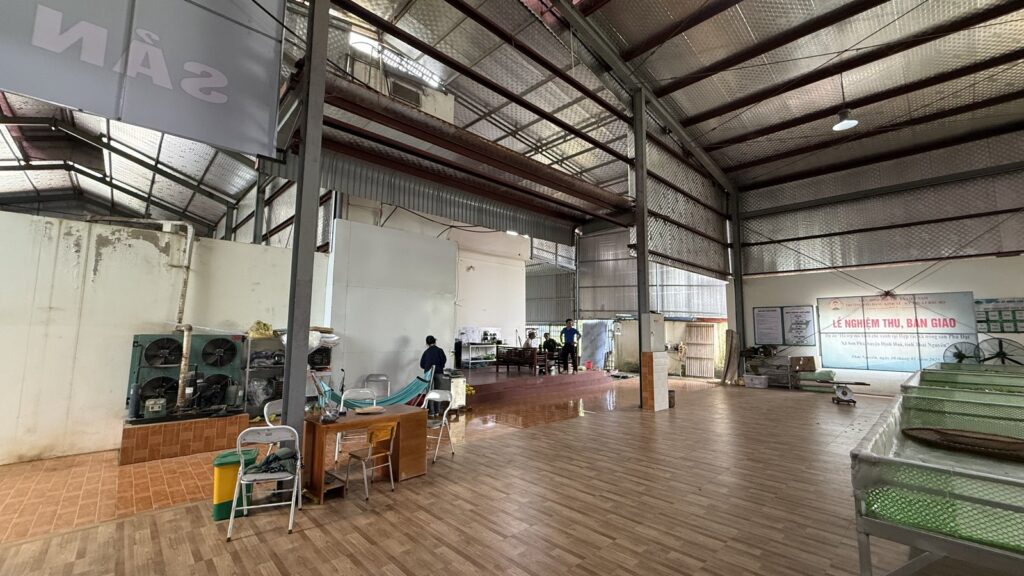
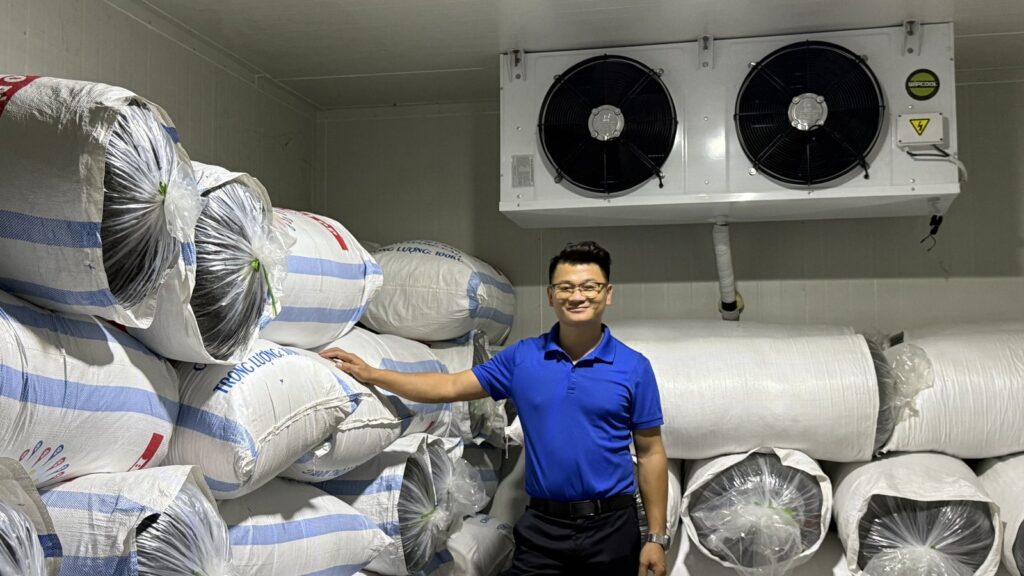
TRAVINA owns two sites: the head office and first workshop at Go Lon in Dai Tu, and the processing facility with the VietGAP growing area at Dong Khuan in La Bang. For larger orders we also work with partner cooperatives in Thai Nguyen, Phu Dat cooperative among them, whose workshops and cold store we use under a linkage agreement. We state this plainly: a buyer checking our capacity should know which building belongs to us and which belongs to a partner.