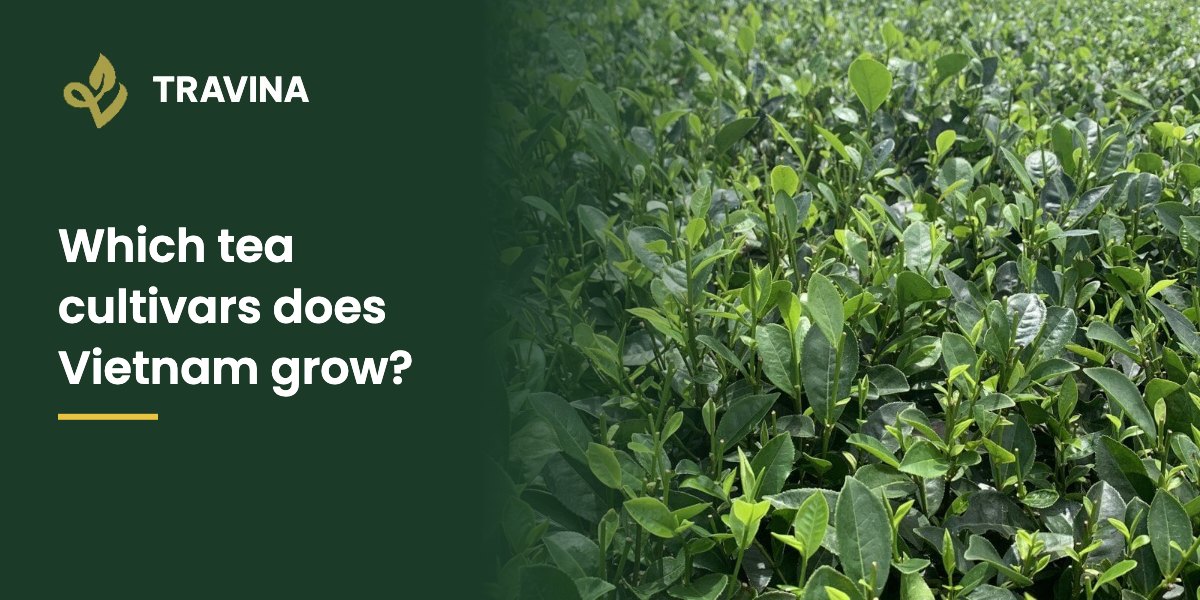
Trung du, Shan, LDP1, Kim Tuyen: which tea cultivars does Vietnam grow? More than 170, according to Vietnam’s agriculture ministry, but most gardens use a handful. Two old local groups form the base: the small-leaf midland (Trung du) tea of the northern hills and the large-leaf Shan tea of the mountains. On top of these come improved cultivars bred at Vietnam’s tea research institute, such as LDP1, LDP2 and PH8, and introduced cultivars such as Kim Tuyen and Phuc Van Tien. Improved cultivars now cover roughly half to 60% of the national tea area and more than 80% in Thai Nguyen. Here is a buyer’s guide to the names you will meet.
The main cultivar groups
| Group | Examples | Typical use | Notes |
|---|---|---|---|
| Old local: midland (Trung du) | Trung du green, Trung du purple | Traditional Thai Nguyen and northern green tea | Seed-grown, small leaves, lower yield |
| Old local: Shan | Native Shan of Ha Giang, Suoi Giang, Ta Xua; Shan Chat Tien | Green, white and black tea from the highlands | Large leaves, grows above about 500 m |
| Improved, bred in Vietnam | LDP1, LDP2, PH1, PH8, PH11, TRI5.0, LP18, PH12, PH14 | Green and black tea, often for export | Higher yields; selected at the Phu Ho institute |
| Introduced specialty cultivars | Kim Tuyen, Phuc Van Tien, Thuy Ngoc, Tu Quy | Specialty green tea and oolong | Introduced from abroad, several from Taiwan; widely planted in Lam Dong and Thai Nguyen |
The old local groups: midland and Shan
Midland tea is the classic tea of the northern hills: seed-grown bushes with small leaves, low yields and a traditional taste. A 2019 study compared its green and purple forms and found that purple midland tea had more anthocyanins, while green midland tea had more catechins. Shan tea is the large-leaf tea of the mountains, often grown as tall trees; Japanese and Vietnamese researchers found that all 135 northern samples they studied belonged to the large-leaf assamica variety, and that midland tea has breeding value comparable to Shan. Both groups are the genetic base from which Vietnam’s improved cultivars were bred.

Improved cultivars from the Phu Ho institute
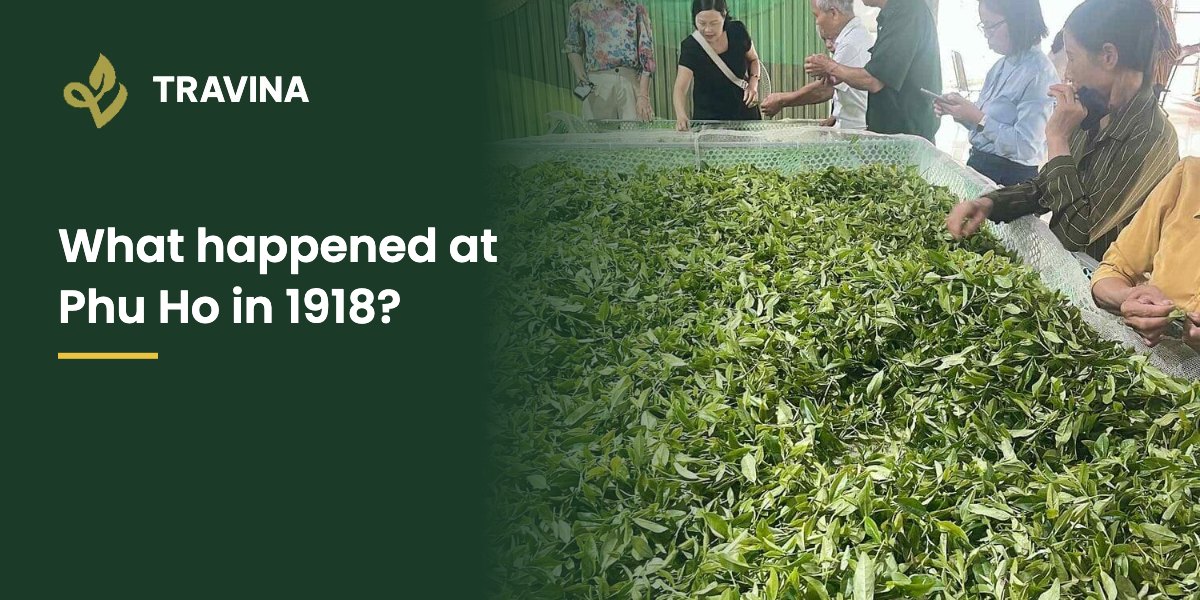
Vietnam’s tea breeding centre is the Northern Mountainous Agriculture and Forestry Science Institute (NOMAFSI) at Phu Ho, successor to a research station founded in 1918. It holds a gene bank of 406 accessions and, according to Vietnamese media, released 16 new cultivars between 2019 and 2024. Some of the most widely planted:
- LDP2: selected from a 1980 cross between Da Bach Tra (of Chinese origin) and PH1 (Assam type); planted on more than 10,000 hectares.
- LDP1: an improved cultivar from the same institute, widely used for replanting in Thai Nguyen.
- PH8: recognised in 2015, on more than 4,600 hectares by around 2022.
- TRI777 and TRI5.0: TRI777 is a Shan-group tea from Moc Chau that went to Sri Lanka and returned in 1977; TRI5.0 was developed from it by gamma irradiation.
- Recent releases: between 2018 and 2022, HBS, TRI5.0, PH276, LP18, CNS141 and CNS183 were officially recognised, and PH21, VN15, LCT1, TC4, PH12 and PH14 released for production.
Which cultivar where: the institute’s advice
| Situation | Recommended cultivars |
|---|---|
| Below 500 m, for black tea and export green tea | LDP1, LDP2, PH1, PH8, PH11 |
| Specialty green tea | Kim Tuyen, Phuc Van Tien, Huong Bac Son, VN15, LCT1 |
| Above 500 m | Native Shan, Shan Chat Tien, LP18, PH8, PH12, PH14 |
Source: NOMAFSI recommendations reported by Báo Nông nghiệp, July 2023.
Introduced cultivars: Kim Tuyen and others
Several cultivars now common in Vietnam were introduced from abroad. In Lam Dong, mostly foreign-invested farms planted oolong cultivars such as Kim Tuyen, Tu Quy and Ngoc Thuy, with more than 1,500 hectares by 2006 according to Tuổi Trẻ. In Thai Nguyen, Nhân Dân reported in 2018 that the main replanting cultivars included LDP1, Phuc Van Tien, Kim Tuyen, Thuy Ngoc and TRI777. These give aromatic green teas and are used for oolong.
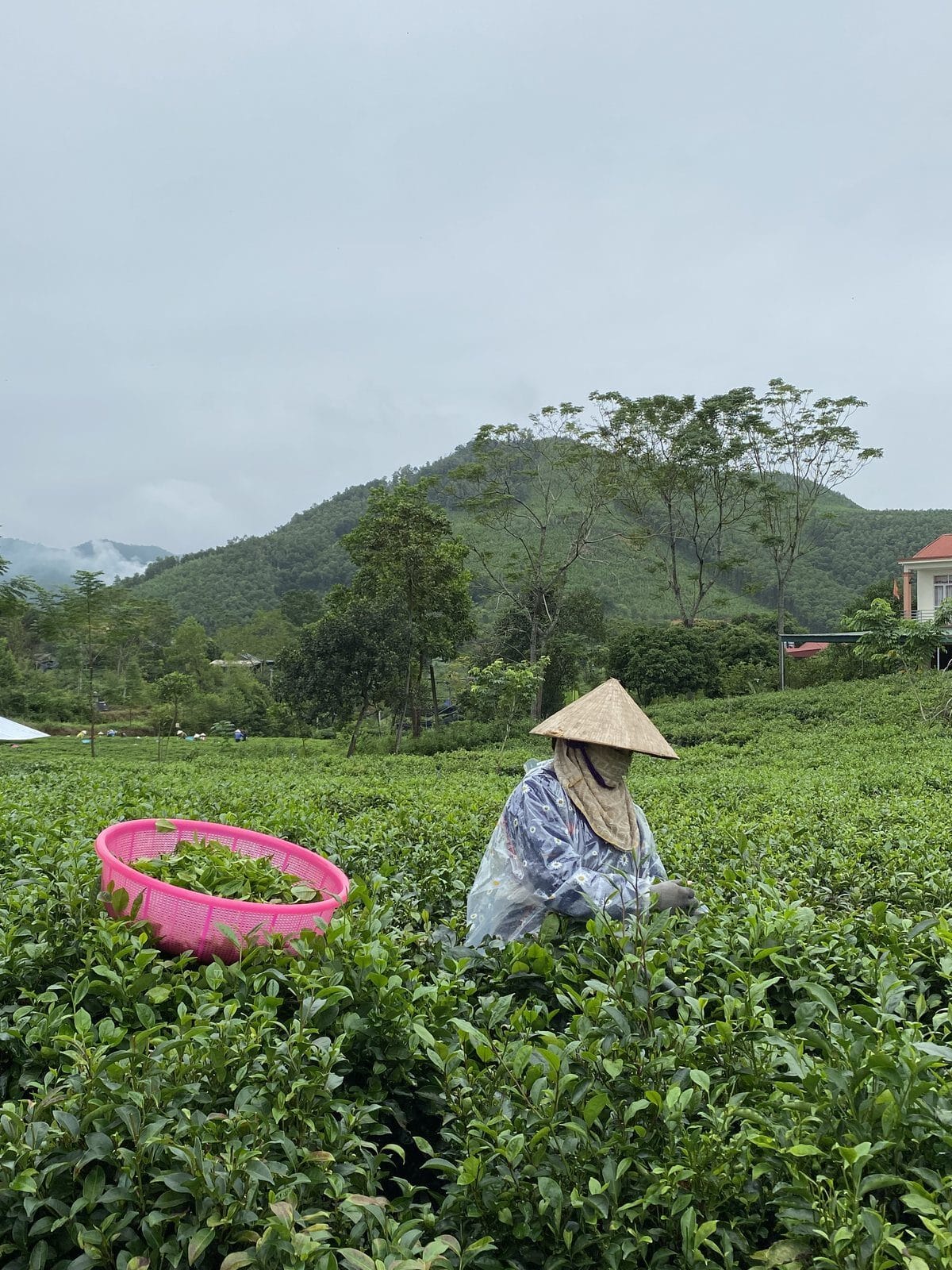
Why cultivar matters to a buyer
- Taste. Midland tea gives the traditional, brisk Thai Nguyen cup; Kim Tuyen-type cultivars give a more floral, milky aroma.
- Consistency. Clonal cultivars give more uniform leaf than seed-grown bushes, which helps when you need the same taste lot after lot.
- Price. High-yield cultivars support lower prices; old midland and Shan trees yield less and cost more.
- Labelling. If a product is sold on a cultivar name, ask for the garden and cultivar on the documents.
Our members’ gardens in Dai Tu and La Bang combine older midland bushes with improved cultivars. We can tell you which applies to each lot we quote. Read more about the institute in what happened at Phu Ho in 1918 and about our gardens in Dai Tu and La Bang.
Frequently asked questions
How many tea cultivars does Vietnam have?
More than 170 according to the agriculture ministry, but a small number account for most of the planted area.
What is Trung du tea?
The old small-leaf, seed-grown tea of Vietnam’s northern midlands, the traditional base of Thai Nguyen green tea.
What is LDP1?
An improved cultivar bred at the Phu Ho institute and widely used for replanting in Thai Nguyen. LDP2, from the same series, comes from a cross of Da Bach Tra and PH1.
Is Kim Tuyen a Vietnamese cultivar?
It was introduced from Taiwan and is now grown in Vietnam, mainly for aromatic green tea and oolong.
What share of Vietnam’s tea uses improved cultivars?
Reports range from about 54% (2026) to over 60% (2024) nationally, and more than 80% in Thai Nguyen.
Sources
- Báo Nông nghiệp, NOMAFSI cultivar recommendations, 26 July 2023: nongnghiepmoitruong.vn
- Báo Nông nghiệp (English edition), new tea varieties, 26 July 2023: van.nongnghiepmoitruong.vn
- VnEconomy, tea industry forum (16 new cultivars 2019–2024), 6 November 2024: vneconomy.vn
- Vietnam News Agency, more than 170 tea cultivars, 29 August 2022: vnanet.vn
- Báo Pháp Luật, the LDP2 cultivar, 5 February 2011: baophapluat.vn
- Vietnam Journal of Agricultural Science and Technology (VAAS), TRI777, TRI5.0 and PH10: tapchi.vaas.vn
- Nhân Dân, new cultivars in Thai Nguyen, 23 June 2018: nhandan.vn
- Tuổi Trẻ, oolong in Lam Dong, 3 November 2006: tuoitre.vn
- Yoshida K. et al. (2006): agris.fao.org
- Nguyen T.L. et al. (2019), green and purple Trung du tea, International Food Research Journal: agris.fao.org
- Báo Chính phủ (via Thương hiệu & Công luận), share of improved cultivars, 28 February 2026: thuonghieucongluan.com.vn
Want a specific cultivar or taste profile? Contact TRAVINA and we will match lots to your requirements.