Thai Nguyen tea has a reputation strong enough that plenty of tea sold outside the province, and outside Vietnam, borrows the name without much resemblance to the real thing. For a buyer sourcing from overseas, that is a harder problem than it is for a shopper in Hanoi: you cannot smell or taste a sample before the container ships, so you are relying on what the leaf looks like, what paperwork comes with it, and whether the seller is willing to show you where it was actually grown.
What genuine leaf looks like, dry
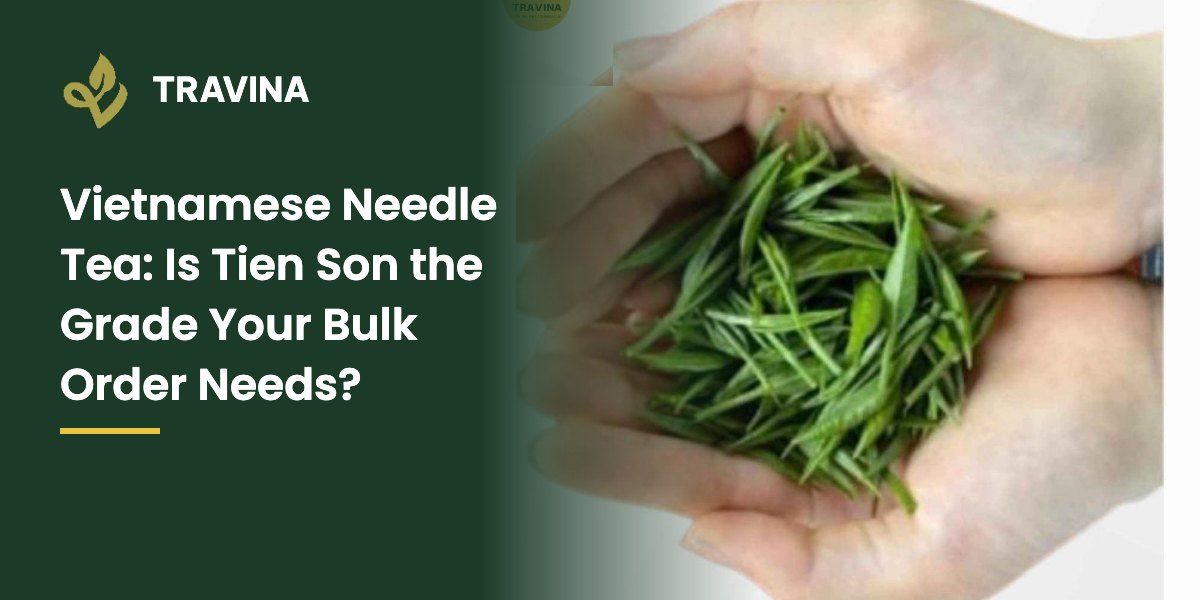
Hand-processed Thai Nguyen green tea is twisted tight and even — each piece close in size to the next, not a mix of large and broken fragments. Colour should be a blue-black sheen, not a flat dull brown, which usually signals leaf that was scorched, over-dried, or picked too coarse. Snap a piece between your fingers: it should be crisp and dry, not soft or slightly rubbery, which suggests moisture was not properly driven out during firing and the tea will not keep well.
What it should smell and taste like
Dry, the leaf carries a clean, slightly grassy aroma close to young rice, not a scorched or musty smell. Brewed, the liquor should run pale green-gold and clear, never cloudy or dark brown. On the tongue: a short, clean bitterness up front, then a sweetness that builds after you swallow rather than fading with it — the trait growers call “hau ngot,” returning sweetness. A tea that tastes flat or only bitter, with nothing coming back afterward, was very likely picked too coarse or processed in a hurry.
What paperwork should follow the tea
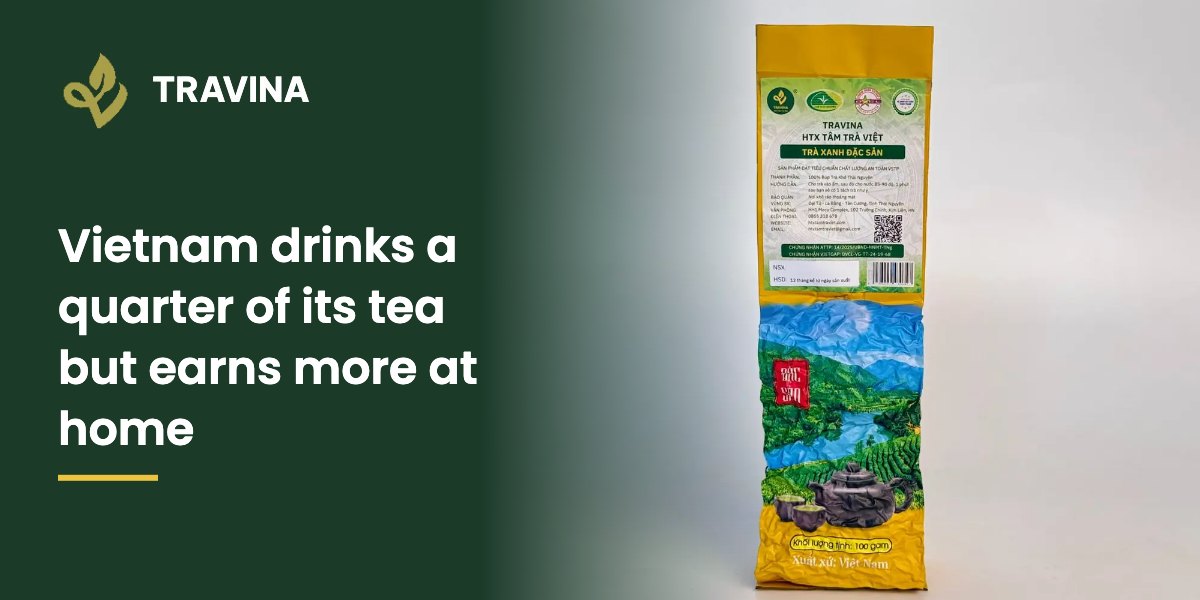
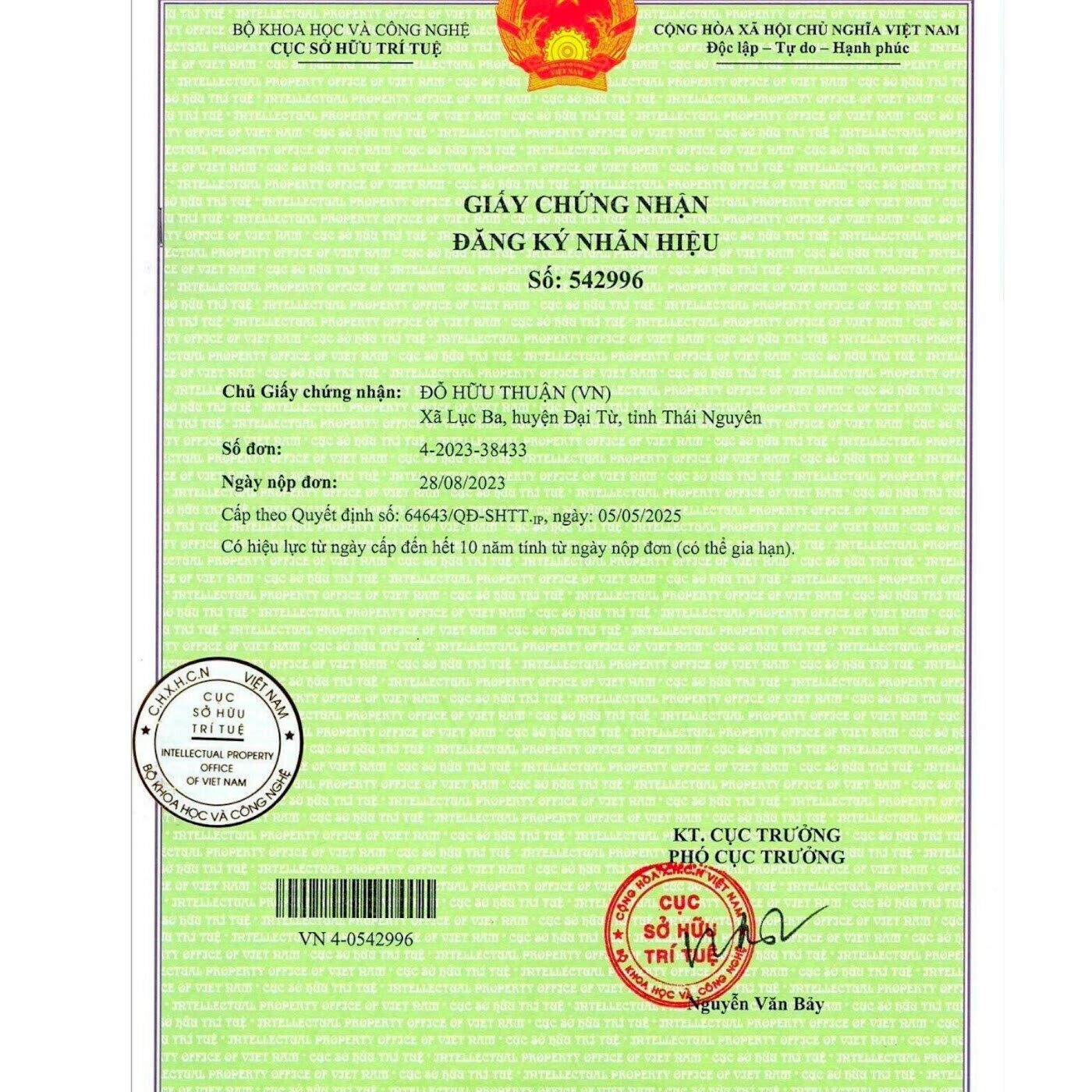
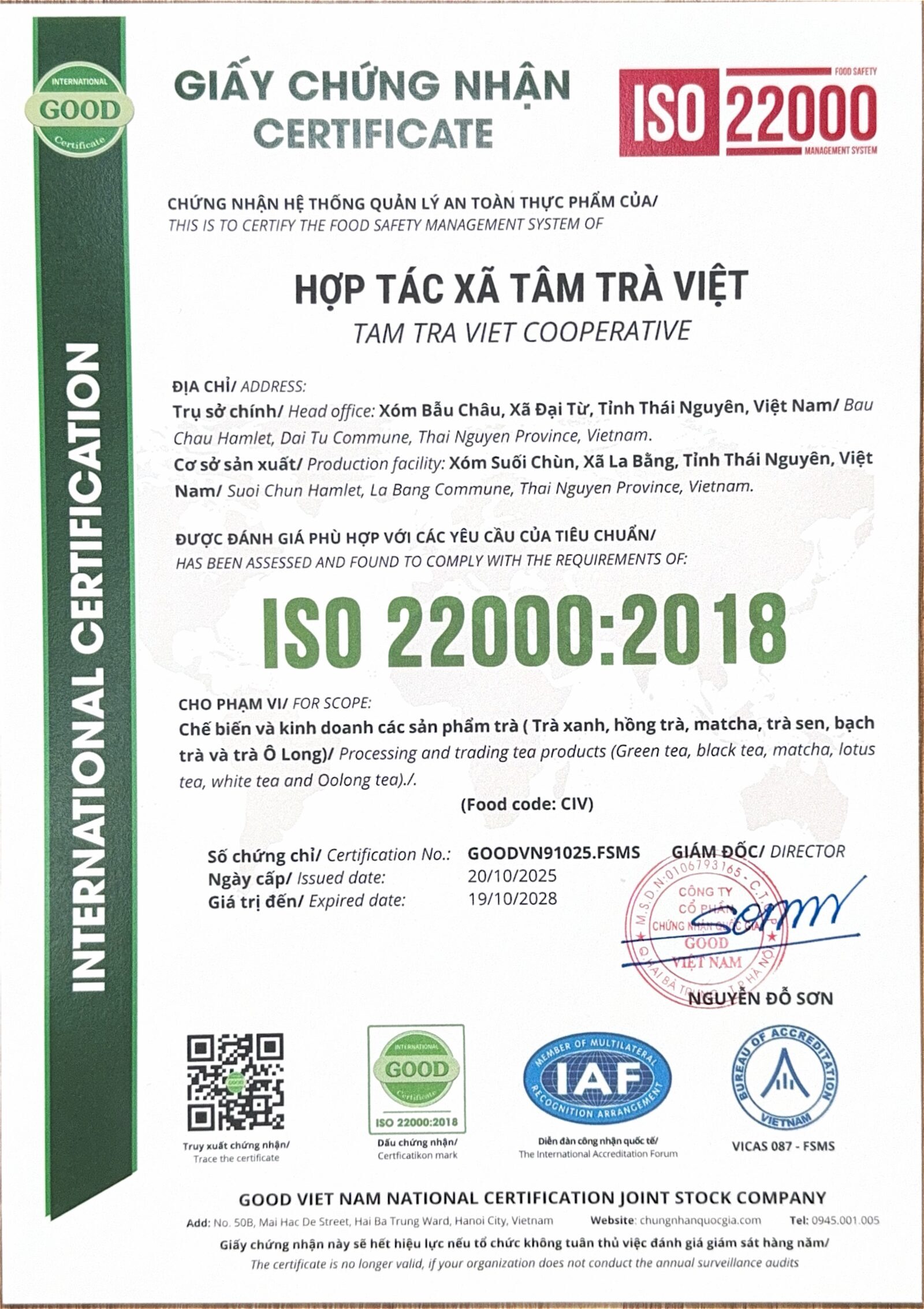
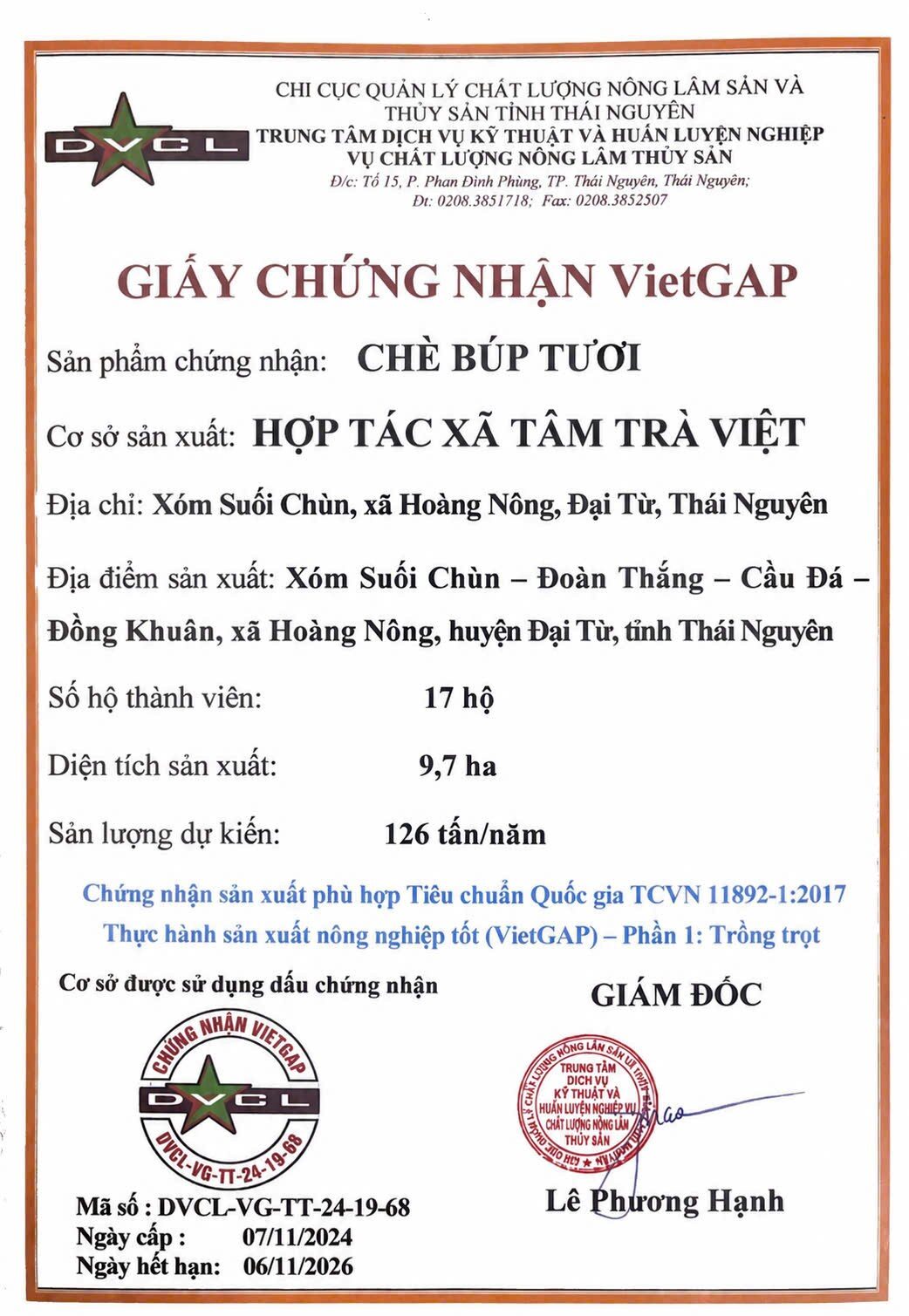
Genuine growers in Vietnam are increasingly certified rather than simply claiming a reputation. Ask for a VietGAP certificate number and check that it is current; ask whether the facility that processes the leaf holds a food-safety or ISO certification, and whether the growing area itself has a registered code you can look up. TRAVINA holds VietGAP (DVCL-VG-TT-24-19-68), ISO 22000:2018 for our La Bang facility (GOODVN91025.FSMS), and food safety licence 14/2025/UBND-NNMT-TNg; the certificate numbers, the issuing bodies, and how to verify each of them yourself are set out in full on our certificates page. A supplier who cannot produce a certificate number, only a general claim of quality, is a reason to ask more questions.
Ask where it was actually grown
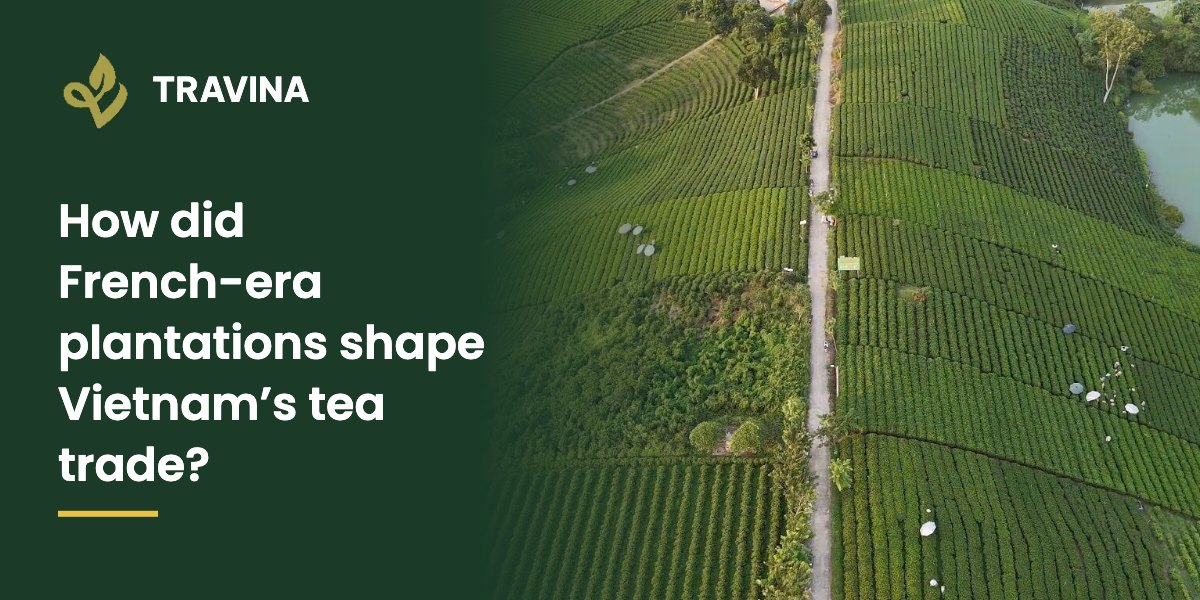
“Thai Nguyen tea” covers a wide province with real differences between districts. Ask specifically which commune or district the leaf came from, and be wary of an answer that is vague or changes between conversations. TRAVINA’s tea comes from cooperative gardens in Dai Tu and La Bang; we say so on every product page rather than leaving the growing area unstated, and we can trace a given batch back to the households that picked it. A supplier that will not name a specific growing area, or that names one this year and a different one next year, is worth treating with caution.

A buyer’s checklist
Before placing an order: ask for a current VietGAP or equivalent certificate number, not just a claim; ask which specific district or commune grew the leaf; ask for a sample before committing to volume, and check the leaf and liquor against the signs above; and ask whether the supplier can trace a shipment back to a specific harvest and processing batch. None of this is unusual to ask of a serious supplier — a cooperative with nothing to hide will usually answer faster, not slower, when asked.