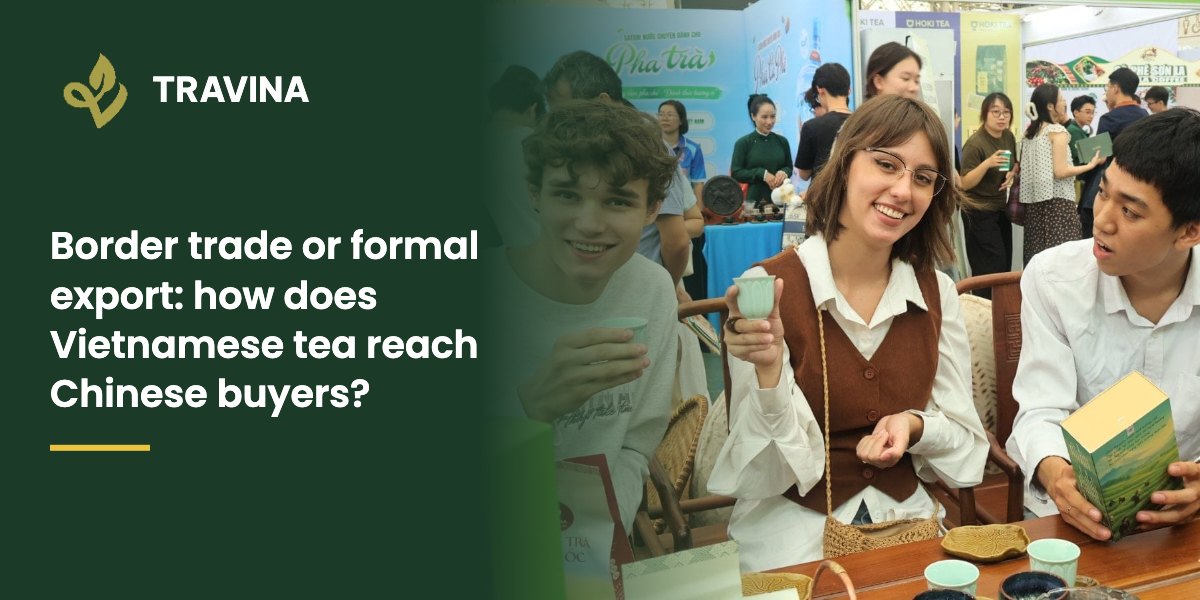
Vietnamese tea reaches China by two roads. In border-resident trade (边民互市, tiểu ngạch), Chinese border residents buy goods at designated trade points and each person has a duty-free allowance of 8,000 yuan a day, intended for daily-use goods. In formal trade (一般贸易, chính ngạch), a Chinese importer clears the tea through customs with a GACC-registered manufacturer, a compliant Chinese label, invoices and a customs declaration. The border road suits small, loose volumes moving close to the frontier. Any brand, retail chain or importer that needs traceable, sellable stock has to use formal export, and both governments are moving trade in that direction.
| Aspect | Border-resident trade (边民互市 / tiểu ngạch) | Formal export (一般贸易 / chính ngạch) |
|---|---|---|
| Who buys on the Chinese side | Registered border residents, often grouped in cooperatives or mutual-aid groups | A Chinese importer filed with GACC |
| Duty treatment | Duty and import taxes waived up to 8,000 yuan per resident per day, for daily-use goods | Normal duties and taxes; a Form E certificate of origin supports ASEAN–China preferential rates |
| Factory registration | Not the basis of the trade | Overseas manufacturer registered with GACC (Decree 280, from 1 June 2026) |
| Chinese label | Goods are bought loose or in local packs at the border | Chinese label required on prepackaged food (Food Safety Law Art. 97) |
| Payment | Cash is allowed for border-resident trade under Vietnam’s Decree 122/2024 | Bank payment against contract and invoice |
| Traceability | Decree 122/2024 requires goods to meet standards, quality and traceability rules | Batch records kept by the importer (Food Safety Law Art. 98) |
| Fits | Small lots of loose leaf for nearby markets | Brands, supermarkets, online stores, wholesalers inland |
How much Vietnamese tea goes to China, and at what price
Chinese customs data reported by Vietnam’s Nông nghiệp và Môi trường newspaper show that in the first eight months of 2024 China imported 35,060 tonnes of tea worth 100.83 million USD. Vietnam supplied 8,430 tonnes, 24.1% of the volume and more than six times its volume a year earlier, which made it the largest supplier by volume. By value, Vietnam’s 12.24 million USD was 12.1% of the total, in second place.
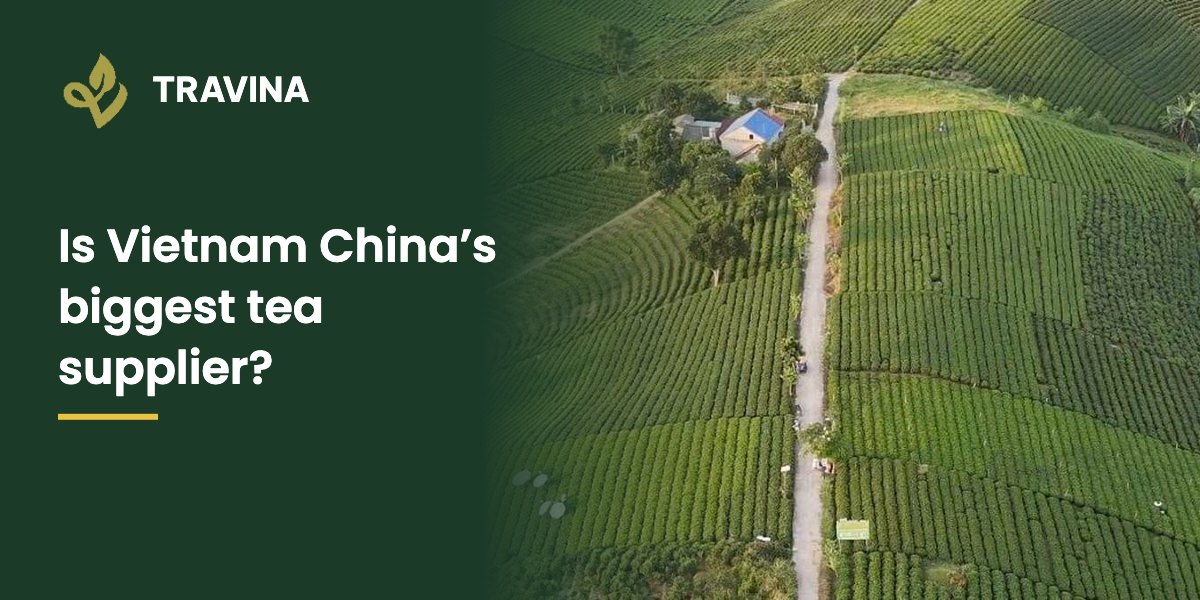
Divide value by volume and Vietnamese tea entered China at about 1.45 USD per kg, against an average of about 2.88 USD per kg for all of China’s tea imports in that period. Our article Is Vietnam China’s biggest tea supplier? looks at what that price gap means. The gap suggests that Vietnamese tea is largely sold to China as lower-priced raw material rather than as a branded product.
The border gates tea passes through
Three established crossing pairs serve northern Vietnam and southern China. Móng Cái in Quảng Ninh faces Dongxing in Guangxi. Hữu Nghị in Lạng Sơn faces Youyiguan near Pingxiang in Guangxi, with the Tân Thanh–Pò Chài freight lane nearby. Lào Cai faces Hekou in Yunnan. Thai Nguyen tea can reach any of them by road.
Vietnam’s Decision 1199/QĐ-TTg of 14 October 2023 plans 26 border gates on the Vietnam–China land border by 2030: 14 international and 12 bilateral. It also plans new rail links, including a Móng Cái–Dongxing rail pair. On the Chinese side, Dongxing has built a processing zone for goods imported through border-resident trade. In 2024 the People’s Daily weekly Minsheng Zhoukan counted 85 such “landing processing” firms there, mainly handling seafood, fruit and spices.
How border-resident trade works on the Chinese side
Border-resident trade is a Chinese tax regime for people who live along the frontier. The People’s Daily reported in November 2025 that “each border resident has a daily duty-free allowance of 8,000 yuan”. In Pingxiang, about 24,000 residents belong to village-level border trade cooperatives. Since its online platform launched in 2023, Pingxiang has handled more than 600,000 cross-border orders worth over 18 billion yuan, with Vietnamese durian and dragon fruit among the imports named.
Two limits matter for tea. First, a 2010 notice from China’s Ministry of Finance, GACC and State Taxation Administration (Cai Guan Shui [2010] No. 18) limits the tax preference to daily-use goods and sets a list of goods that do not qualify. Second, the allowance is built around border residents’ own consumption. Goods that re-enter the domestic market for resale are treated differently: Inner Mongolia’s rules for its trade zones, for example, tax goods sold on a second time. That is why border-resident trade suits small parcels of loose leaf sold near the border, and does not suit a brand building national distribution.
Beijing has also been changing the regime. In December 2019 the Ministry of Commerce said it would draw up a negative list of goods for border-resident imports and adjust the list of goods excluded from duty-free treatment over time. Border areas in Guangxi, Yunnan and Inner Mongolia now run the trade through cooperatives, digital filing and approved processing firms, and details differ by region.
What changed on the Vietnamese side
Vietnam’s Decree 122/2024/ND-CP, signed on 4 October 2024 and in force since 1 December 2024, amends Decree 14/2018 on border trade. Goods traded across the border by traders and by border residents “must fully meet standards, quality and traceability rules” and the conditions of the importing country. Cash payment is allowed for border-resident trade. From 1 January 2029, border residents must be present in person to complete the procedures. From 1 January 2030, goods must clear at listed gates and crossings that have completed opening procedures and have bilateral agreement.
The direction is clear. In 2023, Vietnam’s Ministry of Industry and Trade, consulting on this amendment, described its aim as moving trade “from small-scale to formal import and export”. A 2023 report published by VCCI’s WTO Centre put the share of Vietnam’s farm export volume to China going through small-scale channels at about 70%. Back in 2022, a Ministry of Industry and Trade official told VietnamFinance that produce must meet food safety, plant quarantine and traceability standards “whatever the transport mode”.
Why brands and large buyers need formal export
A supermarket chain, an online store or a tea brand needs stock with a legal importer and a clean paper trail. That requires the formal route.
- Factory registration. Under GACC Decree 280, in force since 1 June 2026, the overseas manufacturer must be registered, and the registration number appears on the packaging and in the customs declaration under licence code 519. Our guide to GACC Decree 280 and Vietnamese tea explains the steps.
- Exporter and importer filing. Article 96 of China’s Food Safety Law requires overseas exporters or agents, and importers, to file with the inspection authority.
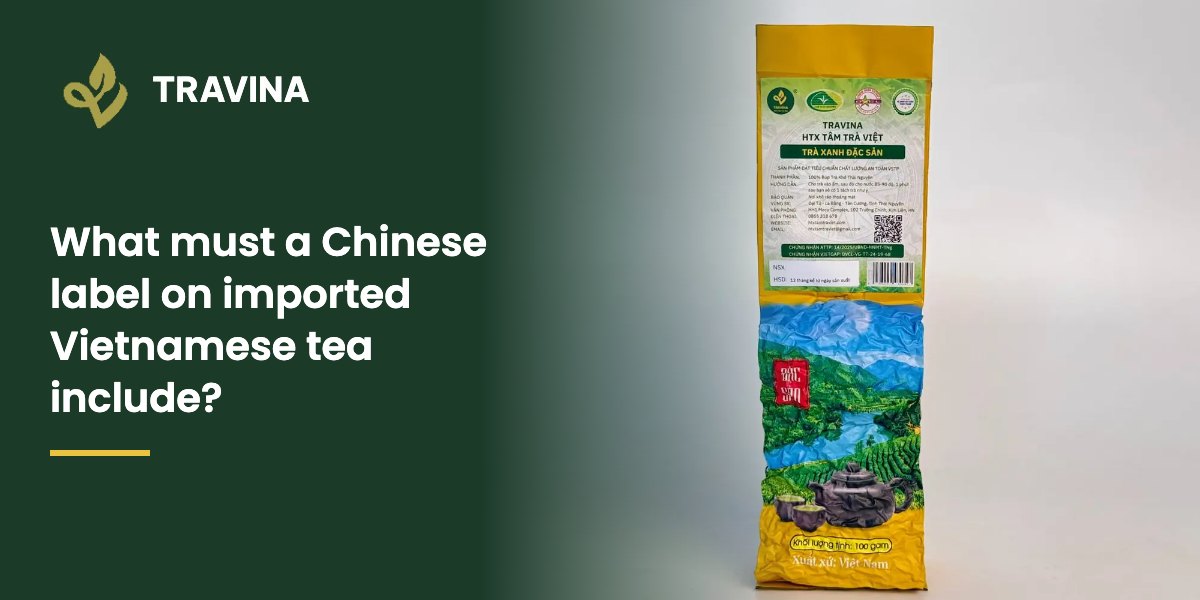
- Chinese label. Imported prepackaged food without a compliant Chinese label may not be imported. See What must a Chinese label on imported Vietnamese tea include?
- Records and inspection. Importers keep records of name, quantity, production date, batch number, shelf life, exporter and buyer (Article 98), and customs samples shipments for inspection.
- Origin and invoices. A Form E certificate of origin is the document used to claim the special preferential rate under the ASEAN–China Free Trade Agreement. Contract, commercial invoice, packing list and bank payment complete the file.
Every one of these steps leaves a record, and a record is what a buyer can show a regulator, a platform or a customer when a question comes up.
Costs and risks of each route
Border-resident trade looks cheaper because the paperwork is lighter and the duty allowance removes import taxes. The costs show up elsewhere. The seller usually deals with border traders, not the end buyer, so it has little say over price. Volumes are capped by daily allowances, and the tea loses its origin once it is repacked. Small-scale trade depends on minor gates and crossings, which VietnamFinance reported in 2022 are usually the first to close during disease outbreaks and suffer congestion each year. Cash settlement is allowed, which gives less protection than a contract with bank payment.
Formal export costs more up front. The manufacturer needs registration, the importer needs filing, the label has to be printed and checked, and inspection, customs broker and freight fees apply. In return, the seller gets a contract, bank payment and a product that can carry its own name on Chinese shelves. For a producer that wants Chinese buyers to know where its tea comes from, formal export is the route that builds value over time.
How TRAVINA works with Chinese buyers
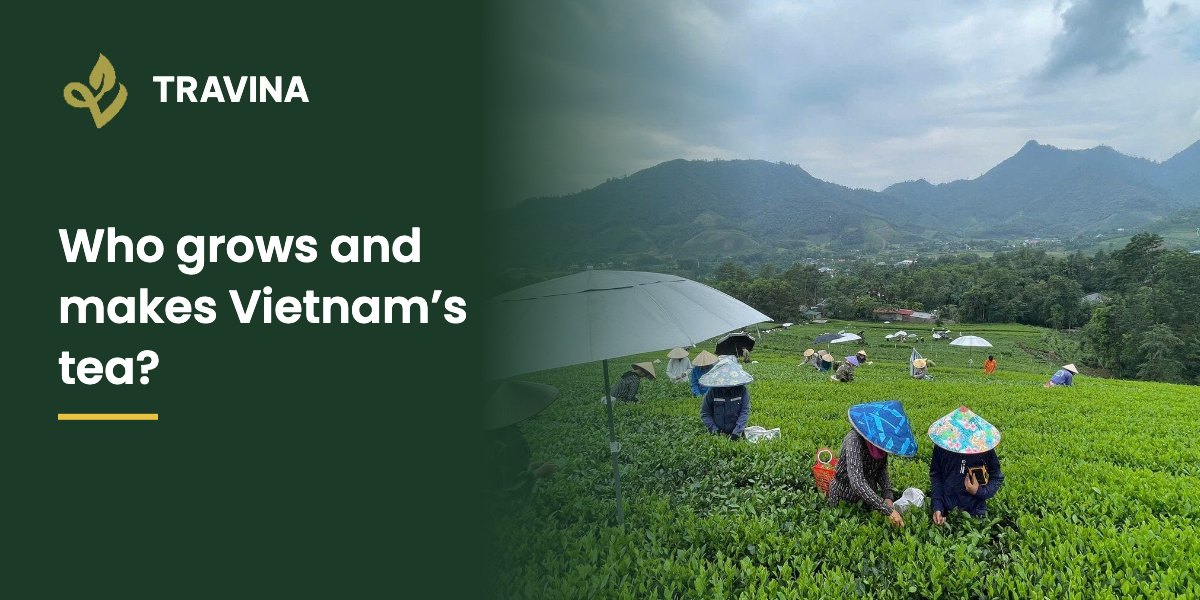
TRAVINA – Tam Tra Viet Cooperative grows and processes tea in Dai Tu and La Bang, Thai Nguyen, Vietnam: 90 member households, 40.5 ha and about 120 tonnes of dry tea a year. The La Bang processing facility is certified to ISO 22000:2018; see our certificates and licences. TRAVINA is not yet registered with GACC under its own name, so for general-trade shipments we work with importers and registered partners who handle the declaration.
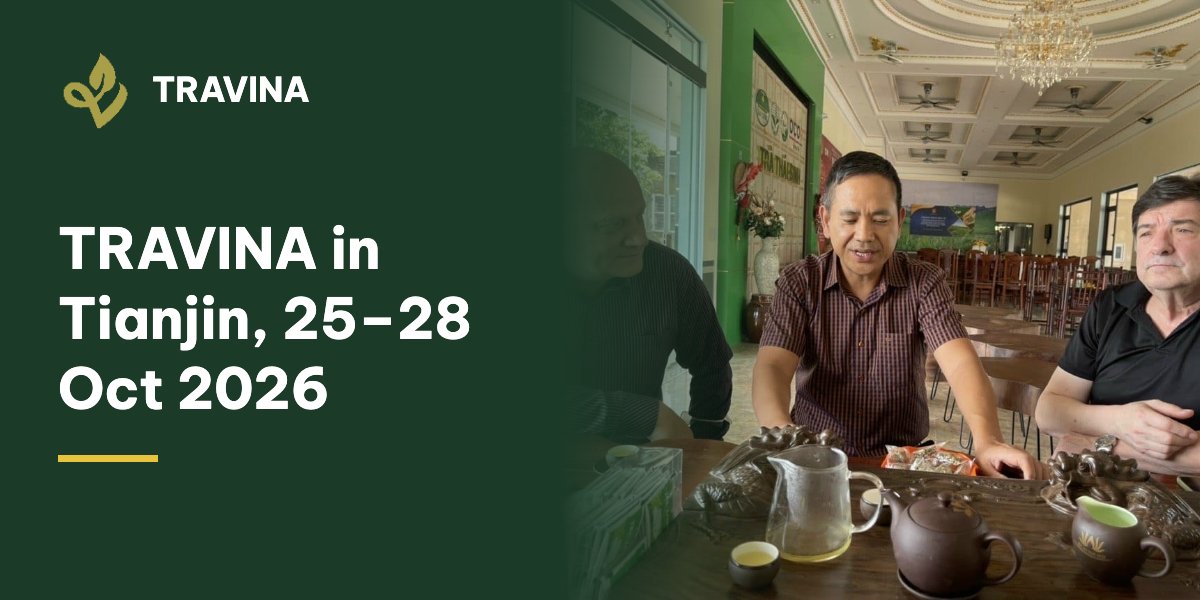
We quote EXW in USD and print no minimum order. Orders under 100 kg are dispatched within 24 hours, from 100 kg within 2 days, and from 1 tonne by agreement. For bulk and private-label supply, see bulk tea export. Our founder will be at the Tianjin exhibition from 25 to 28 October 2026; details are on TRAVINA in Tianjin, October 2026.
Frequently asked questions
What is the duty-free allowance in China’s border-resident trade?
Each border resident has a duty-free allowance of 8,000 yuan per day, as reported by the People’s Daily in November 2025. The tax preference covers daily-use goods; regional rules, such as Inner Mongolia’s, tax goods that are resold on the domestic market.
Can a Chinese tea brand buy Vietnamese tea through border-resident trade?
Border-resident trade is designed for residents’ own daily-use goods. A brand selling packed tea nationwide needs a legal importer, a Chinese label and a registered manufacturer, which are features of formal trade.
Which border gates are used for Vietnam–China trade in the north?
The main pairs include Móng Cái–Dongxing, Hữu Nghị–Youyiguan (Pingxiang) and Lào Cai–Hekou. Vietnam plans 26 gates on this border by 2030.
Has Vietnam changed its own border trade rules?
Yes. Decree 122/2024/ND-CP, in force from 1 December 2024, requires goods traded across the border to meet standards, quality and traceability rules. Further steps apply from 2029 and 2030.
Does formal export mean higher landed cost?
Usually there are more fees: registration, label printing, inspection, broker and freight. In exchange, the buyer gets a contract, bank payment, traceable stock and a product that can be sold under its own name.
Sources
- Nông nghiệp và Môi trường, Việt Nam là nhà cung cấp chè lớn nhất cho Trung Quốc về sản lượng (Chinese customs data, Jan–Aug 2024), 1 November 2024: nongnghiepmoitruong.vn
- People’s Daily, 边民互市热 口岸经济活 (Pingxiang, Mohan, Erenhot), 17 November 2025: peopleapp.com
- Ministry of Finance, GACC and State Taxation Administration, Notice on the list of goods not eligible for duty exemption in border-resident trade (Cai Guan Shui [2010] No. 18), 16 April 2010: fgk.chinatax.gov.cn
- Inner Mongolia Autonomous Region People’s Government, Measures for the administration of border-resident trade zones, 27 October 2018: nmg.gov.cn
- The Paper, Ministry of Commerce spokesperson on border trade measures, 4 December 2019: thepaper.cn
- Minsheng Zhoukan (People’s Daily), report on Dongxing border trade and processing, 10 June 2024: paper.people.com.cn
- Tạp chí Công Thương, Đến năm 2030, tuyến biên giới Việt Nam – Trung Quốc có 26 cửa khẩu (Decision 1199/QĐ-TTg), 20 October 2023: tapchicongthuong.vn
- Caselaw.vn, Decree 122/2024/ND-CP amending Decree 14/2018/ND-CP on border trade, 4 October 2024: caselaw.vn
- Thời báo Tài chính Việt Nam, Ưu tiên xuất nhập khẩu chính ngạch (draft amendment to Decree 14/2018), 23 March 2023: thoibaotaichinhvietnam.vn
- VCCI WTO and Integration Centre, Lợi ích đường dài khi xuất khẩu chính ngạch sang Trung Quốc, 15 May 2023: trungtamwto.vn
- State Council Gazette, GACC Decree No. 280 on registration of overseas manufacturers of imported food, 14 October 2025: gov.cn
- HKSAR Trade and Industry Department, GACC Announcement No. 27 of 2026 implementing Decree 280, 18 March 2026: tid.gov.hk
- Pingdingshan Municipal People’s Government (official text), Food Safety Law of the People’s Republic of China, amended 29 April 2021: pds.gov.cn
- VietnamFinance, Xuất khẩu tiểu ngạch khó tránh ùn tắc vì phụ thuộc cửa khẩu phụ và lối mở, 4 April 2022: vietnamfinance.vn
- Tạp chí Công Thương, Vướng mắc liên quan tới C/O mẫu E mới được tháo gỡ, 26 August 2019: tapchicongthuong.vn
Buying Vietnamese tea for China through formal channels? Tell us the grade, volume and import route you plan, and we will prepare samples, an EXW quote and the label details. Contact TRAVINA