Is Vietnam China’s biggest tea supplier? By volume, yes: in 2024 Chinese customs counted more tea arriving from Vietnam than from any other country. By value, no. Vietnamese tea entered China at roughly half the average import price, so Sri Lanka and India still earned more. This article sets out what the customs numbers from both sides actually say, why the gap exists, and what it means for a Chinese buyer looking at Vietnamese tea in 2026.
The short answer in one table
| Question | Answer | Basis |
|---|---|---|
| Largest source of China’s tea imports by volume, 2024? | Vietnam, about one quarter of all imported tonnes | China Customs data, reported by Vietnamese and Chinese trade media |
| Largest source by value, 2024? | No. Sri Lanka led; Vietnam ranked second or third depending on the data set | Same sources (see the note on two data sets below) |
| Rank by value in 2025? | Third, after Sri Lanka and India | China Chamber of Commerce for Import and Export of Foodstuffs, Native Produce and Animal By-products (CCCFNA), March 2026 |
| Typical price of Vietnamese tea into China, 2024 | About 1.4 USD per kg | Vietnam Customs: 1,420 USD per tonne for shipments to China |
What the Chinese customs numbers show for 2024
The clearest early signal came in the first eight months of 2024. China imported 35,060 tonnes of tea (HS 0902) worth 100.83 million USD. Of that, 8,430 tonnes came from Vietnam, more than six times the same period a year earlier. That put Vietnam first by volume with a 24.1% share, but only second by value with 12.24 million USD, or 12.1%, far behind Sri Lanka at 39.6% of the value.
For the full year, two sets of figures circulate in Chinese-language media, and they do not match:
- Tea Weekly (茶周刊), citing the General Administration of Customs: China imported 54,200 tonnes of tea in 2024 (up 38.5%), worth about 158 million USD. From Vietnam: 12,900 tonnes and 18.28 million USD, first by volume and third by value.
- Abeedata (农小蜂) and The Paper (澎湃新闻), citing China Customs: total imports of 65,000 tonnes and 186 million USD. From Vietnam: 16,000 tonnes and 23 million USD, a 24.67% share of volume and 12.49% of value.
The difference is most likely a question of which tariff lines were counted. The first set fits better with the 2025 figures published by CCCFNA and with Vietnam’s own export statistics (13,300 tonnes shipped to China in 2024). Either way, the picture is the same: Vietnam supplied roughly a quarter of China’s imported tea by weight and roughly an eighth of its value.
2025: steady volume, third place by value
In 2025 China imported 60,800 tonnes of tea, up 12.6%, worth about 180 million USD, up 17.2%. According to CCCFNA, Vietnam ranked third by import value, behind Sri Lanka and India and ahead of Kenya and Taiwan. The top ten origins together accounted for 92.6% of China’s tea import value.
Vietnam’s own customs data tell a similar story from the other side of the border. Shipments to China were worth 7.3% more in 2025 than in 2024, and China remained Vietnam’s third-largest tea market, after Pakistan and Taiwan. Over the first eight months of 2026, however, Vietnamese tea exports to China fell 21% in volume and 9.3% in value, while the average price of all Vietnamese tea exports rose.
Why is Vietnamese tea so cheap at the Chinese border?
At about 1.4 USD per kg, Vietnamese tea entered China in 2024 at roughly half of China’s average tea import price (about 2.9 USD per kg if you divide the Tea Weekly value by its volume). Three reasons stand out.
- Most of it is raw material. The bulk of Vietnamese tea sold abroad leaves as unbranded green or black tea for blending, re-packing or further processing. Branded, graded tea is a small part of the flow.
- Vietnam’s export price is low in general. Vietnamese officials and the Vietnam Tea Association put the country’s average export price at about 55–65% of the world average. In 2025 Vietnam exported 136,952 tonnes of tea for close to 238 million USD, which works out at about 1,737 USD per tonne.
- Processing quality is uneven. A Vietnamese ministry assessment cited by VnEconomy found that only about 20% of the country’s industrial tea factories fully met standards, and that only around 10% of plants have their own or tightly linked raw-material areas. Without traceable gardens, it is hard to sell above commodity prices.
None of this means Vietnamese tea is poor. It means that the tea which crosses into China in large volumes is mostly the cheapest kind, and that the better grades from regions such as Thai Nguyen are rarely sold under their own name.
What a Chinese buyer should look at
If you buy tea for a tea shop, a tea house or a brand in China, the customs averages are less useful than three practical questions.
| Question | Why it matters |
|---|---|
| Is the exporter registered with GACC, and can it supply Chinese labels? | Food imported into China needs a registered overseas producer and compliant Chinese labelling. We explain the current rules in our guide to importing Vietnamese tea into China under GACC Decree 280. |
| Can the supplier name the garden, the harvest and the grade? | Origin and grade are what separate a specialty tea from bulk raw material. Ask for lot-level information, not only a region name. |
| Are there test reports and certificates you can check? | Pesticide residue reports, food safety certificates and ISO 22000 certification should be documents you can read, with numbers you can verify. |
A useful comparison is also how Vietnamese green tea differs in style from the green teas Chinese drinkers already know; we cover that in Vietnamese green tea vs Chinese green tea.
Where TRAVINA fits
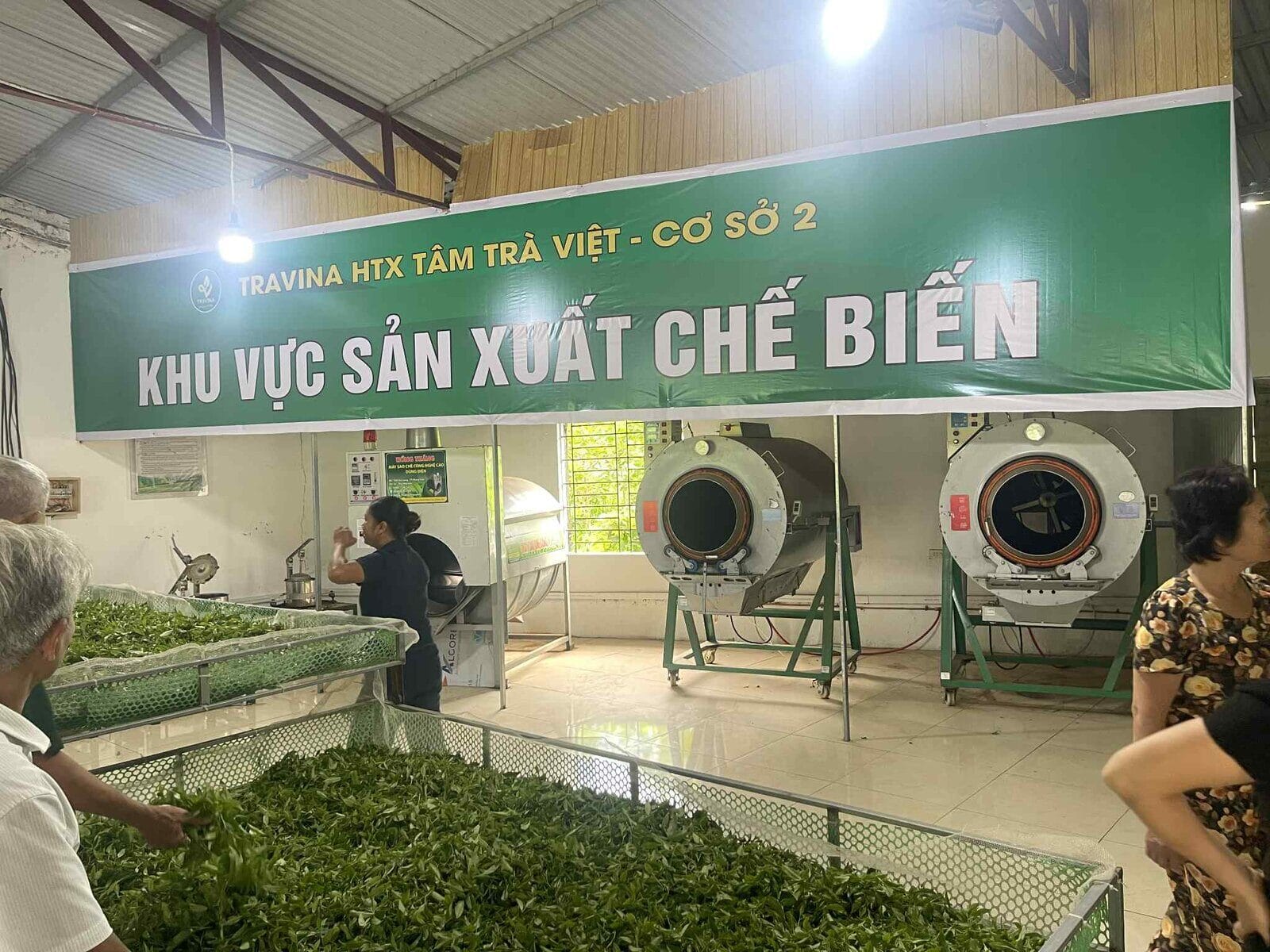
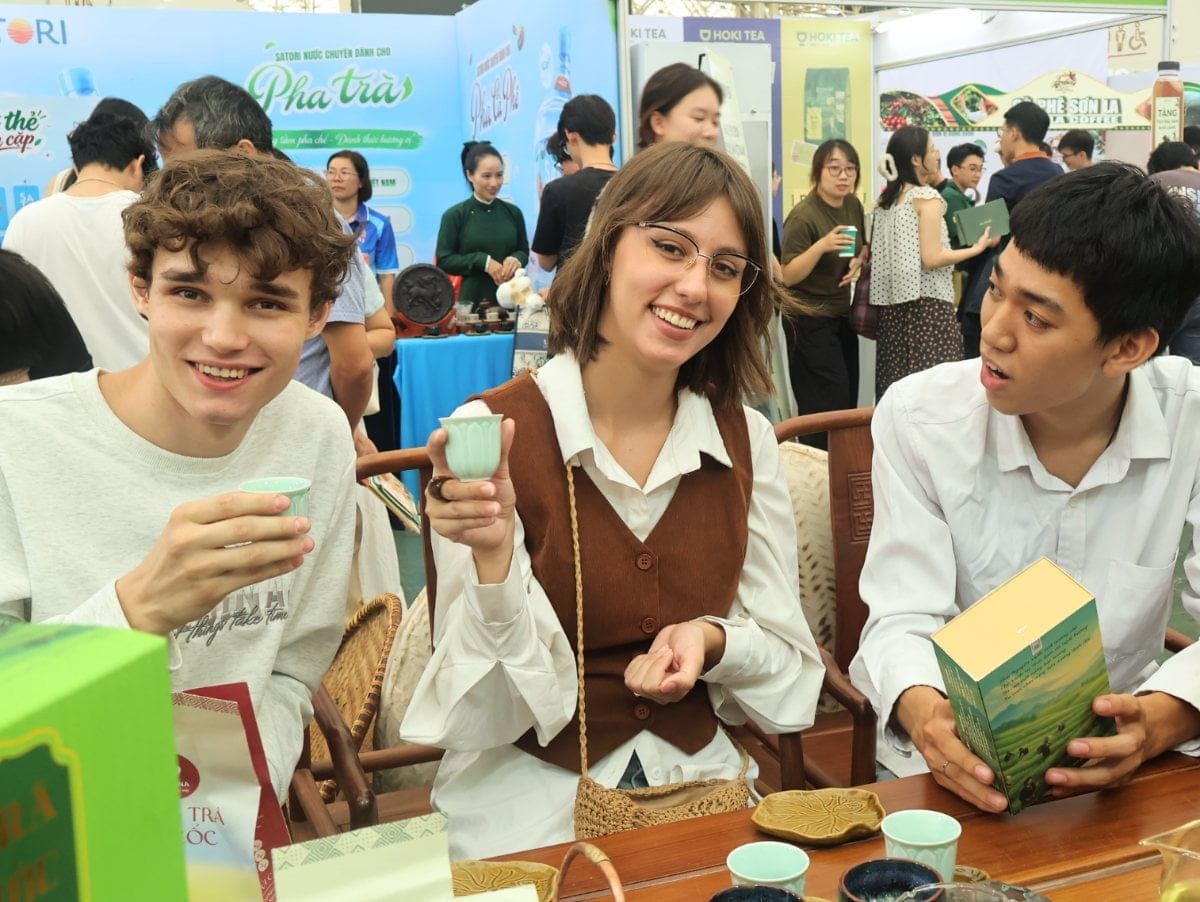
TRAVINA is the brand of Tam Tra Viet Cooperative in Dai Tu and La Bang, Thai Nguyen province. The cooperative brings together 90 member households farming 40.5 hectares and produces about 120 tonnes of dry tea a year. That is a small share of Vietnam’s output, and we do not compete on the lowest price per tonne. What we can offer a Chinese buyer is graded tea from named gardens, an ISO 22000:2018 certified processing facility at La Bang, and documents we hand over with every quote. You can see the paperwork in our certificates and licences, and how we handle larger orders on the bulk tea export page.
Our founder will be in China from 25 to 28 October 2026; details are in TRAVINA at Tianjin. For the wider picture of Vietnam’s export markets, see Vietnam tea export statistics 2025.
Frequently asked questions
Is Vietnam the biggest tea exporter to China?
By volume, Vietnam was the largest source of China’s tea imports in 2024, with about a quarter of the tonnes. By value it ranked behind Sri Lanka, and in 2025 it was third after Sri Lanka and India.
Why do the 2024 figures differ between Chinese sources?
Two data sets are in circulation: 54,200 tonnes total imports (Tea Weekly) and 65,000 tonnes (Abeedata, The Paper). The difference probably comes from which customs codes were included. Both put Vietnam at roughly a quarter of the volume.
What kind of Vietnamese tea goes to China?
Mostly bulk green and black tea used as raw material, at around 1.4 USD per kg in 2024. Branded specialty teas such as graded Thai Nguyen green tea are a small part of the trade.
Did Vietnamese tea exports to China grow in 2026?
No. In the first eight months of 2026, Vietnamese customs data show exports to China down 21% in volume and 9.3% in value compared with the same period of 2025.
Is the “Thai Nguyen tea” name protected in China?
The collective mark “Chè Thái Nguyên” (Thai Nguyen tea) is reported by VnEconomy (August 2025) to be protected in six markets, including China, the United States, Japan, South Korea, Russia and Taiwan.
How do I get a quote or a sample from TRAVINA?
Send us the tea type, the grade and the approximate quantity through our contact page. We quote EXW in USD and can prepare samples for tasting.
Sources
- Báo Nông nghiệp và Môi trường, “Việt Nam là nhà cung cấp chè lớn nhất cho Trung Quốc về sản lượng”, 1 November 2024: nongnghiepmoitruong.vn
- Tea Weekly (茶周刊), 2024 China tea import data, republished by ipucha.com, February 2025: ipucha.com
- The Paper (澎湃新闻), citing China Customs, 1 July 2025: thepaper.cn
- CCCFNA, 2025 tea import and export statistics, 12 March 2026: cccfna.org.cn
- VnEconomy, citing Vietnam Customs, 11 February 2026: vneconomy.vn
- VnEconomy (republished by Báo Lào Cai), 2024 exports by market, 2 March 2025: baolaocai.vn
- Thuế & Hải quan Online, eight-month 2026 export data, 1 October 2026: thuehaiquan.tapchikinhtetaichinh.vn
- VnEconomy, factory quality assessment, 11 January 2024: vneconomy.vn
- VnEconomy, Thai Nguyen tea support and trademark protection, 5 August 2025: vneconomy.vn
Buying tea for the Chinese market? Contact TRAVINA with your tea type and volume, and we will reply with an EXW quote and sample options.