Of everything TRAVINA grows, Tien Vua Needle Tea is the smallest harvest and the one we are asked about most. The name means “tribute to the king,” a phrase older than any brand, and it points to what the grade actually is: not a marketing tier, but the finest, most labour-intensive picking a tea garden can produce.

What “needle tea” means
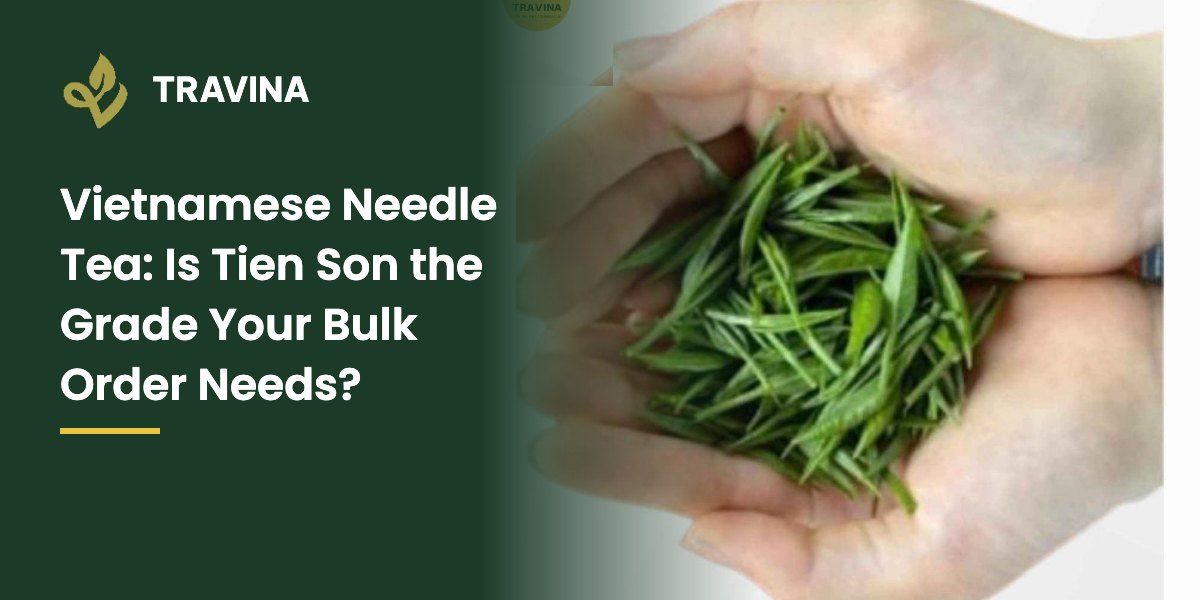
Most green tea is picked as a bud with one or two young leaves attached. Needle tea is picked as the bud alone — nothing else — each one taken by hand in the first light of the morning, while dew is still on the leaf. It takes more than ten kilograms of fresh buds to make one kilogram of finished Tien Vua, and the cooperative gardens only yield a picking fine enough for this grade five or six times a year. That ratio is the reason needle tea costs more than other grades from the same gardens: it is not a different tea, it is a far smaller and more selective harvest of the same plant.
Where it is actually grown
Tien Vua Needle Tea comes from TRAVINA’s cooperative gardens in La Bang, Dai Tu district, Thai Nguyen — not Tan Cuong, a different growing area sometimes associated with needle-grade tea in general conversation. We name the district on every product page because buyers frequently ask, and because a growing area is something a cooperative should be able to state plainly rather than leave vague.
How it is fired
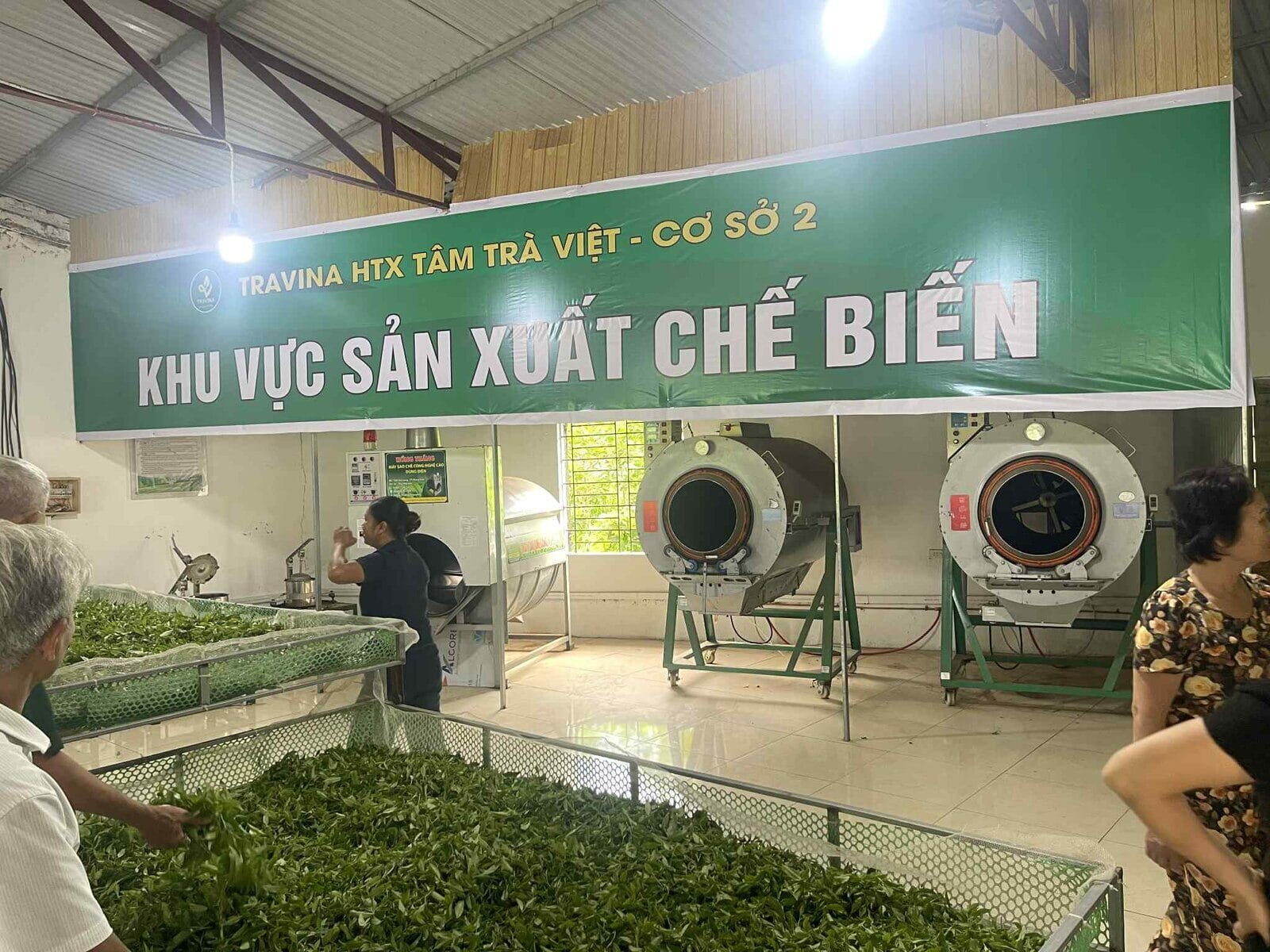
After the buds are picked and briefly withered, they go through three passes in the pan. The first drives off most of the surface moisture. The second, done at a lower heat, tightens the still-soft bud into the characteristic needle shape without scorching it. The third and final pass, done briefly and carefully, is what brings out the aroma — the point at which the leaf should smell distinctly of young rice, the sign an experienced processor is judging by nose as much as by time or temperature.

Why it tastes the way it does
Brewed, Tien Vua pours a clear, pale gold liquor, closer to honey than to the deeper green of ordinary Tra Bac. The first taste carries a short, gentle bitterness; what follows is a sweetness that builds and lingers rather than fading — a much longer “hau ngot,” returning sweetness, than a coarser grade produces, because the bud alone concentrates more of what gives the tea its sweetness than a bud picked with older leaf attached.
How to brew it without wasting it
Needle tea is easy to over-brew and easy to scald. Use water cooled to around 80–85°C, noticeably cooler than for ordinary green tea, in a small porcelain or glass pot rather than a large one. Rinse the leaf briefly and discard that water, then infuse for 15–20 seconds for the first cup — shorter than it feels like it should be — adding only a few seconds to each cup after. Vietnamese tea culture ranks four things in order of importance when brewing: the water, the tea, the pouring, and the pot. For a tea this fine, the water matters most of all; hard or heavily chlorinated water will flatten a leaf this delicate before the pot or the timing gets any say in it.
What it holds, and what it does not claim
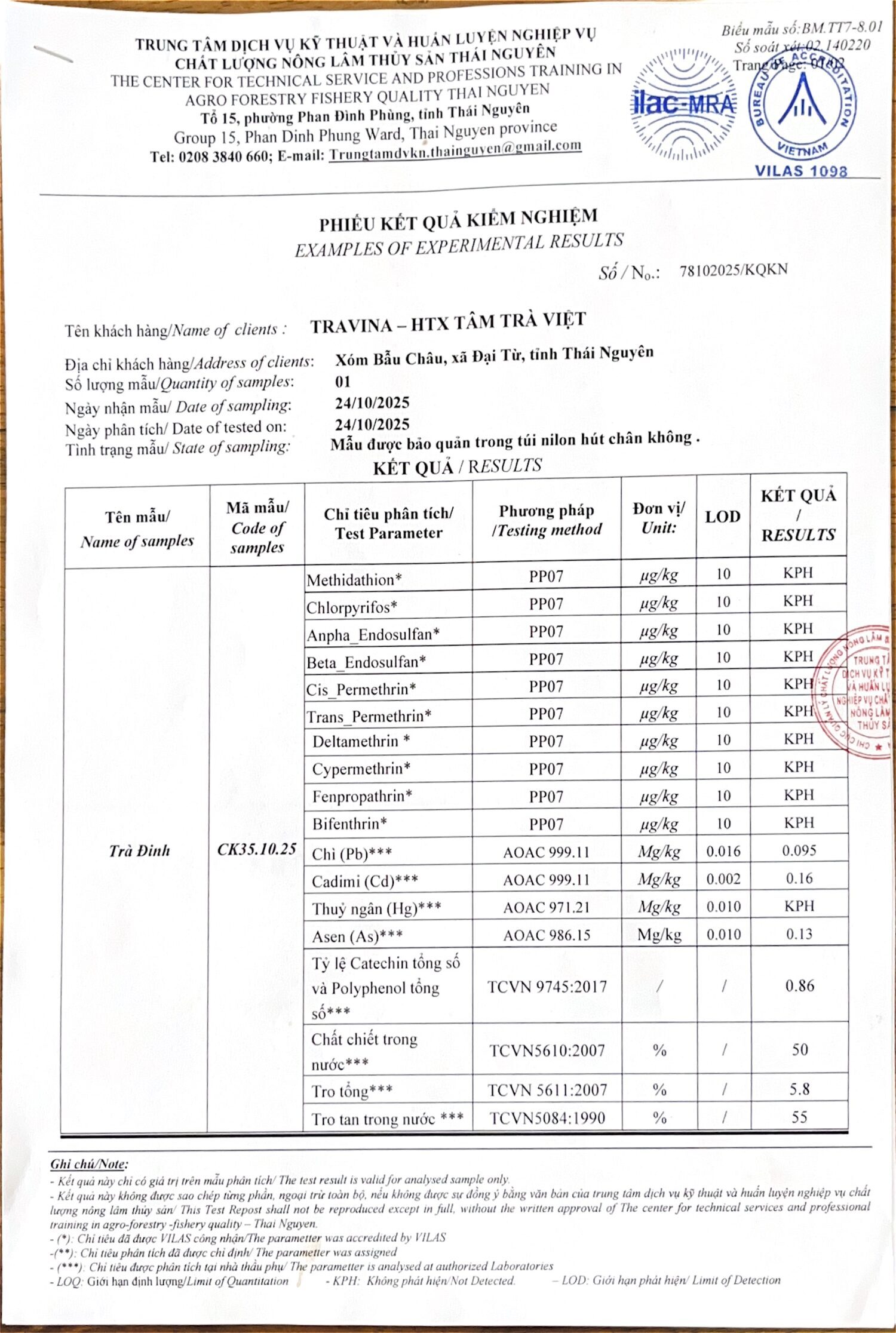
The gardens that produce Tien Vua are farmed to TRAVINA’s 6 Không practice — a production commitment, not a certified organic status, and we do not describe it as one. What the cooperative does hold is VietGAP (DVCL-VG-TT-24-19-68), ISO 22000:2018 for the La Bang facility (GOODVN91025.FSMS), and food safety licence 14/2025/UBND-NNMT-TNg. Full detail, including how to verify each certificate, is on our certificates page; the tea itself is on our product page.