Vietnamese needle tea is a Thái Nguyên green tea made from nothing but the single unopened bud at the tip of the shoot. We make it in two grades. Trà Đinh Tiến Vua (Tien Vua Needle Tea) is our top grade. Trà Đinh Tiên Sơn (Tien Son Needle Tea), formerly sold as Trà Đinh Ngọc, sits one step below it. Both follow our Six-No standard and both are farmed toward organic practice. The difference is in how the bushes are fed and picked: Tien Vua bushes get a richer feeding of ground soybean and organic fertiliser and is picked about five times a year, while Tien Son is picked six to seven times. In the cup Tien Vua has the fuller, richer body. Tien Son is still a high-grade single-bud tea, at a lower cost per kilogram, which is why we usually suggest it for volume and private-label programmes and Tien Vua for the top of the shelf.
| Point | Tien Son Needle Tea | Tien Vua Needle Tea |
|---|---|---|
| Place in our range | One grade below Tien Vua; our main needle tea for volume orders | Top grade of our needle line |
| Growing standard | Six-No, farmed toward organic practice | Same |
| Feeding | Ground soybean and organic fertiliser | A richer feeding of ground soybean and organic fertiliser |
| Name history | Renamed on 15 October 2026; tea, gardens and makers unchanged | Unchanged |
| Plucking standard | Single unopened bud, hand-picked at first light | Same |
| Fresh leaf for 1 kg of finished tea | More than 10 kg | More than 10 kg |
| Pickings per year | Six to seven | About five, with a longer rest between pickings |
| Where it grows | Đồng Khuân hamlet, La Bằng commune, at the foot of Tam Đảo | Our La Bằng gardens |
| In the cup | Clear green-gold liquor, young-rice aroma, a clean, lighter body with a sweet finish | Clear green-gold liquor, young-rice aroma, a fuller, richer body and a longer sweetness |
| Typical use | Retail packs, hospitality, gift-box filling, private label | Top-tier gifting and premium shelves |
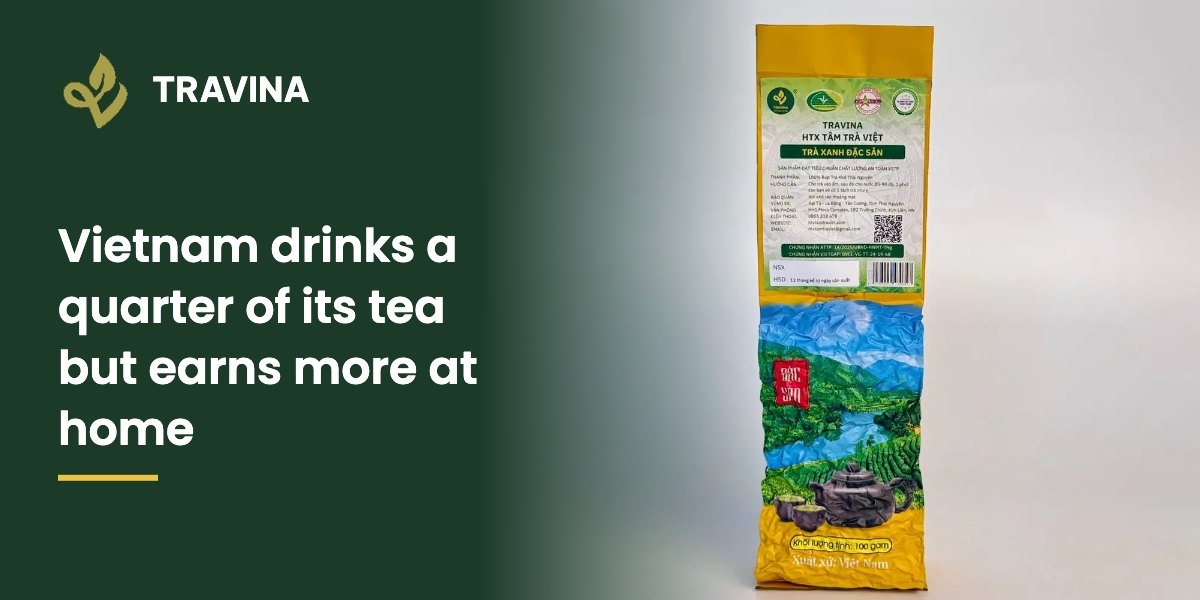
| Packing | 100 g and 200 g vacuum pouches, 10 g single-pot sachets, bulk on request | 100 g and 200 g vacuum pouches, bulk on request |
| Pricing | EXW quote in USD on request | EXW quote in USD on request |
What Vietnamese needle tea is
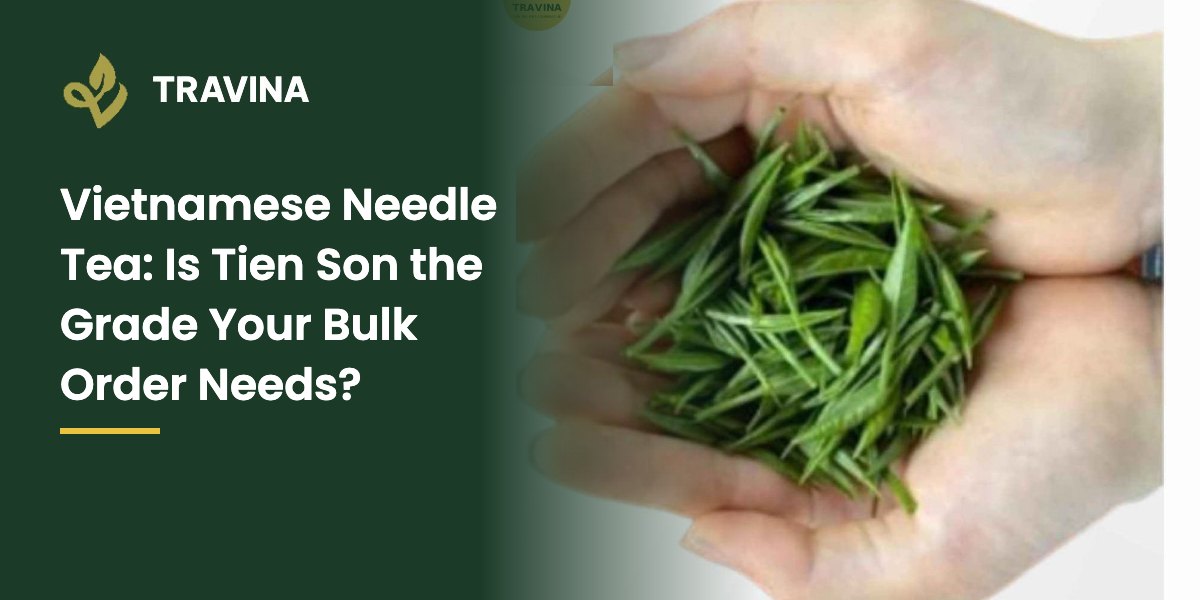
In Vietnamese the style is called trà đinh, literally “nail tea”. The name describes the dry leaf. Once fired, the single bud tightens into a short, firm spike with a rounded head, much like a carpenter’s nail. Nothing else from the shoot goes in: no open leaf, no stem, no second leaf. That is the line between needle tea and the other Thái Nguyên grades, which keep one or two young leaves next to the bud. In English the same tea turns up as needle tea, bud-only green tea or single-bud green tea.
Thái Nguyên is the province most Vietnamese drinkers connect with this style. A 2022 report in Nhân Dân, the national daily, names three specialty lines for the Tân Cương area of the province: needle tea, hook-shaped Móc Câu tea and bud tea. In 2023 the knowledge of growing and processing Tân Cương tea was added to Viet Nam’s list of national intangible cultural heritage. Our gardens are not in Tân Cương. They lie in Đại Từ – La Bằng, on the eastern side of the Tam Đảo range, and we work in the same Thái Nguyên tradition of hand plucking and pan firing.
For buyers comparing origins, FAO’s 2024 market review places Viet Nam second only to China in green tea exports, at an average of about 65,300 tonnes a year over 2020–22. Most of that volume is everyday leaf. Needle tea is the opposite end of the scale: a small, slow, hand-made grade, and that is the context for everything below.
Why there are two grades, and why the name changed
We sell needle tea in three forms. Trà Đinh Tiến Vua is the top grade. Trà Đinh Tiên Sơn is the grade directly below it. Trà Tấm Đinh (Broken Needle Tea) is made of the spikes that break during firing, sieved out of the same batches.
The idea of a first and a second needle grade comes from a story told in the tea villages around us. Every spring, the story goes, villages held pan-firing contests. The winning batch was offered to the king, which is what “Tiến Vua” means, and the runners-up went to mandarins and honoured guests. We tell this as an oral legend. We have not found a written record of it. Today the line between our two grades is not drawn at a contest or a sorting table but in the garden, as the next section explains. What is on record is that the contests still run. On 14 December 2025 ten teams competed in the “Golden Hands in Tea Processing 2025” contest on the Cầu Đá tea hill in La Bằng. Our artisans entered as team No. 08, representing La Bằng commune, and took second prize (Decision No. 1338/QĐ-SNNMT of 20 December 2025). Our head of production, artisan Phạm Hoàng Giang, was at the pan.
The new name is about place. Before 1945 the villages of Hoàng Nông and La Bằng, where our needle gardens sit, belonged to the canton of Tiên Sơn. Commune names in this area have changed several times since, most recently in 2025, when Hoàng Nông was merged into La Bằng commune. A canton name that no longer changes gives the tea a stable origin name for packaging and for buyers’ own labels. The product is declared under self-declaration No. 08/TRAVINA/2026 with that name.
Raw material and plucking: same bud, different feeding
Both grades come from gardens farmed by the 90 member households of our cooperative. The declared growing area for Tien Son is the gardens of Đồng Khuân hamlet, La Bằng commune (formerly Hoàng Nông commune), at the foot of Tam Đảo. Our higher grades, needle tea included, come from a mix of old Trung du midland plants and the Long Vân cultivar. That mix is chosen for a cup with body as well as aroma. Both grades are grown under the same Six-No rules and farmed toward organic practice. What differs is the feeding. Our members feed the bushes with ground soybean and organic fertiliser, and the Tien Vua bushes get a richer feeding of both than the Tien Son bushes do. You can taste the result: Tien Vua has the fuller body in the cup. The guide to Vietnamese tea cultivars explains how Trung du differs from the newer selections.
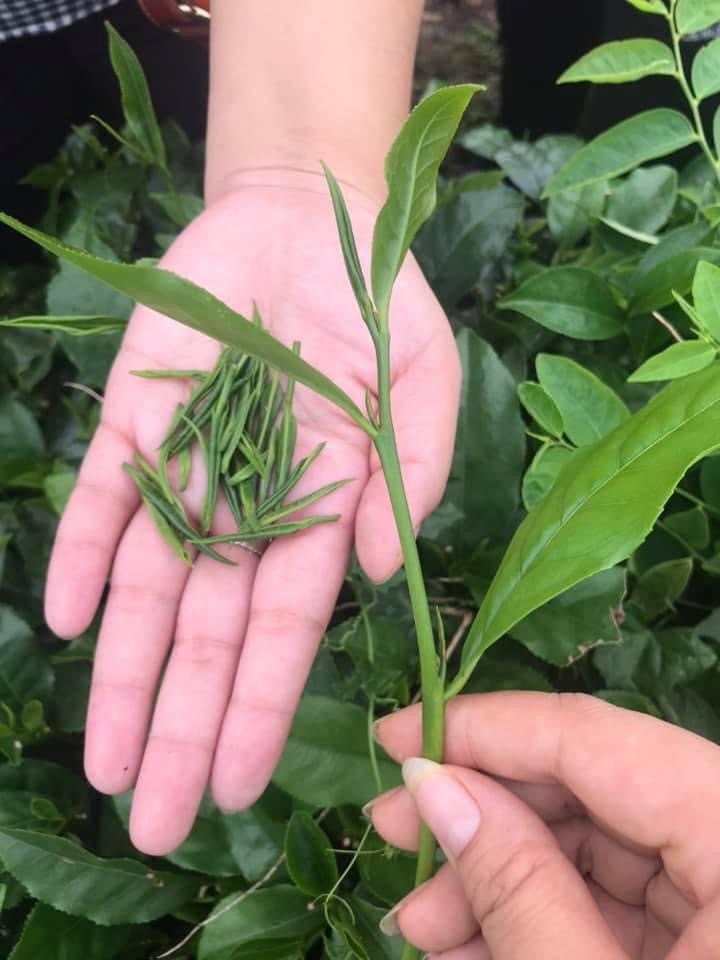
Plucking starts before sunrise, while the buds are still cool and the dew has not burned off. Pickers do not strip the branch the way they would for everyday tea. They pinch off only the tip, the bud that is still rolled tight and has not opened into a leaf. It takes more than 10 kg of these fresh buds to make 1 kg of finished needle tea. Tien Son bushes give six to seven such pickings a year. Tien Vua bushes are picked about five times a year, with a longer rest between one picking and the next. The plucking season runs from about March to October. From November to February the bushes rest.
The buds go to our La Bằng workshop the same morning for light withering, kill-green, rolling and several firing passes until each bud is firm and dry. Both grades go through the same steps and are sorted to the same single-bud rule, so the workshop does not make one better than the other. The garden does. Because Tien Vua bushes are fed more and picked fewer times a year, each season gives less Tien Vua than Tien Son, and that, together with the extra feeding, is why it costs more per kilogram.
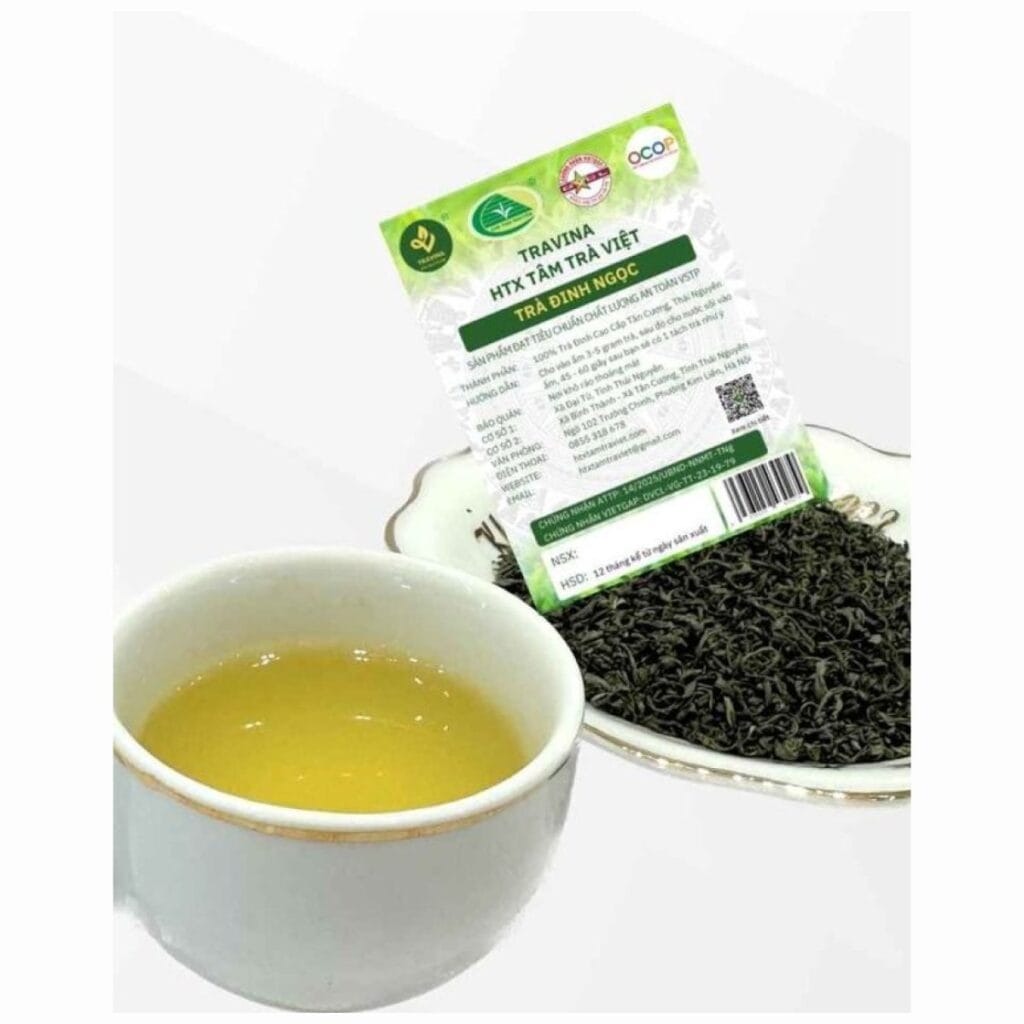
In the bowl: leaf, liquor and taste side by side
Dry, both grades show the needle shape and the dark, blue-black sheen that good Thái Nguyên leaf has when you look closely. Tien Son was described by Viet Nam’s National Institute for Food Control, in its October 2026 sensory check, as firm, slightly curled and even in colour.
Brewed, both give a clear liquor in the green-gold range. Do not expect a vivid, saturated green. Tea made with nothing added does not turn out bright green, and a cup that does is a reason to ask questions. The aroma of both grades is what Vietnamese drinkers call cốm, the smell of young green rice.
Both carry the “bitter first, sweet after” character people expect from Thái Nguyên tea. The difference shows most in body. Tien Vua is richer and fuller in the mouth, with a sweetness that lasts longer after the cup is empty; Vietnamese drinkers call this quality ngậy. Tien Son is lighter in body and very clean, still clearly a single-bud tea. For a customer who wants the fullest cup, Tien Vua is the one to pour. For daily drinking and for customers new to Vietnamese bud tea, Tien Son is the easier way in. If you are working out how these teas sit next to Chinese bud teas, our comparison of Vietnamese and Chinese green tea covers processing and flavour.
How to brew Tien Son needle tea
Needle tea is made of young buds, so the main rule is to keep the water off the boil. Water at 100°C cooks the buds, flattens the aroma and pulls out harshness.
- Warm the pot and cups with boiling water, then pour it away.
- Use 10 g of leaf for a standard pot of 150–200 ml. About 6 g gives a lighter cup, 12–15 g a strong one.
- Wake the leaf: cover it with hot water, swirl for about five seconds and discard.
- Let fresh water cool to 80–85°C. For the first infusion, steep 20–30 seconds. The same timing works for both grades.
- Add 10–15 seconds for each further infusion. Good leaf gives three to four infusions.
At 10 g a pot, 1 kg makes roughly 100 pots, each with three or four infusions. For cafés, hotels and tea rooms that is the number that matters. Compare grades on cost per pot rather than cost per kilogram, and Tien Son usually wins the argument for daily service while Tien Vua stays on the menu as the special pot.
Why buyers choose Tien Son for volume orders
When an importer, distributor or brand owner asks us for needle tea in quantity, we usually point them to Tien Son first, for these reasons:
- It is genuine bud-only tea at a lower cost. The label can truthfully say single-bud needle tea, and the cost per kilogram is clearly below Tien Vua.
- The same standard in the garden. Tien Son is grown under the same Six-No rules as Tien Vua and farmed toward organic practice. The lower cost comes from feeding and picking, not from cutting corners.
- It is easier to repeat. Tien Son bushes are picked six to seven times a year against about five for Tien Vua, so each season gives more of it. A programme that has to be refilled every few months is easier to match on the larger grade.
- The paperwork carries its name. Tien Son has its own product self-declaration and its own recent lab report, so the documents match the name on the buyer’s invoice.
- The cup suits a wide audience. A clean cup with a sweet finish is the taste customers already associate with Vietnamese green tea.
- It works in gift packs. Our own An Khang needle-tea gift box is filled with Tien Son. For a buyer selling boxes at several price points, Tien Son suits the main box and Tien Vua a small premium edition.
- It has a story that fits on a label. A named historic canton at the foot of Tam Đảo is easy to explain on a back label or a product page.
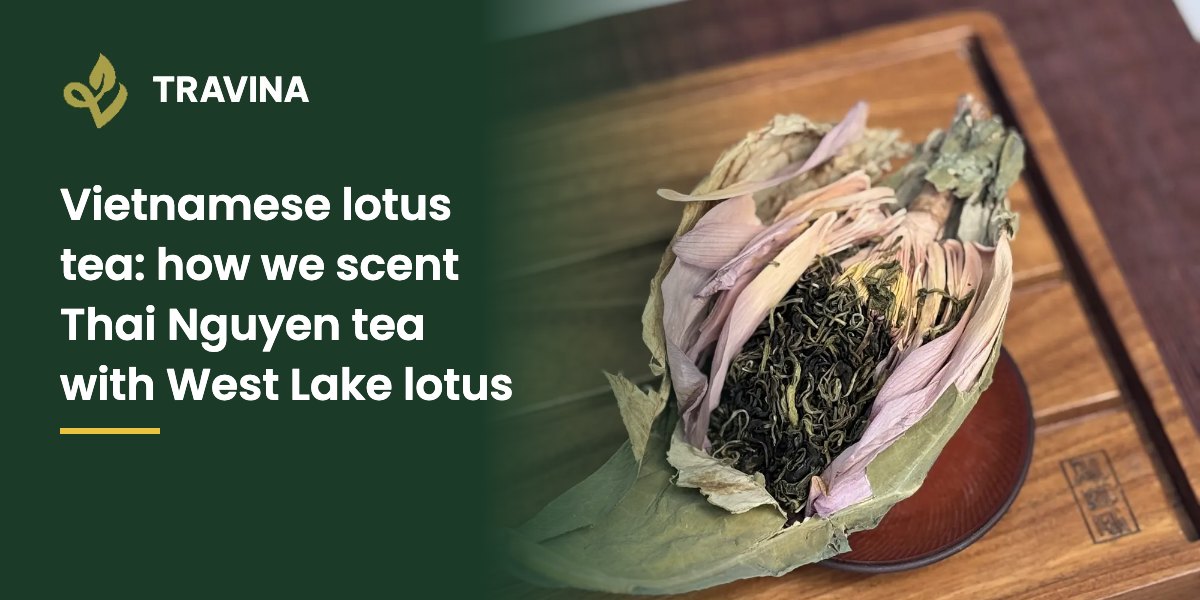
There are limits, and we would rather state them. Needle tea is a small share of the roughly 120 tonnes of dry tea our cooperative makes a year. It is not a container commodity, and the amount available depends on the season. If you need a larger, cheaper base alongside it, look at Trà Nõn Hảo Hạng (Superior Bud Tea), which is plucked one bud and one tender shoot, or at Broken Needle Tea for tea bags and blends. For a scented line, our Trà Gạo Sen Bách Diệp is built on needle tea scented with West Lake lotus from Hanoi.
Documents, packing and samples
Our gardens follow the Six-No clean tea standard: no chemicals, no pesticides, no chemical fertiliser, no colouring, no bleaching and no preservatives. Six-No is a production commitment we hold ourselves to, and the gardens are farmed toward organic practice. Alongside it, the cooperative has a 40.5 ha raw-material area farmed under the VietGAP procedure, and our La Bằng facility, where the needle grades are processed, holds ISO 22000:2018; that certificate covers the La Bằng facility only. Scans of each document are on our certificates and licences page.
For Tien Son specifically, a production sample was tested by the National Institute for Food Control (report No. 90061/PKN-VKNQG, 15 October 2026). All eight pesticide residues tested were not detected, and arsenic, cadmium and lead were within Vietnamese limits. A copy of the report is available on request.
Packing options:
- 100 g and 200 g vacuum pouches.
- 10 g single-pot sachets, convenient for hotels, tea rooms and tasting kits.
- Bulk packing and private label under the buyer’s brand, with labels in the buyer’s language. If you sell into China, read our notes on Chinese labels for imported Vietnamese tea.
We do not publish fixed price lists or fixed minimums for export. Quantity, packing and delivery time are agreed per order against the stock available in the season, and quotes are EXW in USD. Our page on MOQ, price and lead time explains how we work this out. To taste first, follow the steps in how to sample Vietnamese tea. We suggest cupping Tien Son next to Tien Vua and Trà Nõn Hảo Hạng, using the brewing guide above, so you can see where each one sits for your customers.
FAQ
Is Tien Son Needle Tea the same tea as Trà Đinh Ngọc?
Yes. It is the same tea from the same gardens, plucked and made by the same people. Only the name changed, on 15 October 2026. If you bought it from us under the old name, you will get the same grade under the new one.
What is the real difference between Tien Son and Tien Vua?
Both are single unopened buds plucked by hand at first light, both follow the Six-No standard and both are farmed toward organic practice. The difference is in the garden: Tien Vua bushes get a richer feeding of ground soybean and organic fertiliser and are picked about five times a year, while Tien Son is picked six to seven times. In the cup Tien Vua has the fuller, richer body. Tien Son is lighter, clean and sweet, at a lower cost per kilogram.
Is Tien Son grown in Tân Cương?
No. Tân Cương is a well-known tea area of Thái Nguyên, but our needle tea grows in Đồng Khuân hamlet, La Bằng commune, in the Đại Từ – La Bằng area at the foot of Tam Đảo. We do not label it as Tân Cương tea.
Is “bud-only green tea” the same as needle tea?
Bud-only describes what is plucked: the single bud and nothing else. Needle tea describes the finished shape that Thái Nguyên firing gives that bud. Tien Son is both.
Can Tien Son be packed under our own brand?
Yes. We pack bulk and private label orders to the buyer’s specification. Label text, pack size and documents are agreed before production.
How should Tien Son be stored?
Keep it sealed in a cool, dry place away from sunlight and strong smells. Once opened, reseal tightly or keep it in the refrigerator. Shelf life is printed on each pack.
Sources
- FAO (2024). Current global market situation and medium-term outlook, CCP:TE/24/2. Intergovernmental Group on Tea, 25th session.
- Nhân Dân (12 October 2022). Đệ nhất danh trà (Thái Nguyên specialty tea lines).
- Nhân Dân (5 April 2023). Knowledge of growing and processing Tân Cương tea listed as national intangible cultural heritage.
- Báo Thái Nguyên (14 December 2025). Golden Hands in Tea Processing contest at La Bằng.
Comparing needle teas for your market? Contact our export team with your destination, expected volume and packing needs. We will reply with Tien Son and Tien Vua samples and an EXW quote in USD.