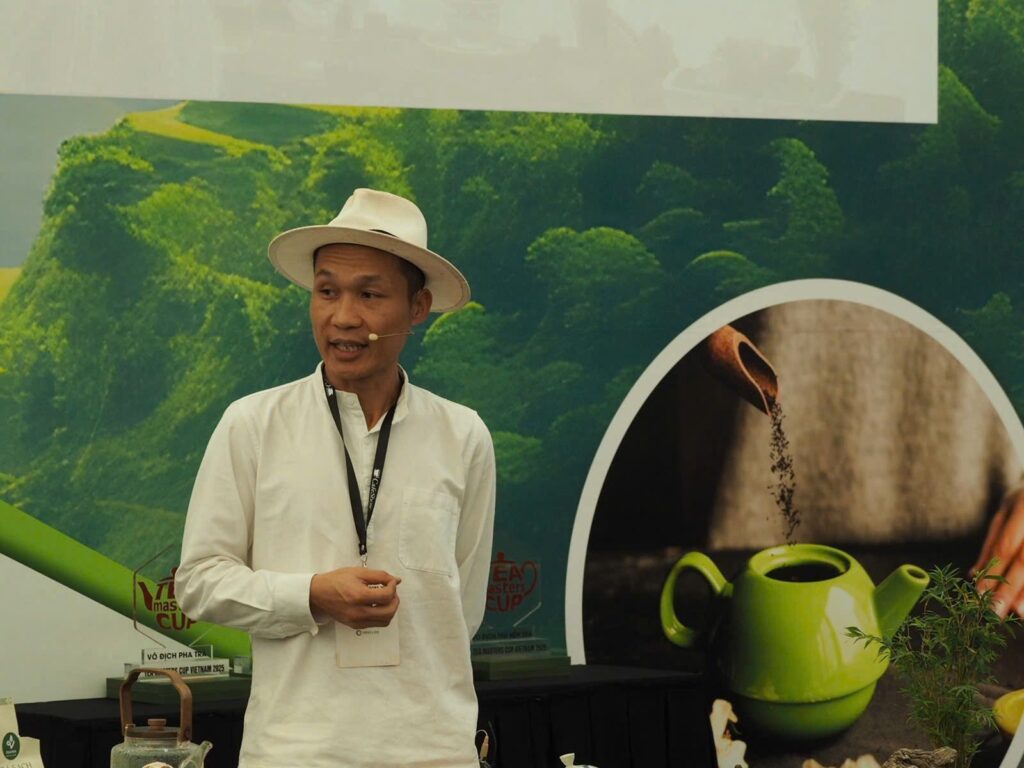
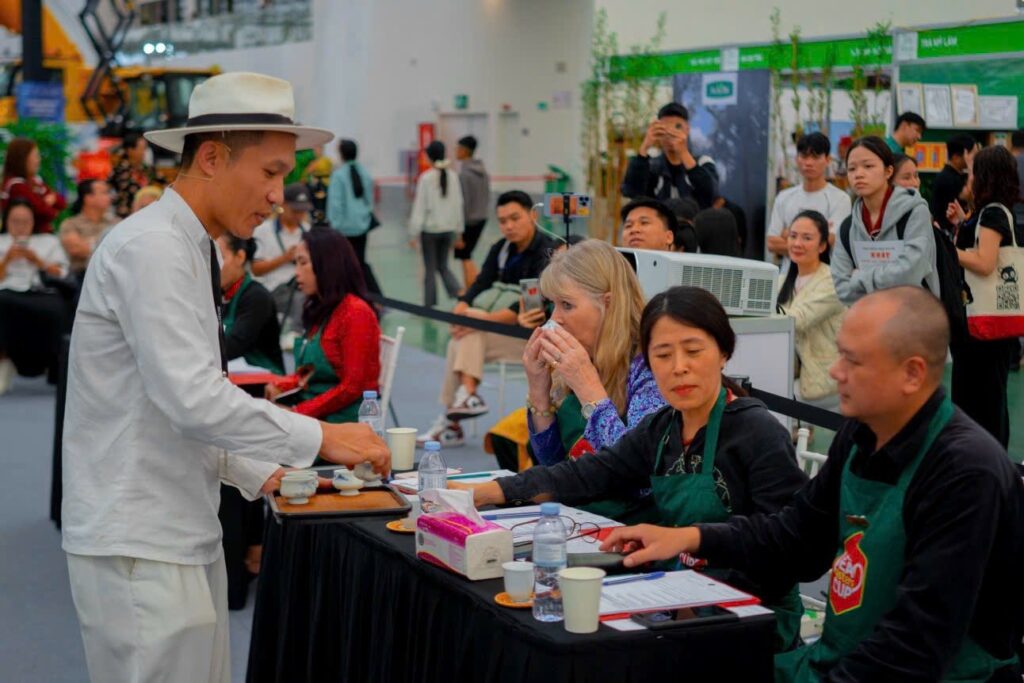
In November 2025 Pham Hoang Giang, the tea artisan who works with TRAVINA, stood behind a small table at the Vietnam National Exhibition Center, with a clock counting down in front of him and three foreign judges waiting for a cup. This is what that round involves, and why we think a buyer should care that the tea in those cups was our own leaf, brewed by our own artisan.
What Tea Masters Cup is
Tea Masters Cup is an international framework of national tea competitions. The Vietnamese edition, Tea Masters Cup Vietnam 2025, was the fifth held in the country and ran from 12 to 15 November 2025 at the Vietnam National Exhibition Center, organised by Tea Masters Cup Vietnam together with the Vietnam Tea Association and Exporum Vietnam. Sixty-four tea artisans from provinces across the country took part.
There are four categories: Tea Preparation, Tea Pairing, Tea Tasting and Creative Tea Mixology. TRAVINA entered Tea Preparation, the round where you brew your own tea in front of the panel and explain every decision you make while you make it.
The panel was not a home crowd
The 2025 jury had fourteen judges, eleven Vietnamese and three international — two from Australia, including the head judge, and one from Japan. That matters more than it sounds. A tea that reads as normal in Thai Nguyen can read as too astringent, too grassy or simply confusing to a palate trained on Japanese or Australian standards. Putting your own tea in front of that panel tells you, quite quickly, how the rest of the world receives what you make.
What is actually being judged
The round is timed. You bring your own tea and your own equipment, and you work under the clock. What the sheet asks about is not showmanship:
- Water temperature and steeping time — whether the choices suit the leaf you brought, not whether they follow a formula.
- Consistency between cups. Every judge should get the same tea. One excellent cup and two ordinary ones is a worse result than three that match.
- The liquor itself — colour, aroma, body, finish.
- How you talk about the tea. Where it grew, when it was picked, how it was fired, and why you are brewing it this way rather than another.
Why it matters that our own artisan brewed our own tea
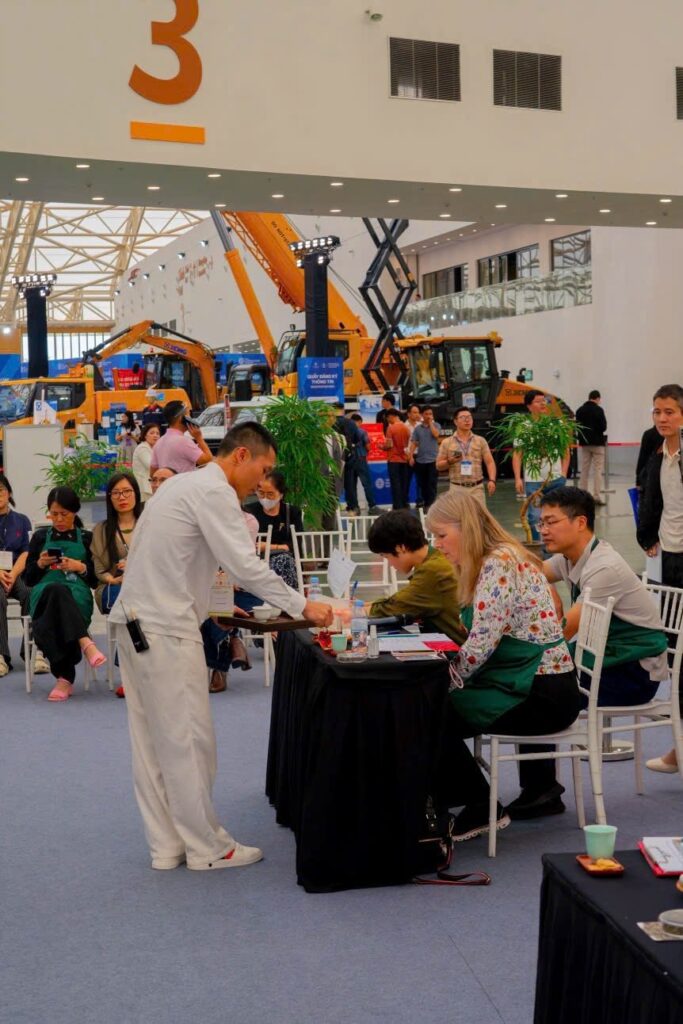
TRAVINA is a producer cooperative. The tea Pham Hoang Giang brewed on that stage was our own leaf, picked in our own gardens in Dai Tu and fired in our own workshop. He works with the cooperative on how each grade should be brewed and presented, and he judges a lot the way a buyer eventually will: by what ends up in the cup.
For an importer that is a practical point, not a sentimental one. When you write to us and ask why a lot tastes different from the last one, the answer comes from somebody who was in the workshop when it was made.
What we took home
Two things. First, a clearer sense of the vocabulary foreign buyers and judges use for what we already do by feel — and being able to describe a tea in that vocabulary shortens a lot of emails. Second, a reminder that consistency, not peak quality, is what a professional palate looks for. That thinking now sits behind how we blend and check a lot before it leaves the workshop.
We do not claim a title here. We competed, and the photographs on this page are of the round itself.
Everything we hold on paper is published, scan by scan, in Every Certificate TRAVINA Holds. If you would rather see the workshop than read about it, the gardens and the processing line are open to visitors: Visit our tea gardens in Thai Nguyen. The growing area itself is described on Origin and Factory.