Which Vietnamese teas are worth knowing? If you only remember five, make them Thai Nguyen green tea, Shan tuyet from the northern highlands, Hanoi’s lotus-scented tea, jasmine tea, and the oolong and black teas of Lam Dong. Together they cover most of what Vietnam does well: crisp roasted green tea, large-leaf mountain tea, flower-scented tea, and teas made from cultivars introduced in the last century. This is a short tour from north to south, with where each tea comes from, what makes it distinctive, and which names are legally protected.
Vietnam’s best-known teas at a glance
| Tea | Main area (province since 2025) | Style | Protection or recognition |
|---|---|---|---|
| Thai Nguyen green tea | Thai Nguyen | Pan-roasted green tea, from everyday grades to needle and bud teas | Collective mark “Chè Thái Nguyên”; one area with a geographical indication (2017) |
| Shan tuyet | Tuyen Quang (former Ha Giang), Lao Cai (former Yen Bai), Son La | Large-leaf tea with white down on the buds, often from old trees | Geographical indications for Shan tuyet Moc Chau (2010) and Shan tuyet Ha Giang (2018) |
| Hanoi lotus tea | Hanoi (Quang An, West Lake) | Green tea scented with lotus anthers | National intangible heritage (2024) |
| Jasmine tea | Hanoi and the north | Green tea scented with fresh jasmine flowers | A long-standing household tradition |
| Oolong and black tea | Lam Dong (Bao Loc), Phu Tho, Thai Nguyen | Oolong from Taiwanese cultivars; black tea for export and blending | Bao Loc tea since 1927 |
Thai Nguyen green tea
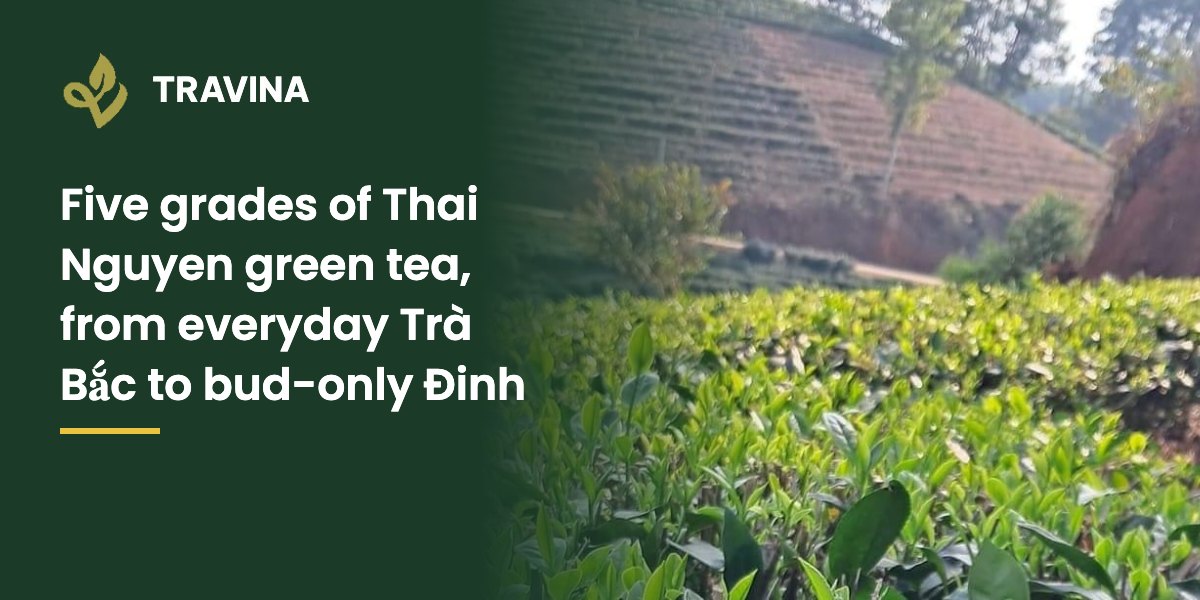
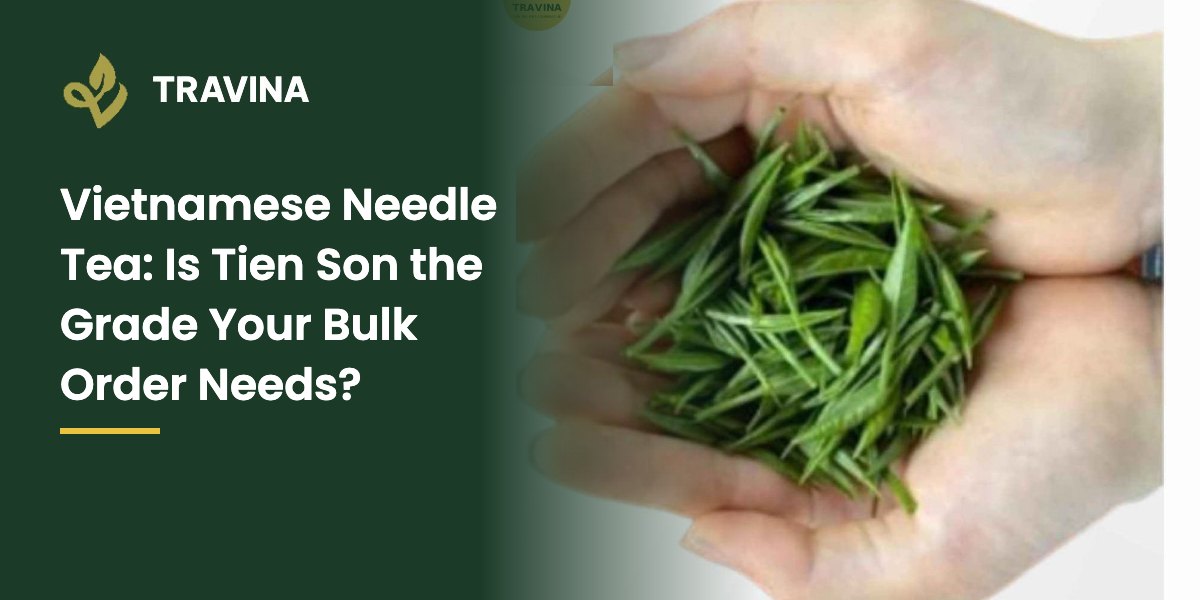
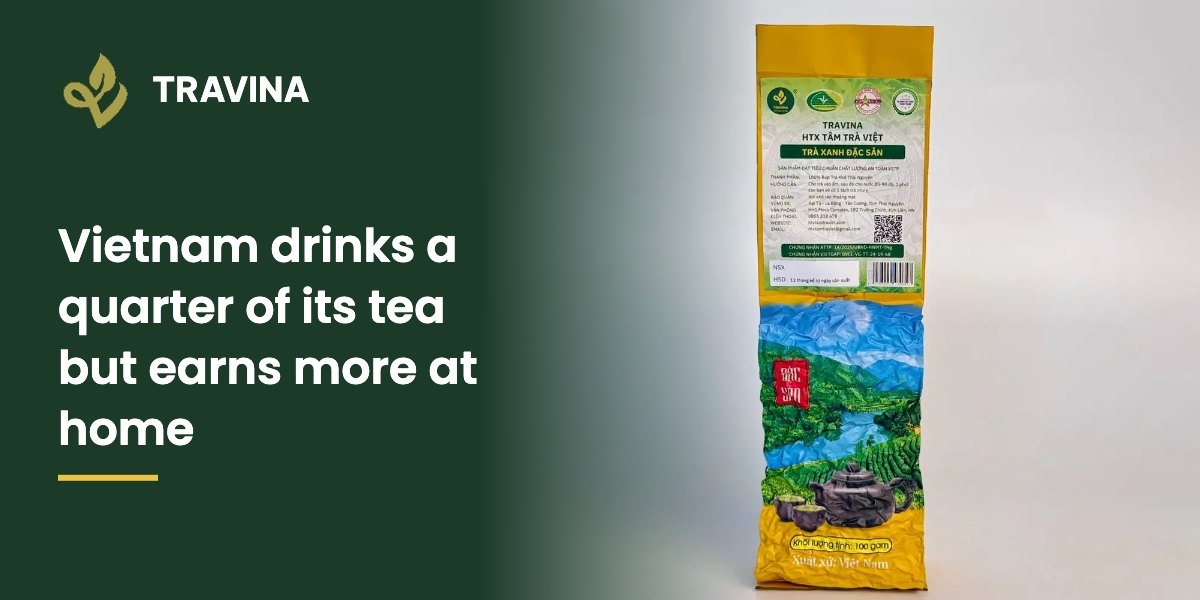
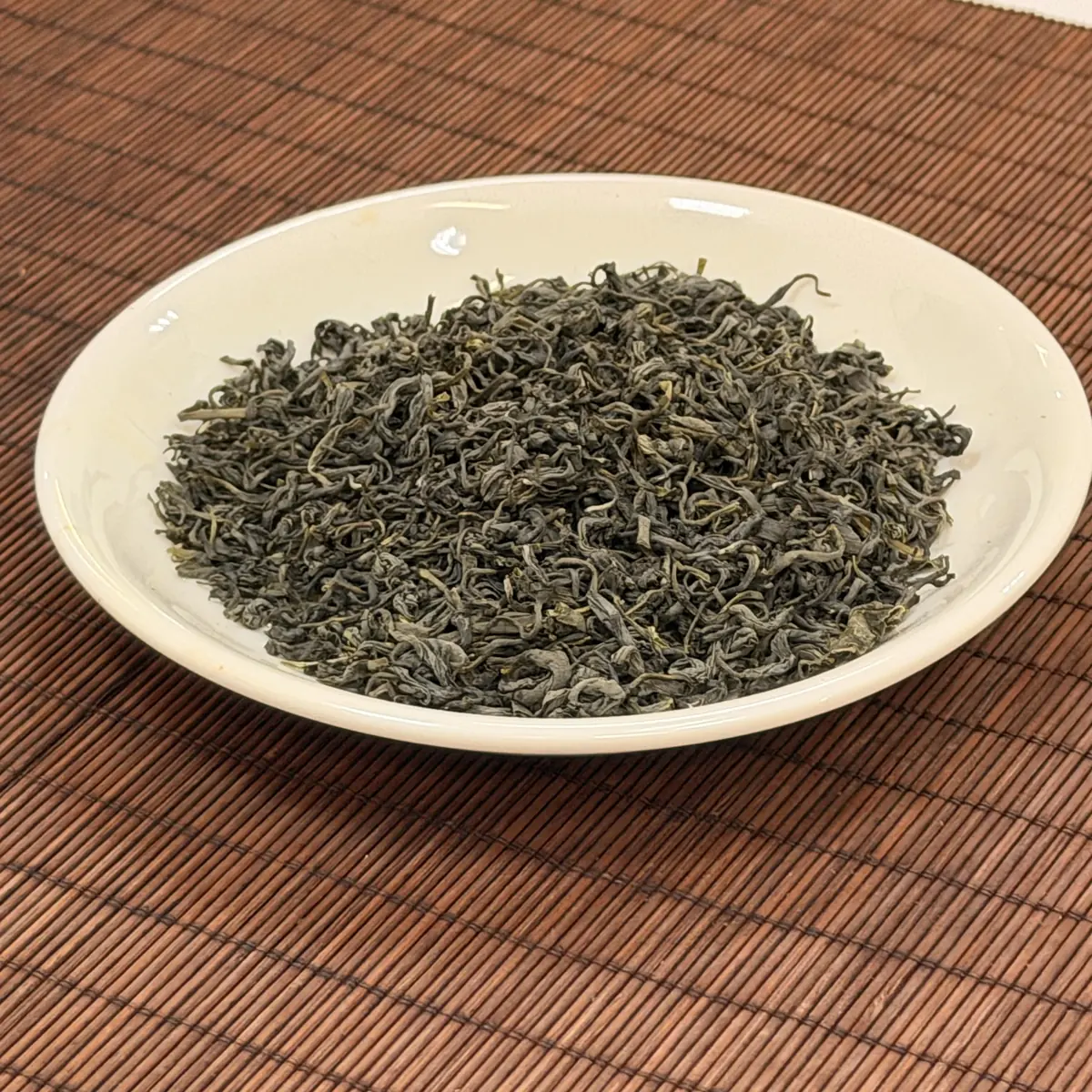
For most Vietnamese, “good tea” means Thai Nguyen green tea. It is picked young, withered briefly and roasted in rotating drums or pans until the leaves twist into small dark-green hooks. Vietnamese writers describe its character as “chát tiền, ngọt hậu”: astringent at first, sweet in the aftertaste. Grades run from everyday tea to hook-shaped Moc Cau, bud teas and needle teas made from the closed bud alone. The province produced more than 280,000 tonnes of fresh leaf in 2025, more than any other. Our Moc Cau green tea and Tien Vua needle tea come from La Bang.
Shan tuyet: tea from the high mountains
Shan tuyet (“snow Shan”) is the large-leaf tea of the northern highlands, named for the fine white hairs on its buds. Much of it grows as tall trees above 1,000 metres in Ha Giang (now part of Tuyen Quang), Suoi Giang (now in Lao Cai), Ta Xua and Moc Chau in Son La. It is made into green, white and fermented teas. Two geographical indications protect it: Shan tuyet Moc Chau, registered in 2010 and also announced as protected in Thailand in 2018, and Shan tuyet Ha Giang, registered in 2018 for 44 communes. We cover the old trees in where Vietnam’s ancient tea trees are.
Hanoi lotus tea
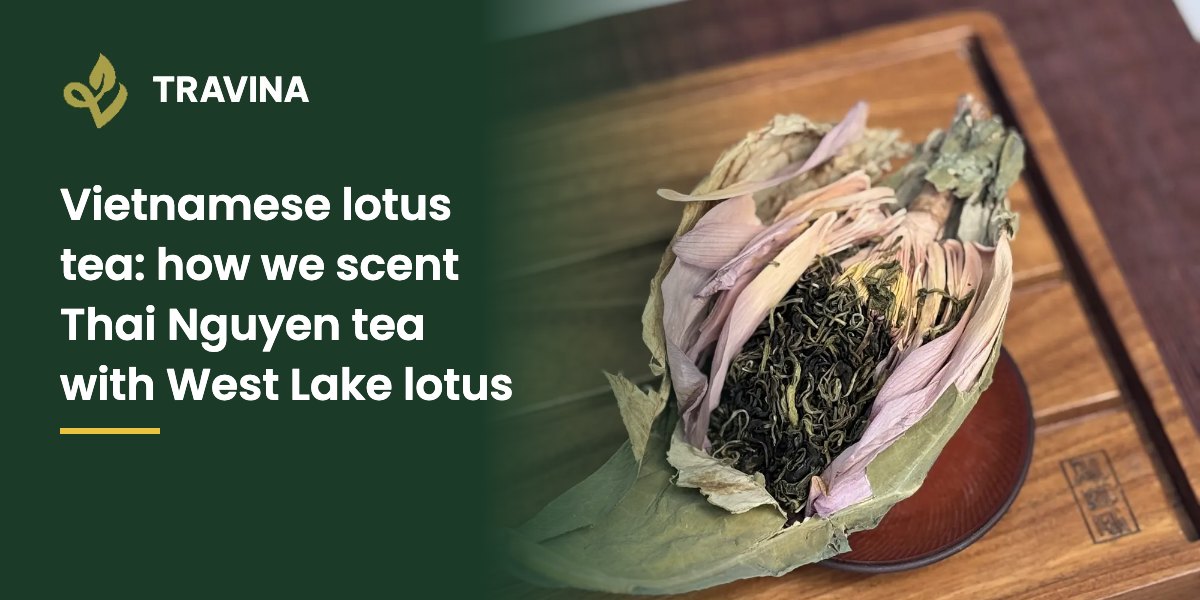
Lotus tea is Hanoi’s signature: green tea, often from Thai Nguyen, Ha Giang or Phu Tho, layered with the anthers of lotus flowers from West Lake and scented several times over one to two weeks. Traditional lotus tea needs about 1,000 to 1,400 flowers per kilo, which explains its price. In 2024 “the traditional craft of scenting lotus tea in Quang An” was listed as national intangible cultural heritage. TRAVINA offers West Lake lotus tea and the anther-scented West Lake Hundred-Petal Lotus Anther-Scented Tea.
Jasmine tea
Jasmine tea is the everyday flower tea of northern Vietnam. According to VOV, jasmine buds are picked during the day, kept cool, and layered with green tea at night, when the flowers open and release their scent. Our jasmine green tea is scented with jasmine from the outskirts of Hanoi in season, from May to September.
Oolong and black tea: Lam Dong, Phu Tho and beyond
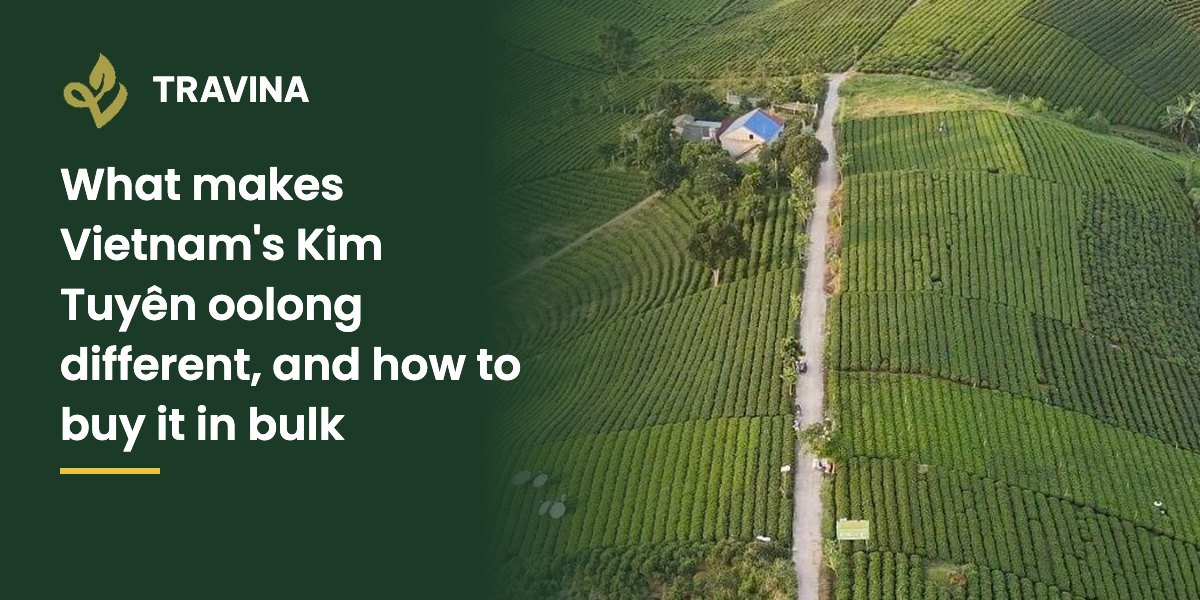
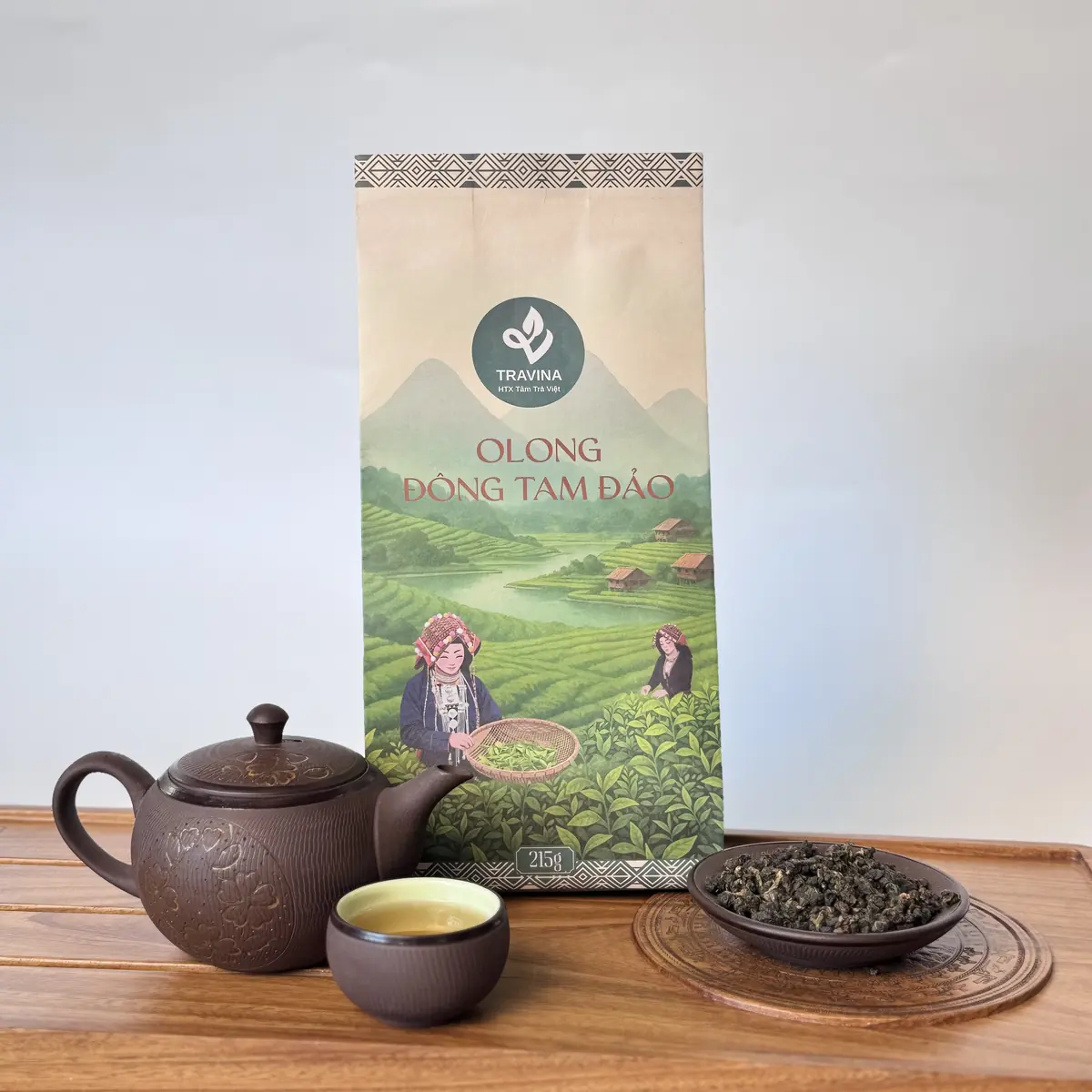
In the south, Bao Loc in Lam Dong has grown tea since 1927, when the French planted Assam-type tea there, and its factories made black tea for export for decades. Later, mostly foreign-invested farms planted oolong cultivars introduced from Taiwan, such as Kim Tuyen, Tu Quy and Ngoc Thuy; Tuổi Trẻ reported more than 1,500 hectares of such high-grade tea in Lam Dong by 2006. In the north, Phu Tho was the cradle of industrial tea, with the Phu Ho research station (1918) and Indochina’s first tea factory (1925), and remains a centre of black tea.
Black tea is a large part of Vietnam’s exports, but mostly as bulk tea for blending. Small-batch black teas made from northern leaf, such as our Nui Coc black tea, are a newer, smaller category. Our Tam Dao oolong is a northern oolong.
How to choose as a buyer
- For a tea shop or tea house: start with Thai Nguyen green tea in two or three grades, plus lotus or jasmine tea for customers who like scented tea.
- For milk tea and blends: look at black tea and stronger green grades; ask for consistency between lots.
- For specialty and gifts: needle tea, lotus tea and Shan tuyet from named areas, with clear origin documents.
- Always: ask for test reports, the harvest season and the right to use any protected name on the label.
Frequently asked questions
What is the most famous tea in Vietnam?
Inside Vietnam, Thai Nguyen green tea is the best-known everyday fine tea, and Hanoi lotus tea is the best-known scented tea. Abroad, Shan tuyet from old trees is attracting more attention.
Does Vietnam make oolong tea?
Yes, mainly in Lam Dong, from cultivars introduced from Taiwan, and in smaller amounts in the north.
Which Vietnamese teas have geographical indications?
Among those we verified: Shan tuyet Moc Chau (2010), Tan Cuong in Thai Nguyen (2017), Shan tuyet Ha Giang (2018) and Phinh Ho Shan tea in the former Yen Bai (2021).
Is Vietnamese jasmine tea made with real flowers?
Traditional jasmine tea is scented with fresh jasmine flowers layered with the tea. Ask your supplier to confirm that no flavouring is added.
Which TRAVINA teas cover these styles?
Thai Nguyen green and needle teas, lotus teas, jasmine tea, Tam Dao oolong and Nui Coc black tea. See the tea shop or ask for samples.
Sources
- Nhân Dân, “Đệ nhất danh trà”, 12 October 2022: nhandan.vn
- Tạp chí Công Thương, Shan tuyet Moc Chau geographical indication, 23 June 2016: tapchicongthuong.vn
- VnBusiness, Moc Chau geographical indication in Thailand, 9 April 2018: vnbusiness.vn
- Nhân Dân, Ha Giang receives geographical indication for Shan tuyet, 1 December 2018: nhandan.vn
- Thời báo Tài chính Việt Nam, Phinh Ho Shan tea geographical indication, 20 December 2021: thoibaotaichinhvietnam.vn
- Nhân Dân (special report), West Lake lotus tea, 2 July 2024: special.nhandan.vn
- VTV, Quang An lotus tea craft recognised as national heritage, 15 August 2024: english.vtv.vn
- VOV via Vietnam Tourism, scented teas, 20 November 2012: vietnamtourism.vn
- Tuổi Trẻ, oolong in Lam Dong, 3 November 2006: tuoitre.vn
- Báo Lâm Đồng, B’Lao tea since 1927, 29 January 2025: baolamdong.vn
Building a Vietnamese tea range? Contact TRAVINA and we will suggest a starter set of grades and send samples.