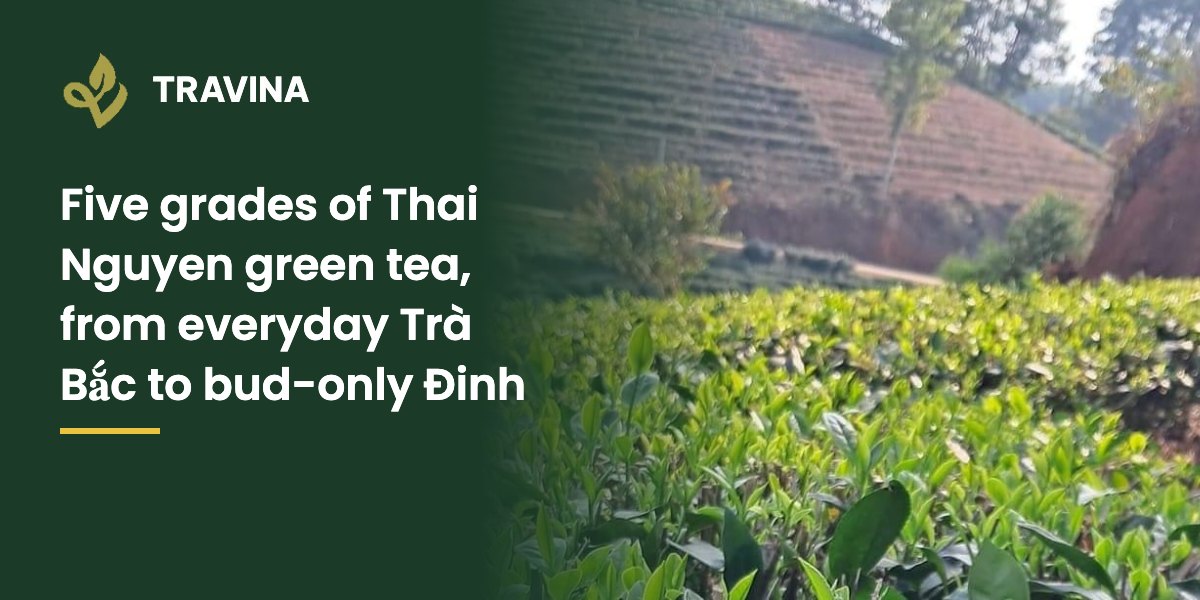
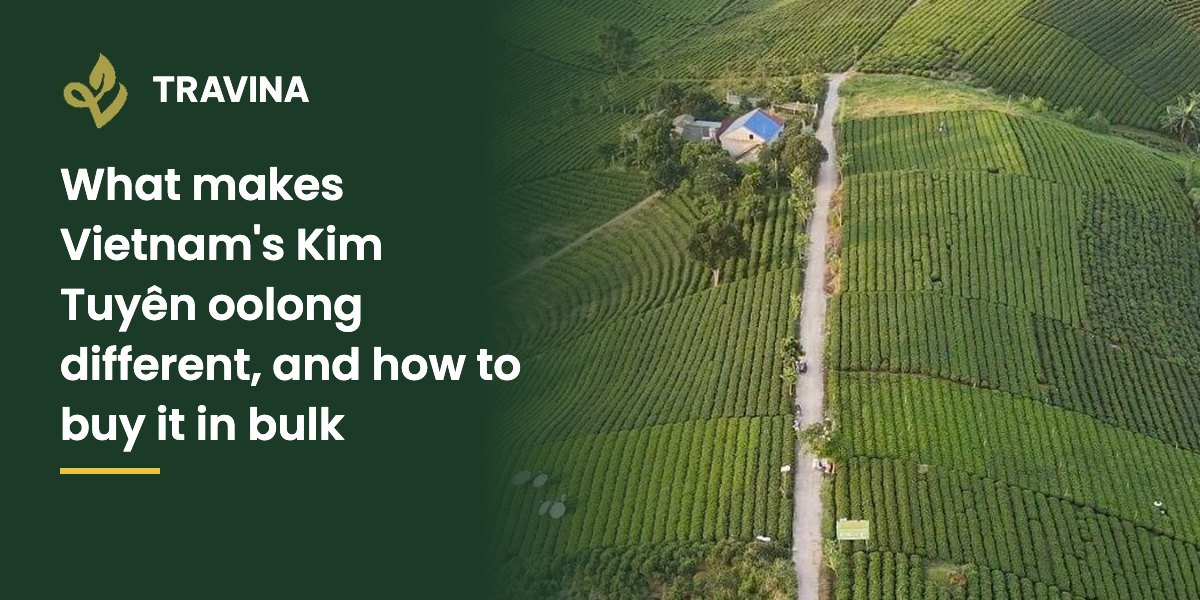
What are Thai Nguyen’s “four famous tea areas”, and where does La Bang fit? In Vietnamese media the phrase “tứ đại danh trà” usually lists Tan Cuong, La Bang, Trai Cai and Khe Coc: four places whose names have long been attached to good green tea. It is a popular label, not an official ranking, and other lists exist. La Bang, where TRAVINA’s gardens are, sits on the eastern slopes of the Tam Dao range in the west of the province. This article explains where the phrase comes from, what is known about each area, and what makes La Bang different.
The four names, and how solid the list is
| Area | Where | What is known |
|---|---|---|
| Tan Cuong | West of Thai Nguyen city | The best known; has a geographical indication (2017) and national heritage status for its tea knowledge (2023) |
| La Bang | Western Thai Nguyen, eastern slopes of Tam Dao | Commune “long known as a land of tea”; since July 2025 a larger commune of more than 60 km² |
| Trai Cai | Northern and eastern hills of the province | A village name associated with tea; appears in press lists of famous areas |
| Khe Coc | Hill country of the province | A village name associated with tea; appears in press lists of famous areas |
The four-name list appears in Báo Nông nghiệp và Môi trường (September 2025) and Báo Pháp Luật Việt Nam (2022). Nhân Dân, in a 2022 special report, did not use the phrase “four famous” but named La Bang, Trai Cai and Khe Coc among Thai Nguyen’s well-known tea areas. A 2013 Nhân Dân article gave a different list: Minh Lap, La Bang and Phuc Thuan alongside the best-known area. In other words, La Bang appears on every list we found, but the “four” are a convention rather than a fixed title. Trai Cai and Khe Coc are village names known for tea rather than current administrative units, and we have not verified their exact present-day boundaries.
Why these names became famous
Thai Nguyen’s reputation for tea goes back at least to the 19th-century Nguyen dynasty gazetteer, which praised tea from Phu Luong. In the early 20th century, cultivated gardens spread across the hills west and north of the provincial town, and particular villages became known for the tea their households roasted. In a market where most tea was sold loose and by word of mouth, a village name was the brand. That is still largely true in Vietnam today: buyers in Hanoi ask for tea “from La Bang” or “from Trai Cai” the way wine buyers ask for a village.

La Bang: on the eastern slopes of Tam Dao
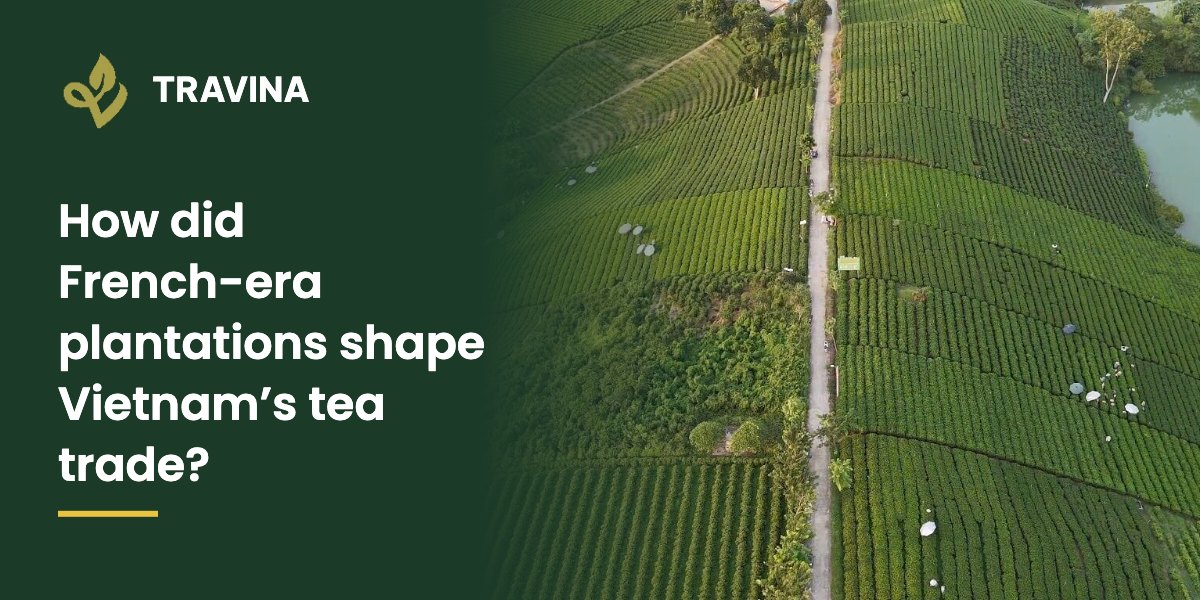
La Bang lies in the former Dai Tu district, in the west of Thai Nguyen province, where the land rises towards the Tam Dao mountains. Dân Việt describes the commune as lying “on the eastern side of the Tam Dao range” and “long known as a land of tea”. Since 1 July 2025, the communes of Hoang Nong, Tien Hoi and La Bang have been merged into one La Bang commune under Resolution 1683/NQ-UBTVQH15. The new commune covers more than 60 square kilometres with 36 hamlets and over 18,000 residents, including Dao, Tay and Nung communities. Two eco-tourism areas linked to tea, each about 50 hectares, are being planned.
Our member gardens sit at roughly 300 to 500 metres above sea level. Being close to the forested mountains gives cooler nights and frequent mist through the growing season, which slows the growth of the young shoots. Many households are from ethnic minority communities; they make up 62% of our members.
How La Bang tea differs in practice
- Season. Our gardens are picked from March to October. Output peaks in May and June and stops from November to February, when the bushes rest and are pruned.
- Cultivars. Like most of Thai Nguyen, La Bang combines old midland (Trung du) bushes with improved cultivars. Midland bushes give smaller yields and a more traditional taste.
- Processing. Leaf is withered and roasted the same day. At La Bang our processing facility is certified to ISO 22000:2018, alongside the household tradition of pan roasting.
- Style. Thai Nguyen green tea is known for an astringent first sip that turns sweet in the aftertaste. Differences between villages are real but subtle, and depend as much on the picking standard and roasting as on the place.

What the label means for a buyer
A famous area name helps, but it does not guarantee a lot. Ask for the garden or household group, the harvest date, the grade and test reports. Be careful with names that carry legal protection: one of the four areas has a registered geographical indication, and “Chè Thái Nguyên” is a collective mark protected in several markets. A supplier should be able to show that it is entitled to use such names. TRAVINA sells La Bang and Dai Tu tea under its own name and does not label it as tea from any other area.
For more on our gardens, read Dai Tu and La Bang: inside the two tea-growing areas behind TRAVINA, how to verify genuine Thai Nguyen tea and Thai Nguyen tea in numbers.
Frequently asked questions
What are the four famous tea areas of Thai Nguyen?
Vietnamese media usually list La Bang, Trai Cai, Khe Coc and the area west of Thai Nguyen city shown in the table above. It is a popular phrase, not an official classification, and some articles name other villages instead.
Where is La Bang?
In the west of Thai Nguyen province, in the former Dai Tu district, on the eastern slopes of the Tam Dao mountains. Since July 2025 it has been a larger commune that includes the former Hoang Nong and Tien Hoi.
Is all tea from the four areas the same?
No. They are different villages with different gardens, cultivars and roasting habits. Tea from La Bang should be sold under its own origin, not under another area’s name.
When is the harvest in La Bang?
Our gardens are picked from March to October, with the largest volumes in May and June. There is no harvest from November to February.
Can I visit La Bang?
Yes. We welcome buyers at the gardens and the processing facility; see tea tours or contact us. During the Thai Nguyen tea festival from 30 October to 7 November 2026, we also host visits.
Sources
- Báo Nông nghiệp và Môi trường, Thai Nguyen tea and the four famous areas, 9 September 2025: nongnghiepmoitruong.vn
- Báo Pháp Luật Việt Nam, “Trà Thái Nguyên xứng danh đệ nhất danh trà”, 2022: baophapluat.vn
- Nhân Dân, “Đệ nhất danh trà”, 12 October 2022: nhandan.vn
- Nhân Dân, Thai Nguyen tea areas, 5 November 2013: nhandan.vn
- Dân Việt, La Bang commune and tea tourism, 13 September 2025: danviet.vn
- Tạp chí Công Thương, names of Thai Nguyen communes after the 2025 merger, 18 June 2025: tapchicongthuong.vn
Want to taste La Bang tea? Contact TRAVINA for samples and the harvest details of current lots.