How long has Vietnam been drinking tea? Long enough to appear in the oldest books we can still check. A 14th-century Vietnamese chronicle records tea and wine offered to ancestors on New Year’s Eve; 15th- and 18th-century Vietnamese scholars wrote about local tea hills; and the 8th-century Chinese Classic of Tea already noted that people in the Giao region valued a tea-like drink above all and served it first to guests. Claims of “thousands of years” are harder to prove. This article walks through what the written records actually say, in Vietnam and in China, and where the evidence stops.
A timeline from the written record
| Period | Record | What it says |
|---|---|---|
| 8th century | Lu Yu, Classic of Tea (茶經) | Quotes an older text saying that in Giao and Guang a tea-like leaf drink is valued most and served first to guests |
| About 1335 | Le Tac, An Nam Chi Luoc | On New Year’s Eve, families offer tea and wine to their ancestors |
| 15th century | Nguyen Trai, Du Dia Chi (geography) | Mentions “sparrow-tongue” tea from Sa Boi, in today’s Quang Tri (cited by later writers) |
| 1773 | Le Quy Don, Van Dai Loai Ngu | Tea trees grow on the Am Thien, Am Gioi and Am Cac hills of Ngoc Son, Thanh Hoa (cited by later writers) |
| Late 18th–early 19th century | Pham Dinh Ho, Vu Trung Tuy But | Describes drinking tea with friends and notes that Vietnamese tastes in tea resemble Chinese ones (cited by later writers) |
| 19th century | Dai Nam Nhat Thong Chi (Nguyen dynasty gazetteer) | Notes that tea from Phu Luong in Thai Nguyen is better than tea from elsewhere (cited by later writers) |
| 1884–1940 | French colonial records | First plantations (1884, 1890), Phu Ho research station (1918), first factory in Indochina (1925), first tea cooperative (1940) |
A note on sources: we read the Classic of Tea and the 1961 Vietnamese translation of An Nam Chi Luoc directly. For the other Vietnamese classics we rely on how Vietnamese newspapers and journals quote them, and say so.
What the Classic of Tea says about Giao
Lu Yu’s Classic of Tea, written in Tang dynasty China, opens with the line “茶者,南方之嘉木也”: tea is a fine tree of the south. In its seventh chapter it quotes an older text, the Tongjun Lu, about a plant called gualu (瓜蘆), “which also resembles tea”. People who boil salt drink it, it says, and “in Giao and Guang it is valued most; when guests arrive it is served first” (交、廣最重,客來先設).
Two cautions apply. The plant described is tea-like, not necessarily tea. And Giao, the Tang-era Jiaozhou, covered northern Vietnam but also more than today’s Vietnam. What the line does show is that, over a thousand years ago, Chinese writers already associated the Giao region with a strong custom of serving a leaf drink to guests, a custom that is still central to Vietnamese hospitality. We look at this passage more closely in a separate article.
Vietnamese records: ancestors, hills and connoisseurs
The earliest Vietnamese record we could check ourselves is An Nam Chi Luoc, compiled by Le Tac around 1335. Describing New Year’s Eve, it says people open their doors, set off bamboo firecrackers and lay out “tea and wine to offer to the ancestors”. Tea on the ancestral altar at Tet is still a Vietnamese custom today.
Later scholars wrote about where tea grew. According to Vietnamese journals quoting these works, Nguyen Trai’s 15th-century geography mentions a “sparrow-tongue” tea from Sa Boi, in present-day Quang Tri, and Le Quy Don’s encyclopedic Van Dai Loai Ngu (1773) records tea trees on several hills of Ngoc Son in Thanh Hoa, as well as the folk habit of drinking fresh green tea. In the essays of Pham Dinh Ho (1768–1839), the author drinks tea with a friend, refers to the Chinese tea masters Lu Tong and Lu Yu, and remarks that Vietnamese and Chinese tastes in tea are alike.
The Nguyen dynasty’s national gazetteer, the Dai Nam Nhat Thong Chi, is often cited for one line that matters to us: tea from Phu Luong, in Thai Nguyen, was better than tea from other places. It is one of the earliest written links between Thai Nguyen and fine tea.
The colonial period: plantations, research and export
Large-scale, export-oriented tea came with French rule. VnBusiness lists a 250-hectare plantation at Phu Thuong in Quang Nam in 1884 and a 60-hectare plantation at Tinh Cuong in Phu Tho in 1890 as the first in Indochina. In 1918 the colonial government set up the Phu Ho station in Phu Tho to find the best tea cultivars for Tonkin, and in 1925 the first tea factory in Indochina was built there with British machinery. A 1927 report by P. Braemer, head of agriculture for Tonkin, notes that Phu Ho’s small output was bought entirely by the Paris tea house Dammann, and that northern Vietnam still imported 340,000 kg of tea from China in 1925 while exporting 150,000 kg. Tea was planted at B’Lao, today’s Bao Loc in Lam Dong, from 1927.
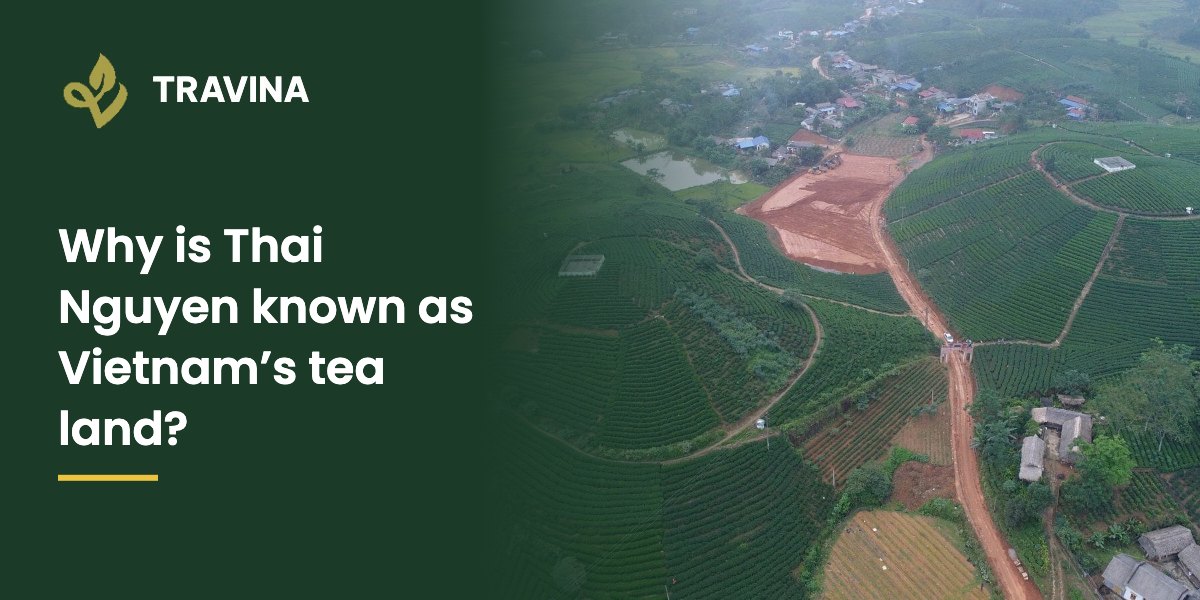
In Thai Nguyen, the tea gardens that made the province famous were laid out in the early 1920s, when Vu Van Hiet, known as Doi Nam, brought cultivars from Phu Tho. By 1940 the first Vietnamese tea cooperative had been founded in Thanh Ba, Phu Tho, with 50 growers.

How far back does the evidence go?
Some articles state that Vietnamese people have grown tea for more than 2,000 years; an international tea journal repeated this in 2007. Others point to the wild tea trees of the northern mountains, or to the remark of a Soviet scientist at Suoi Giang in 1960, as signs that tea may have originated here. These ideas are plausible but not proven. What can be said with confidence is that a tea-drinking culture in the Giao region was noticed by Chinese writers by the 8th century, that Vietnamese families offered tea to their ancestors by the 14th century, and that Vietnamese scholars were writing about local tea hills and tea tastes by the 15th to 18th centuries.
Why history matters to a buyer
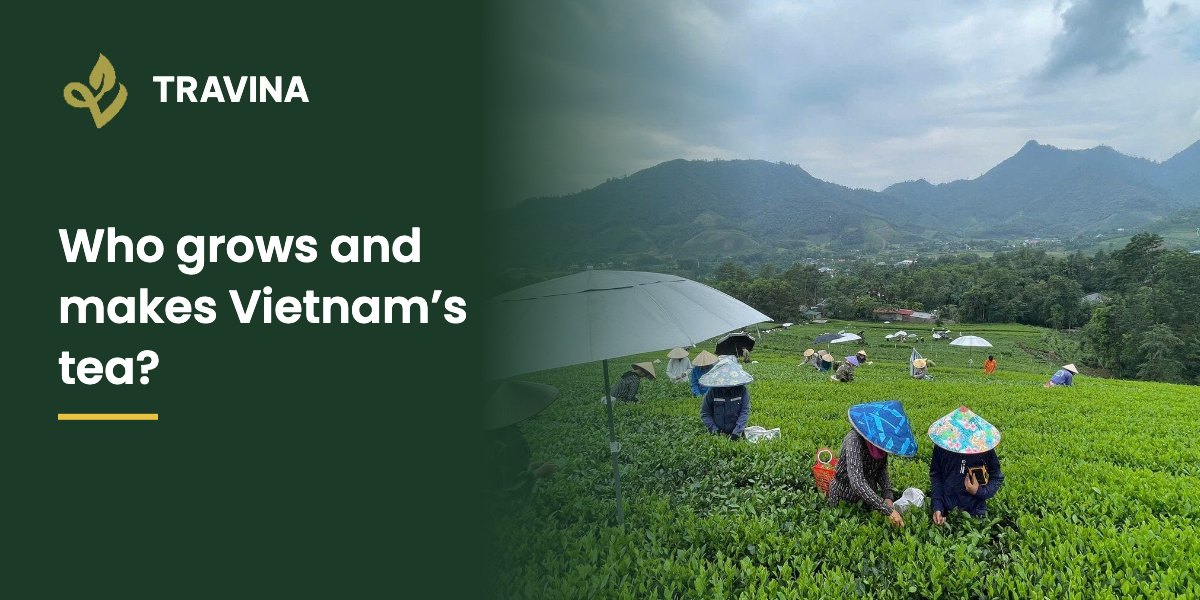
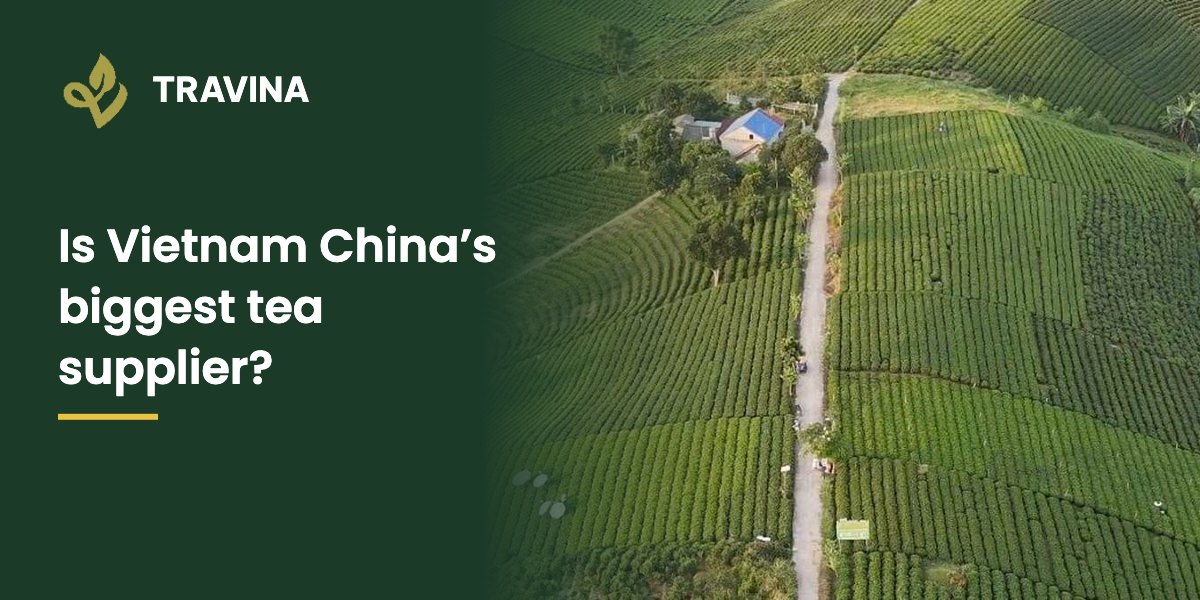
For a tea buyer, history is not decoration. It explains why tea in northern Vietnam is grown by so many households rather than a few estates, why green tea and hand-roasting remain central, and why names like Thai Nguyen carry weight in the domestic market. It also explains the strong local preference for tea served to guests and on family altars, which keeps a large domestic market alongside exports. Our own gardens in Dai Tu and La Bang are part of this northern tradition; see Dai Tu and La Bang and an honest guide to Thai Nguyen green tea.
Frequently asked questions
When did Vietnamese people start drinking tea?
No exact date can be proven. The earliest Vietnamese record we could verify, from about 1335, already treats tea as a normal offering to ancestors, which implies a much older habit.
Does the Classic of Tea mention Vietnam?
It mentions Giao (Jiaozhou), a Tang-era region that included northern Vietnam, saying a tea-like drink was valued most there and served first to guests. It does not use the name “Annam” or “Vietnam”.
Is tea in Vietnam older than tea in China?
There is no evidence for that. Northern Vietnam lies within the wider region where the tea plant is thought to have originated, but the written history of tea drinking is much older in China.
When did Thai Nguyen become famous for tea?
The Nguyen dynasty gazetteer already praised tea from Phu Luong in Thai Nguyen in the 19th century, and the province’s best-known gardens were planted in the early 1920s.
Who built Vietnam’s first tea factory?
The French colonial administration, at Phu Ho in Phu Tho province, in 1925.
Sources
- Lu Yu, Classic of Tea (茶經), Project Gutenberg edition: gutenberg.org
- Le Tac, An Nam Chi Luoc, Vietnamese translation 1960, Hue University 1961 (digital edition 2001): quangduc.com
- Vietnam News Agency (Nhân vật – Sự kiện), on Le Quy Don’s record of tea, 25 May 2023: vnanet.vn
- Tạp chí Công Thương, “Trà qua văn học và đời sống” (Nguyen Trai, Pham Dinh Ho): tapchicongthuong.vn
- Báo Nông nghiệp và Môi trường, on the Dai Nam Nhat Thong Chi and Thai Nguyen tea, 9 September 2025: nongnghiepmoitruong.vn
- VnBusiness, early plantations and the first tea cooperative, 17 May 2023: vnbusiness.vn
- P. Braemer, “Tonkin: relance du thé”, L’Éveil économique de l’Indochine, 8 May 1927: entreprises-coloniales.fr
- Báo Lâm Đồng, tea at B’Lao since 1927, 29 January 2025: baolamdong.vn
- Nhân Dân, Doi Nam and early Thai Nguyen tea, 18 August 2023: nhandan.vn
Want to taste tea from this northern tradition? Contact TRAVINA for samples of our Thai Nguyen green teas.