For most first orders of Vietnamese tea, the practical choice is between EXW at the cooperative and FOB Hai Phong. FOB is usually the simpler start for an overseas buyer: the seller clears export customs in Vietnam and loads the goods on board at Hai Phong, and from that point freight and risk are yours. EXW gives you the lowest quoted price but leaves Vietnamese export clearance to you, which is hard to do from abroad. CIF adds sea freight and basic insurance to the destination port, and suits buyers who do not yet have a forwarder. TRAVINA – Tam Tra Viet Cooperative quotes in USD on EXW or FOB terms; this guide explains what each term covers so you can compare quotes on the same basis.
| Term (Incoterms® 2020) | Seller delivers | Export clearance | Main freight | Insurance | Risk passes to buyer |
|---|---|---|---|---|---|
| EXW – Ex Works | At seller’s premises, not loaded | Buyer | Buyer | Buyer (optional) | When goods are made available at the premises |
| FCA – Free Carrier | To buyer’s carrier at an agreed place | Seller | Buyer | Buyer (optional) | On handover to the carrier |
| FOB – Free On Board | On board the vessel at the port of shipment | Seller | Buyer | Buyer (optional) | Once the goods are on board |
| CFR – Cost and Freight | On board the vessel at the port of shipment | Seller | Seller | Buyer (optional) | Once the goods are on board |
| CIF – Cost, Insurance and Freight | On board the vessel at the port of shipment | Seller | Seller | Seller, minimum cover | Once the goods are on board |
What Incoterms do, and what they do not do
Incoterms® are trade terms published by the International Chamber of Commerce (ICC). The version in common use is Incoterms® 2020, in force since 1 January 2020. It has eleven rules: seven for any mode of transport (EXW, FCA, CPT, CIP, DAP, DPU, DDP) and four for sea and inland waterway only (FAS, FOB, CFR, CIF).
A term tells both sides three things: where the seller hands over the goods, who pays which costs, and at what point the risk of loss or damage moves to the buyer. It does not set the price, the payment method, the moment ownership changes or what happens if the tea fails a test. Those belong in the sales contract. Always write the term together with a named place and the version, for example “FOB Hai Phong, Incoterms® 2020”.
EXW at the cooperative: lowest number, most work for you
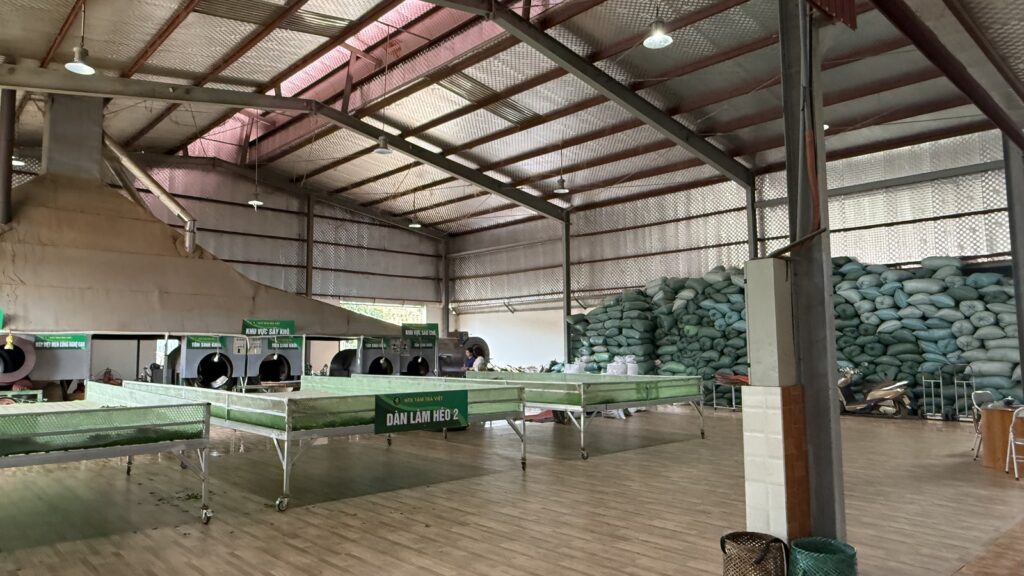
Under EXW the seller makes the tea available at its own premises. In our case that is the cooperative in Dai Tu district, Thai Nguyen province, in northern Vietnam. The buyer then pays for loading, trucking to the port, Vietnamese export customs, the ocean freight and everything after.
EXW looks cheapest on paper because almost nothing is included. The catch is export clearance. A foreign buyer normally cannot declare goods for export in Vietnam in its own name, so it needs a Vietnamese forwarder or agent to act as exporter. ICC itself notes that EXW fits domestic trade better than international sales. If you already work with a forwarder in northern Vietnam who handles export declarations, EXW can work well. Otherwise, it tends to add calls, delays and surprise charges.
FOB Hai Phong: the usual starting point
Hai Phong is the main seaport for northern Vietnam and the natural port of loading for tea from Thai Nguyen. Under FOB Hai Phong, the seller covers packing, trucking to the port, export customs and loading. Risk passes to you once the goods are on board the vessel. You book the ship, pay the ocean freight and arrange insurance if you want it.
FOB suits buyers who have a forwarder at home and want to control freight rates. It also keeps the comparison clean: when two Vietnamese suppliers both quote FOB Hai Phong, the difference is the tea, the packing and the paperwork, not hidden trucking costs.
One technical point. ICC advises that FOB is meant for goods loaded directly onto the ship, and that for containers handed to the shipping line at a terminal, FCA is the better fit, because the seller loses control of the container before it is on board. In everyday tea trade many buyers still ask for “FOB” on container shipments. If your bank or insurer is strict about this, ask for FCA with the same named port; the cost structure is almost the same.
CFR and CIF: when the seller arranges the ship
Under CFR and CIF the seller also books and pays the main sea freight to your destination port. CIF adds cargo insurance. Note two details that often confuse first-time importers:
- Risk still passes in Vietnam. Even though the seller pays freight to your port, the risk moves to you once the goods are on board at Hai Phong. If something happens at sea, you claim on the insurance, not against the seller.
- CIF insurance is minimum cover. Under Incoterms® 2020, CIF only requires the lower level of cover (Institute Cargo Clauses C or similar). If you want broader “all risks” cover, agree it in the contract. CIP, the multimodal cousin of CIF, requires the higher level by default.
CIF is convenient for buyers who do not yet have a forwarder or who import small, irregular lots. The trade-off is less control over the shipping line, transit time and destination charges. Our standard quotes are EXW or FOB; if you need CFR or CIF to your port, tell us the destination and expected volume and we will say whether we can arrange it for that lane.
How to compare two tea quotes on different terms
Quotes only compare fairly on the same term. A practical way to line them up:
- Bring everything to FOB. To an EXW price, add loading, trucking to Hai Phong, export customs, port handling and document fees. Your forwarder can estimate these per shipment.
- Add your own freight and insurance to the FOB figure and compare the result with any CFR or CIF quote you have.
- Check what is inside the price. Export cartons, inner vacuum bags, pallets, phytosanitary certificate, certificate of origin and lab reports may or may not be included.
- Divide by net kilograms of tea, not by gross weight or number of cartons, so different pack sizes compare properly.
Documents that usually travel with a tea shipment
Whatever the term, an export lot of tea from Vietnam normally ships with a commercial invoice, a packing list, a bill of lading (or air waybill), a phytosanitary certificate issued by Vietnam’s plant protection authority, and a certificate of origin when the buyer wants a preferential tariff, for example Form E for China under the ASEAN–China agreement. Test reports for pesticide residues are agreed separately, according to the rules of your market. Who arranges and pays for each document should be written next to the Incoterm in your contract.
Which term we suggest for a first order
- You have a forwarder in Vietnam: EXW or FCA at the cooperative.
- You have a forwarder at home: FOB Hai Phong (or FCA Hai Phong for containers).
- You have no forwarder yet: ask us whether CFR or CIF to your port is possible; for samples and small lots, air or courier is usually simpler.
For samples, minimum orders and lead times, see our guide to MOQ, price tiers and lead times and how to request and evaluate a tea sample.
Get a quote on the term that fits you. Importers can request samples of Traditional Northern Green Tea, Special Green Tea or Broken Needle Tea Bags through our Contact page, or message our export team on Zalo/WhatsApp at +84 855 318 678. Tell us your destination port, the Incoterm you prefer and the expected volume, and we will quote in USD on that basis.
Frequently asked questions
Which Incoterm does TRAVINA quote by default?
We quote in USD on EXW or FOB terms. FOB Hai Phong is the most common basis for overseas buyers. CFR or CIF can be discussed for specific destinations.
Is EXW always the cheapest option?
The quoted number is the lowest, but you pay the export costs separately and need someone in Vietnam to clear export customs. After those costs, the landed cost is often close to, or higher than, buying FOB.
When does risk pass to me under CIF?
When the goods are loaded on board the vessel at the port of shipment in Vietnam, the same point as FOB. The seller pays freight and minimum insurance to your port, but the voyage risk is yours, covered by the insurance policy.
Should I use FOB or FCA for a container of tea?
ICC recommends FCA for containers handed to the carrier at a terminal. In practice many tea buyers still use FOB. If your letter of credit or insurer is strict, use FCA with the named port.
Does the Incoterm decide when I pay?
No. Incoterms cover delivery, costs and risk. Payment terms such as deposit, T/T balance or L/C are agreed separately in the contract.