In Thai Nguyen, our cooperative picks tea from March to October and rests the bushes from November to February. Spring (March–May) gives the tender, much sought-after leaf in smaller volumes; early summer (May–July) brings the highest volume and a fuller cup; autumn (September–October) gives a smaller, aromatic flush. For buyers this means three practical rules: order spring tender grades before March, plan volume orders for the summer peak, and book anything for the Lunar New Year by October or November, from tea already made in the season. This guide turns our harvest calendar into an ordering plan.
| Period | What comes in | Finished tea (cooperative, typical year) | What to order |
|---|---|---|---|
| March–April | First spring flush, tender leaf | About 11–15 t a month | Bud and tender grades; book before March |
| May–July | Peak volume, fuller leaf | About 18–21 t a month (June highest) | Everyday green tea, tea bags, private label runs |
| August–September | Volume easing, autumn flush begins | About 12–14 t a month | Repeat orders, second lots for the year |
| October | Autumn leaf, aromatic and finer | About 10 t | Autumn lots; last fresh processing of the year |
| November–February | Rest period, bushes pruned | No picking | Stock tea only; plan next spring |
Monthly figures are from our growing-area guide, Dai Tu and La Bang, and add up to roughly the 120 tonnes of dry tea the cooperative makes in a normal year. Weather moves them from year to year.
Why the season matters to a buyer
The same garden gives different tea through the year. Spring leaf grows slowly after the winter rest, so buds are small and tender and the cup is gentle and sweet. As the weather warms, the bushes grow faster: summer leaf is larger and the cup is fuller and stronger, which suits everyday drinking, blending and tea bags. In autumn growth slows again and the leaf becomes finer and more aromatic. None of these is “better” in general; each fits a different product. What matters is matching the flush to what you sell.
How often each bush is picked
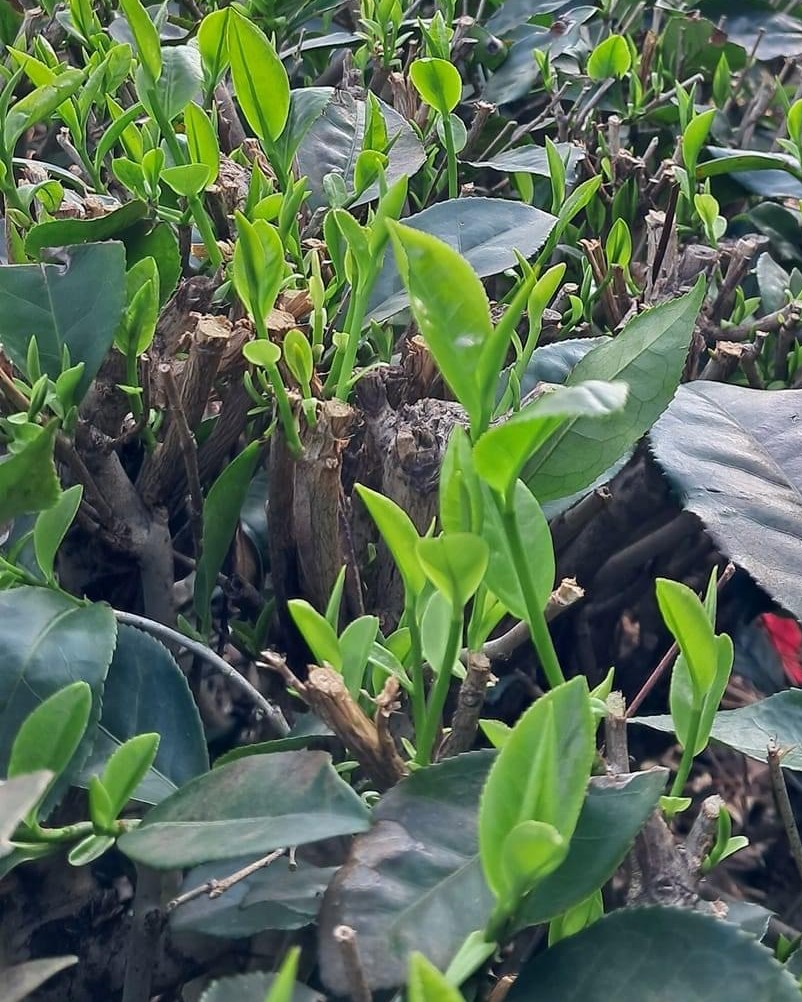
Bushes are picked in rounds. For everyday green tea, a new round is ready roughly every 28 to 40 days depending on the season. Bud grades are much slower: our Tra Dinh needle tea gives only about five or six pickings a year. The picking standard also changes the yield:
- Everyday green tea (one bud, two leaves): about 6 kg of fresh leaf per 1 kg of dry tea.
- Clean Six-No tea: about 10 kg of fresh leaf per 1 kg of dry tea.
- Needle (bud) tea: about 12 kg of fresh leaf per 1 kg of dry tea.
This is why bud grades are limited in volume and need to be reserved early, while everyday grades can be supplied steadily through the season. Our guide to Thai Nguyen green tea grades explains how each grade is picked.
An ordering plan by product
Bud and tender grades
Reserve volume before March. Spring tender grades come from the first weeks of the season, and once the spring lots are made they do not come back until the next year. Taste samples in January or February, confirm the grade and quantity, and we plan the picking around your order.
Everyday green tea and tea bags
Plan larger orders for May to July, when volume is highest. If you buy all year, split the year into two or three lots rather than one large order, so each lot is fresh when it ships.
Private label
Packaging takes time to print, so work backwards from the season: approve the artwork before the flush you want, and the tea can be packed as soon as it is made. See private label tea in 7 steps.
Lunar New Year (Tet) and year-end gifts
Tet falls in late January or February, during the rest period, so all Tet tea is made earlier in the season. Order by October or November: packaging suppliers and couriers in Vietnam are at full capacity in the weeks before Tet.
Buying outside the season
From November to February we sell from stock made earlier in the year. Stored properly in vacuum packs, green tea keeps its character well for months, but it is no longer “new season” tea. Be careful with offers of fresh spring Thai Nguyen tea in December: tea sold then was made months earlier. Ask for the production date on the lot.
Planning a visit around the harvest
If you want to see picking and processing, come between March and October. Our one-day factory visit for importers covers both sites, a cupping session and a documents review.
Plan your next lot with us. Importers can request samples of Traditional Northern Green Tea, Special Green Tea or Broken Needle Tea Bags through our Contact page, or message our export team on Zalo/WhatsApp at +84 855 318 678. Tell us the grade, quantity and when you need the tea, and we will tell you which flush it can come from. For minimums and lead times, see MOQ, price tiers and lead times.
Frequently asked questions
When is tea harvested in Thai Nguyen?
At our cooperative, from March to October. November to February is the rest period, when bushes are pruned and not picked.
When should I order spring tea?
Before March. Taste samples in January or February and confirm the grade and quantity, so the order can be planned around the first spring pickings.
Which month has the most tea?
In a typical year, June is our highest month, with May and July close behind.
Can I buy Thai Nguyen tea in winter?
Yes, from stock made earlier in the season. There is no fresh picking from November to February.
When should I order for Tet?
By October or November, because Tet falls during the rest period and suppliers are at full capacity in the weeks before it.