Is northern Vietnam part of tea’s original homeland? Possibly, but “possibly” is the honest answer. Several researchers have placed the origin of the tea plant in the mountainous region where China, Myanmar, Laos and northern Vietnam meet, and Vietnam’s old Shan tea trees fit that picture. The most detailed recent genetic work, however, locates the main centres of tea domestication in Yunnan and India and does not single out Vietnam. Popular claims that tea “began in Vietnam” go further than the evidence. This article sets out what researchers actually say.
What different researchers say
| Source | What it says | How strong |
|---|---|---|
| F. Kingdon-Ward (1950), cited by later reviews | Places the natural range of tea in Southeast Asia, from Assam to eastern China and south into Vietnam | A botanical view of where wild tea grows, not a genetic study |
| K. M. Djemukhadze at Suoi Giang (1960) | Wrote in the commune’s visitors’ book, asking whether this might be “the origin of the tea plant” | A question in a guest book, not a published finding |
| Nesumi et al. (2004), Japanese–Vietnamese survey | Tea is thought to have originated in the border area of Vietnam, Laos, Thailand, Myanmar and China, so Vietnamese tea diversity is scientifically important | Peer-reviewed survey report; states the origin as a prevailing view |
| Yoshida et al. (2006) | All 135 tea samples from northern Vietnam were C. sinensis var. assamica, with wide chemical diversity | Chemistry and classification, not origin |
| Meegahakumbura et al. (2018) | Three domestication centres: Chinese tea in southern China, Chinese Assam tea in Yunnan, Indian Assam tea in India | Large genetic study; does not discuss Vietnam |
| Bui et al. (2025) | High genetic diversity among 60 Vietnamese Shan trees, in three regional groups | Shows diversity within Vietnam; does not test origin |
The case for northern Vietnam
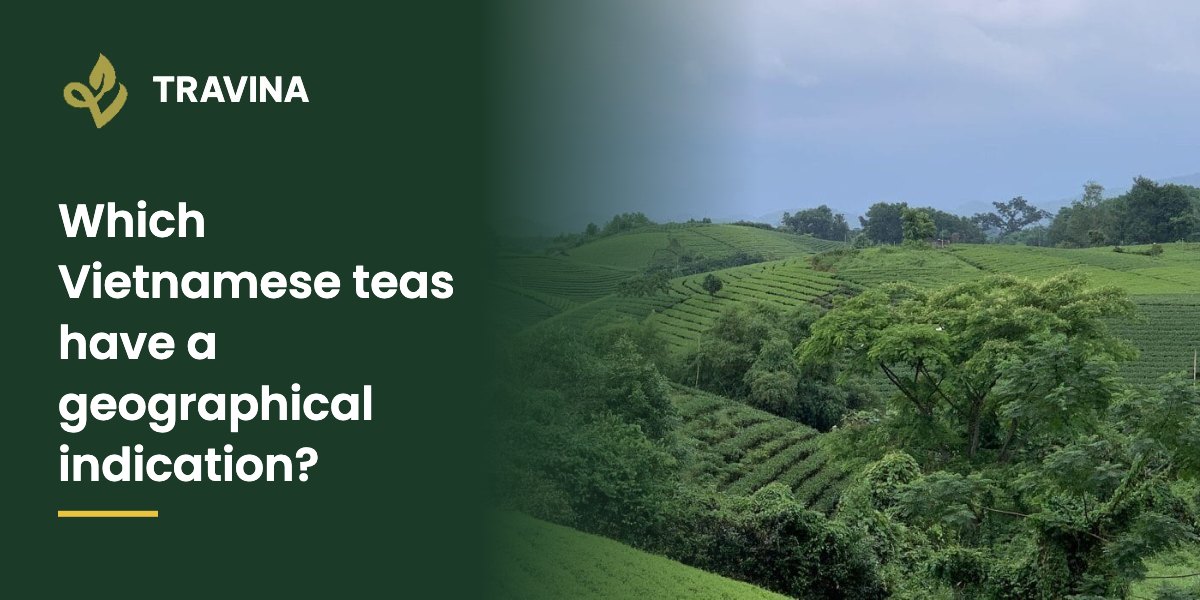
The argument rests on geography and diversity. The tea plant’s wild relatives and its oldest surviving trees are found in the humid mountains of southwest China, northern Myanmar, Laos and northern Vietnam. A 2022 SGGP article describes these as the “primitive tea regions” where ancient tea trees still survive. Northern Vietnam has tall Shan tea trees above 1,000 metres in Ha Giang, Lao Cai and Son La, some recognised as Vietnam Heritage Trees, and Vietnamese researchers have found high genetic diversity among them. In plant science, high diversity in a region is often a sign of a long history there.
The 2004 survey by Nesumi and colleagues, made with Vietnamese co-authors, states this view plainly: tea is “thought to have originated” in the border area of Vietnam, Laos, Thailand, Myanmar and China, which makes Vietnam’s tea genetic resources especially important.

The case for caution
The largest genetic study of tea domestication to date, published by Meegahakumbura and colleagues in 2018, analysed tea plants from across the growing world and identified three centres where tea was domesticated: Chinese small-leaf tea in southern China, Chinese Assam tea in Yunnan, and Indian Assam tea in India. It does not mention Vietnam. That does not rule Vietnam out, because the study did not focus on Vietnamese samples, but it means there is no genetic evidence that tea was first domesticated in Vietnam.
The famous remark at Suoi Giang also needs care. Vietnamese newspapers often say that the Soviet tea scientist K. M. Djemukhadze concluded that Vietnam was the origin of tea. The verified account, from SGGP in 2015, is that in 1960 he wrote a question in the commune’s visitors’ book. We could not find the research paper often attributed to him.
What we can say with confidence
- Northern Vietnam lies inside the wider mountainous region where tea is thought to have originated.
- The region has old, large-leaf tea trees and high genetic diversity, which makes it important for tea science and breeding.
- The main centres of tea domestication identified so far by genetics are in China and India.
- Claims that tea “originated in Vietnam” are hypotheses, not established facts.
Why it matters
For tea lovers, the origin question is a good story. For the Vietnamese tea industry, it is also practical: the genetic diversity of old Shan trees is a resource for breeding better cultivars, and the heritage value of old stands can support higher prices if it is described honestly. For buyers, it is a reason to ask specific questions about any tea sold on the strength of “ancient origins”. You can read more in where Vietnam’s ancient tea trees are and Vietnamese Shan tea and Yunnan Pu’er.
Frequently asked questions
Did tea originate in Vietnam?
There is no proof that it did. Northern Vietnam is part of the wider region where tea is thought to have originated, but genetic studies place the main domestication centres in China and India.
Who was Djemukhadze?
A Soviet tea scientist who visited Suoi Giang in 1960 and wrote in the commune’s visitors’ book, asking whether it might be the origin of the tea plant. It was a question, not a research conclusion.
Are Vietnamese tea trees wild?
Some old Shan trees grow in forest and are often called wild, but most have been tended by local communities for generations. Most Vietnamese tea comes from cultivated gardens.
What type of tea plant grows in northern Vietnam?
A 2006 study of 135 northern samples found all of them to be the large-leaf assamica variety. Cultivated gardens also grow improved cultivars, some bred from Chinese and Indian parents, such as LDP2.
Sources
- Nesumi A., Yoshida K., Le Van Duc, Nguyen Le Thang (2004), survey of tea genetic resources in northern Vietnam: repository.naro.go.jp
- Yoshida K. et al. (2006), diversity of caffeine, catechins and amino acids in northern Vietnamese tea: agris.fao.org
- Meegahakumbura M.K. et al. (2018), Frontiers in Plant Science, DOI 10.3389/fpls.2017.02270: doi.org
- Bui K.T. et al. (2025), Sains Malaysiana 54(3): ukm.my
- Luong Hong Quang, lecture notes on tea processing citing Kingdon-Ward, Nong Lam University, 2004: hcmuaf.edu.vn
- SGGP, “Lên núi tìm trà” (Djemukhadze at Suoi Giang), 3 July 2015: sggp.org.vn
- SGGP, ancient Shan tea and the primitive tea regions, 5 November 2022: sggp.org.vn
Curious about Vietnamese tea from its oldest regions? Contact TRAVINA for an honest conversation about what we can supply.