Vietnamese Shan tea and Yunnan Pu’er: same big-leaf tree, different cup? Botanically they are close relatives. The old Shan tuyet trees of northern Vietnam and the big-leaf trees of Yunnan both belong to the large-leaf assamica type of Camellia sinensis, and they grow in neighbouring mountains. The difference lies in origin and in how the leaf is processed and sold. Legally, “Pu’er” in China is a geographical indication reserved for Yunnan, so Vietnamese Shan tea is not Pu’er, even when it is made in a similar way. This article explains what the two share, how they differ, and what a Chinese buyer should ask.
Similarities and differences at a glance
| Vietnamese Shan tuyet | Yunnan Pu’er | |
|---|---|---|
| Plant | Large-leaf C. sinensis var. assamica; all 135 northern Vietnamese samples in a 2006 study were of this type | Yunnan large-leaf tea, also assamica type |
| Where | Northern highlands of Vietnam: Ha Giang (now Tuyen Quang), Suoi Giang and Hoang Thu Pho (Lao Cai), Ta Xua and Moc Chau (Son La) | Defined areas of Yunnan Province, China |
| Name protection | Geographical indications: Shan tuyet Moc Chau (2010), Shan tuyet Ha Giang (2018) | National geographical indication standard GB/T 22111-2008 |
| Typical products | Green tea, white tea, black tea; some sun-dried and pressed teas | Raw (sheng) and ripe (shu) Pu’er, loose or pressed, made from sun-dried green tea |
| Can it be sold as “Pu’er” in China? | No | Yes, if it meets the standard |
The same kind of tree
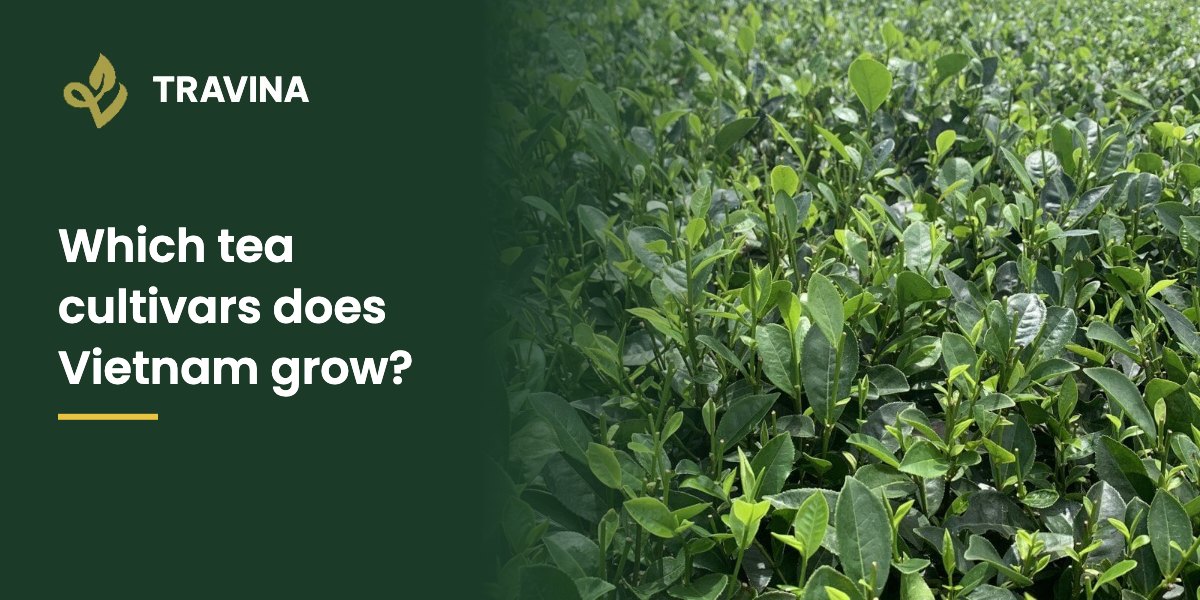
Japanese and Vietnamese researchers who collected 135 tea samples across northern Vietnam found that all of them were C. sinensis var. assamica (Yoshida et al., 2006). Research on tea domestication (Meegahakumbura et al., 2018) places one of the three centres of tea domestication, for the Chinese Assam type, in Yunnan. Northern Vietnam lies just south of Yunnan, and earlier surveys described the border region of Vietnam, Laos, Myanmar and China as part of the area where tea is thought to have originated (Nesumi et al., 2004). It is therefore no surprise that the old trees on both sides of the border look alike: tall, single-trunked, with large leaves and downy buds.
Within Vietnam, though, the trees are far from uniform. A 2025 study of 60 Shan trees using DNA markers found high genetic diversity and three regional groups, and measured lower tannin and catechin levels in Suoi Giang trees than in Cao Bo trees in Ha Giang (Bui et al., 2025).
Different names: why Vietnamese tea is not Pu’er
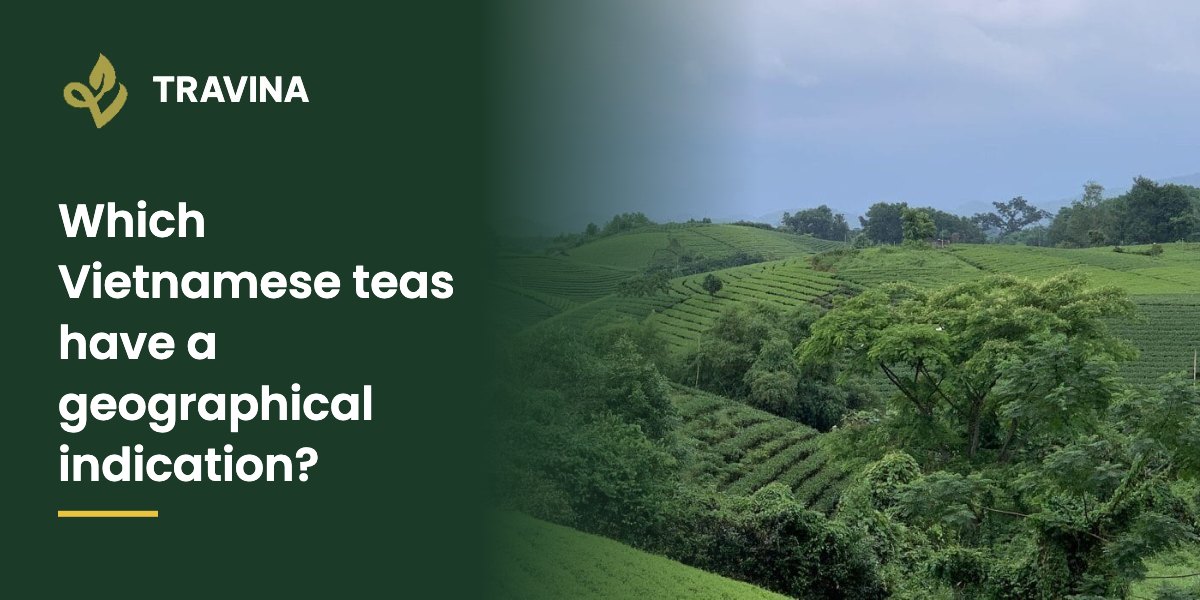
China’s national standard GB/T 22111-2008 defines Pu’er tea as tea made from Yunnan large-leaf sun-dried green tea grown within the geographical indication area, and processed within that area using specific methods. Tea from outside Yunnan cannot be called Pu’er under this standard, however it is made. For Vietnamese producers, the honest description is “Shan tea”, “Shan tuyet”, “large-leaf tea from northern Vietnam” or a similar term, with the province and village named. Vietnam has its own protected names for Shan tuyet: Moc Chau (2010) and Ha Giang (2018, covering 44 communes).
Different processing traditions
Most Vietnamese Shan tuyet is sold as green tea, pan-fired or drum-roasted soon after picking, in the same northern tradition as Thai Nguyen green tea. Producers in the highlands also make white tea from the downy buds and black tea from the large leaves, and some make sun-dried and pressed teas. A 2023 study in Molecules analysed 28 Vietnamese samples and found that green tea and raw Pu’er-style tea made from wild or ancient trees in the north had higher polyphenol content than southern oolong and northern black tea, and that caffeine and catechin levels varied with processing, region and cultivar (Nhu-Trang et al., 2023). In other words, how the leaf is made changes the cup as much as where it grows.
Yunnan Pu’er, by contrast, is built on sun-dried green tea (shaiqing) as the base, then sold either as raw Pu’er that changes slowly with age, or as ripe Pu’er made with accelerated fermentation. That tradition of ageing and trading pressed cakes is much older and better organised in Yunnan than in Vietnam.

What this means for a Chinese buyer
- Do not relabel. Vietnamese Shan tea cannot be sold as Pu’er in China. Use its own name and origin.
- Ask about the trees. “Ancient tree” can mean leaf from heritage stands, from younger Shan trees, or a blend. Ask which village and which trees.
- Ask about processing. Green, white, black or sun-dried: each behaves differently in the cup and in storage.
- Check import rules. GACC registration and Chinese labelling apply to all imported tea; see importing Vietnamese tea into China under Decree 280.
TRAVINA’s own gardens in Thai Nguyen are cultivated green tea gardens, not Shan highlands. Our ancient tea flower buds come from old trees on the eastern slopes of Tam Dao. For more on the old trees of Vietnam, read where Vietnam’s ancient tea trees are, and for green tea styles, Vietnamese green tea vs Chinese green tea.
Frequently asked questions
Is Vietnamese Shan tea the same as Pu’er?
No. They come from the same large-leaf type of tea plant, but Pu’er is a protected name for tea from defined areas of Yunnan made by specific methods. Vietnamese Shan tea is sold under its own names.
Is Shan tuyet a Pu’er-type tea?
Most Shan tuyet is made into green tea. Some producers make sun-dried and pressed teas that resemble raw Pu’er in style, but they are not Pu’er.
Are Vietnamese and Yunnan old tea trees related?
Both belong to the assamica type and grow in neighbouring mountains. Studies show considerable genetic diversity within Vietnam itself, so it is better to compare specific areas than whole countries.
Does Vietnam have protected names for Shan tea?
Yes. Shan tuyet Moc Chau has a geographical indication from 2010 and Shan tuyet Ha Giang from 2018.
Can TRAVINA supply Shan tea?
Our core range is Thai Nguyen green tea. For teas from old trees, please contact us and we will tell you honestly what we can source and from where.
Sources
- Yoshida K. et al. (2006), caffeine, catechins and amino acids in 135 northern Vietnamese tea samples: agris.fao.org
- Meegahakumbura M.K. et al. (2018), domestication origins of tea, Frontiers in Plant Science, DOI 10.3389/fpls.2017.02270: doi.org
- Nesumi A. et al. (2004), tea genetic resources survey in northern Vietnam: repository.naro.go.jp
- Bui K.T. et al. (2025), diversity of Vietnamese Shan tea, Sains Malaysiana 54(3): ukm.my
- Nhu-Trang T.-T. et al. (2023), wild and cultivated Vietnamese teas, Molecules 28(8):3470: mdpi.com
- Definition of Pu’er under GB/T 22111-2008, as quoted by Maigoo: maigoo.com
- Tạp chí Công Thương, Shan tuyet Moc Chau geographical indication, 23 June 2016: tapchicongthuong.vn
- Nhân Dân, Shan tuyet Ha Giang geographical indication, 1 December 2018: nhandan.vn
Comparing large-leaf teas for your range? Contact TRAVINA for honest advice and samples.