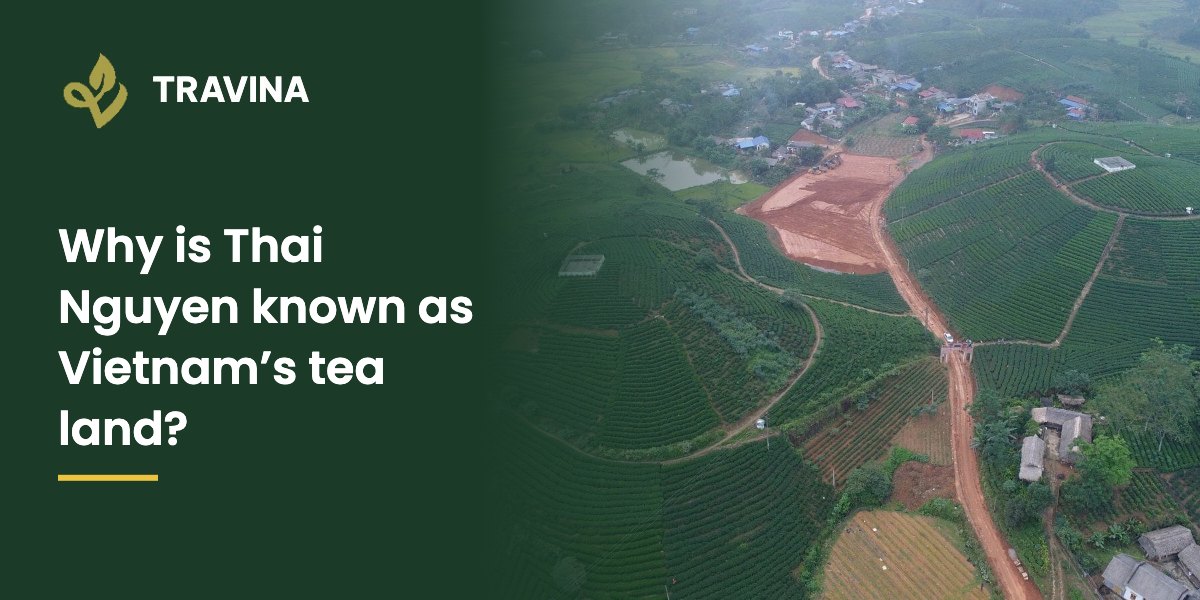
Why is Thai Nguyen known as Vietnam’s tea land? Not because it has the most tea: since the 2025 province merger, Tuyen Quang has a larger tea area. Thai Nguyen stands out for how much and how well it produces on its land. Its gardens yield well above the national average, it harvests more fresh leaf than any other province, and its tea has been praised in writing since the 19th century. Here is the province in numbers, with the sources behind each figure.
Thai Nguyen tea in numbers
| Indicator | Figure | Year / source |
|---|---|---|
| Tea area (current province, including former Bac Kan) | About 24,000 ha | 2025, Thai Nguyen provincial portal |
| Fresh leaf harvest | More than 280,000 tonnes | 2025, Thai Nguyen provincial portal |
| Area, output and value before the merger | 22,200 ha; 272,800 t fresh leaf; 54,600 t finished tea; about 13,800 billion VND | 2024, VnBusiness |
| Yield | About 123–130 quintals of fresh leaf per hectare | 2024–2026, VnBusiness; Đại biểu Nhân dân |
| Share of improved cultivars | About 82.8% of the area (18,400 ha) | 2024, VnBusiness |
| VietGAP certified area | Close to 6,000 ha | 2025, VnBusiness |
| Certified organic area | About 120 ha | 2025, VnBusiness |
| 2030 targets | 24,500 ha; over 300,000 t fresh leaf; 70% of area under GAP or organic standards | Thai Nguyen provincial portal, April 2026 |
| Public support for tea, 2025–2030 | More than 500 billion VND | VnEconomy, August 2025 |
Not the largest area, but the most leaf
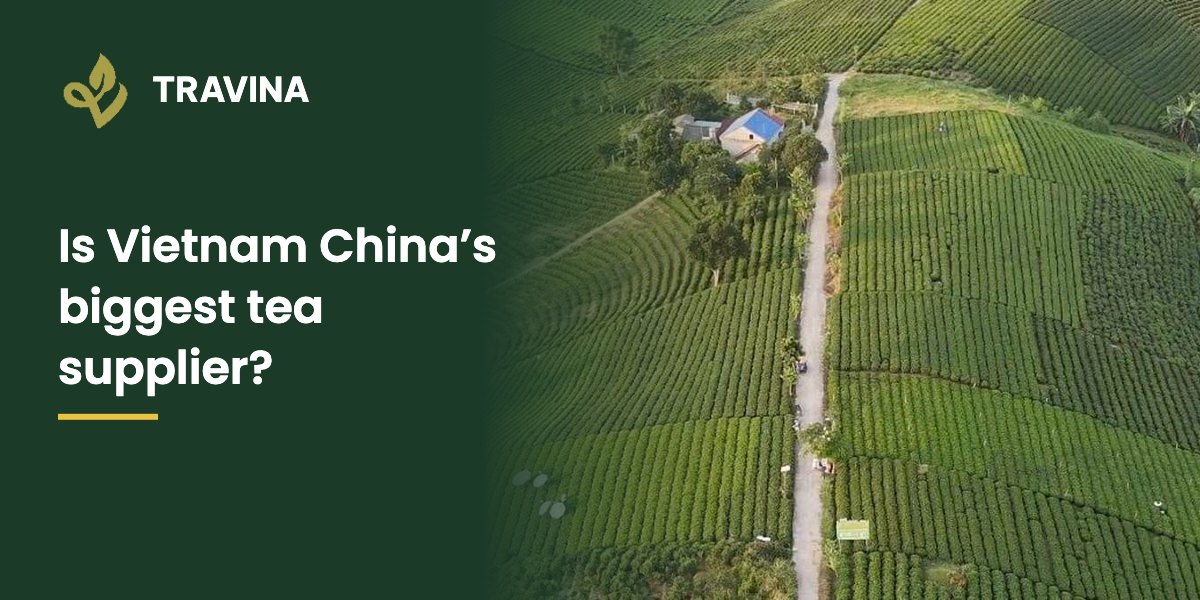
After 1 July 2025, when Vietnam merged its 63 provinces into 34, Thai Nguyen absorbed Bac Kan and now has about 24,000 hectares of tea. The new Tuyen Quang province, which absorbed Ha Giang, has more than 28,000 hectares according to Dan Viet. Some Vietnamese articles still say Thai Nguyen leads the country in tea area; with the new borders that is no longer accurate.
Where Thai Nguyen does lead is output and yield. Its gardens produced more than 280,000 tonnes of fresh leaf in 2025, against about 170,000 tonnes in Tuyen Quang. Before the merger, in 2024, the province’s 272,800 tonnes were close to a quarter of Vietnam’s 1.154 million tonnes of fresh leaf, from less than a fifth of the national tea area (our calculation from the published figures).

Why yields are high
At around 123 to 130 quintals of fresh leaf per hectare, Thai Nguyen’s yield is well above the national average of roughly 95 quintals (1.154 million tonnes from about 122,000 hectares in 2024, our calculation). Three things help:
- Replanting. More than four-fifths of the province’s tea area is now planted with improved cultivars, compared with about 54% nationally.
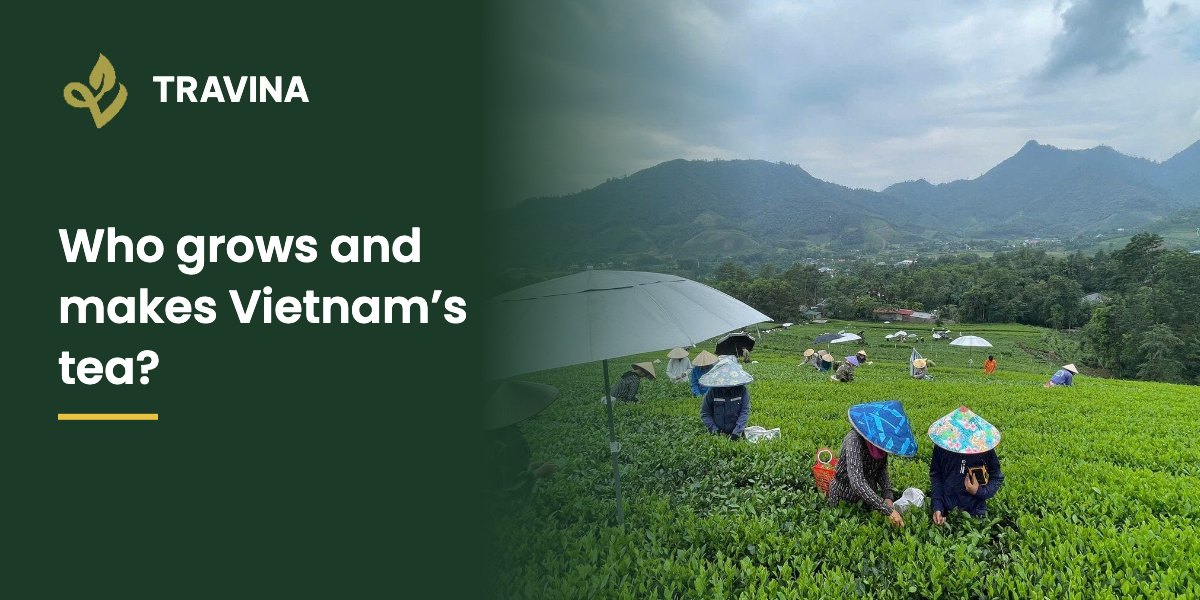
- Intensive care. Gardens are small, close to the house and picked many times a season, often with irrigation.
- Market pull. Thai Nguyen green tea sells well at home, so farmers have reason to invest in their gardens.
High yield is not the same as high quality, and Thai Nguyen tea ranges from cheap everyday grades to expensive bud and needle teas. What the numbers show is a province where tea is a serious, well-tended crop.
A reputation with a written history
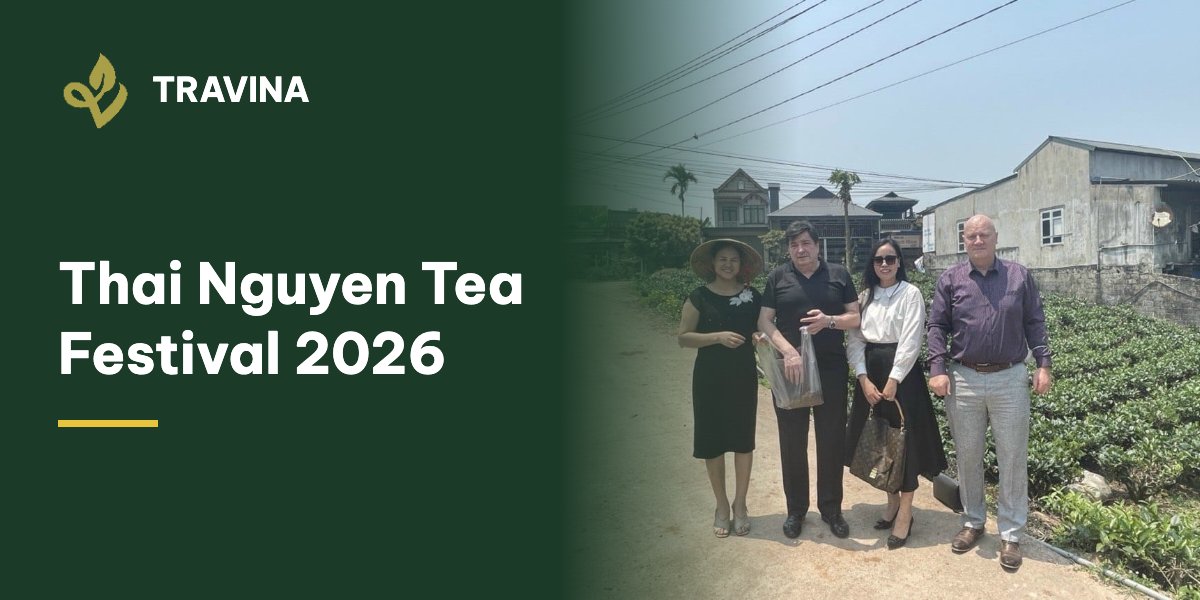
The Nguyen dynasty’s national gazetteer, the Dai Nam Nhat Thong Chi, is often quoted for its note that tea from Phu Luong in Thai Nguyen was better than tea from elsewhere. The province’s famous gardens were laid out in the early 1920s, and in 2023 Vietnam’s Ministry of Culture listed “the knowledge of growing and processing Tan Cuong tea” as national intangible cultural heritage (Decision 240/QĐ-BVHTTDL). Since 2011 the province has held a tea festival, usually every two years; the 2026 edition runs from 30 October to 7 November. Vietnamese media often call Thai Nguyen tea “đệ nhất danh trà”, “the foremost famous tea”, a popular phrase rather than an official title.

Protected names
The collective mark “Chè Thái Nguyên” (Thai Nguyen tea) is reported by VnEconomy to be protected in six markets: the United States, China, Taiwan, Russia, Japan and South Korea. For buyers abroad, this means “Thai Nguyen tea” is a name with legal standing, not just a description. Ask your supplier whether they are authorised to use it.
Where TRAVINA sits in the province
TRAVINA’s gardens are in Dai Tu and La Bang, in the west of the province on the eastern slopes of the Tam Dao range. Since July 2025 the communes of Hoang Nong, Tien Hoi and La Bang have been merged into one La Bang commune, covering more than 60 square kilometres. Our 90 member households farm 40.5 hectares there and produce about 120 tonnes of dry tea a year. Read more in Dai Tu and La Bang, Thai Nguyen tea terroir and the 2026 tea festival.
Frequently asked questions
Is Thai Nguyen the largest tea province in Vietnam?
By fresh leaf output, yes: more than 280,000 tonnes in 2025. By area, no: after the 2025 merger, Tuyen Quang has more tea land.
How much tea does Thai Nguyen produce?
About 280,000 tonnes of fresh leaf in 2025. In 2024, before the merger, the province made about 54,600 tonnes of finished tea.
Why is Thai Nguyen tea called the “foremost famous tea”?
It is a popular phrase in Vietnamese media, based on the tea’s long reputation. It is not an official title, and we have not found who first used it.
Is “Thai Nguyen tea” a protected name abroad?
The collective mark “Chè Thái Nguyên” is reported to be protected in six markets, including China, the United States and Japan.
Where in Thai Nguyen is TRAVINA?
In Dai Tu and La Bang, on the eastern slopes of the Tam Dao mountains, in the west of the province.
Sources
- Thai Nguyen provincial portal, 2025 figures and 2030 targets, 5 April 2026 (republished by Thiên nhiên & Môi trường): thiennhienmoitruong.vn
- VnBusiness, Thai Nguyen tea after the merger, 10 July 2025: vnbusiness.vn
- Đại biểu Nhân dân, Thai Nguyen tea yields, 26 May 2026: daibieunhandan.vn
- VnEconomy, support budget and protected trademark, 5 August 2025: vneconomy.vn
- Dân Việt, Tuyen Quang tea area, 3 August 2025: danviet.vn
- Báo Chính phủ (via Thương hiệu & Công luận), national area and output, 28 February 2026: thuonghieucongluan.com.vn
- Nhân Dân, national heritage listing, 5 April 2023: nhandan.vn
- Báo Nông nghiệp và Môi trường, the Dai Nam Nhat Thong Chi on Phu Luong tea, 9 September 2025: nongnghiepmoitruong.vn
- Dân Việt, La Bang commune after the merger, 13 September 2025: danviet.vn
Sourcing Thai Nguyen tea? Contact TRAVINA for grades, samples and documents from our La Bang gardens.