Every tea brand says its hillside is special. Almost none of them tell you the elevation, the rainfall, the soil, or what they stopped putting into that soil and when. This is our attempt to do it properly, for two communes in Thai Nguyen, northern Vietnam.

1. What the Tam Dao range actually does to a tea bush
TRAVINA farms in Dai Tu and La Bang, on the eastern side of the Tam Dao range. The range is not scenery here, it is the growing condition.
Tam Dao runs north-west to south-east and rises to 1,592 metres at its highest peak, with several peaks over 1,300 metres, from a base near 100 metres. The national park covers 36,883 hectares and its territory extends into Dai Tu, which is where our member gardens sit (Tam Dao National Park sourcebook). Annual rainfall in the massif is around 2,800 mm, concentrated between April and October, which is exactly the picking season.
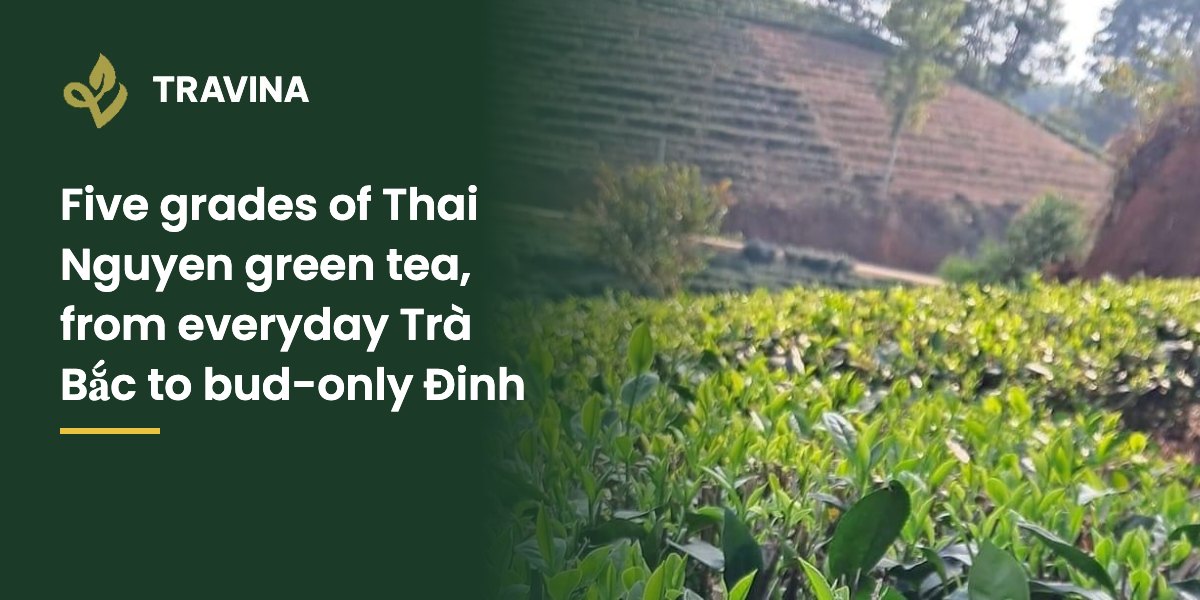
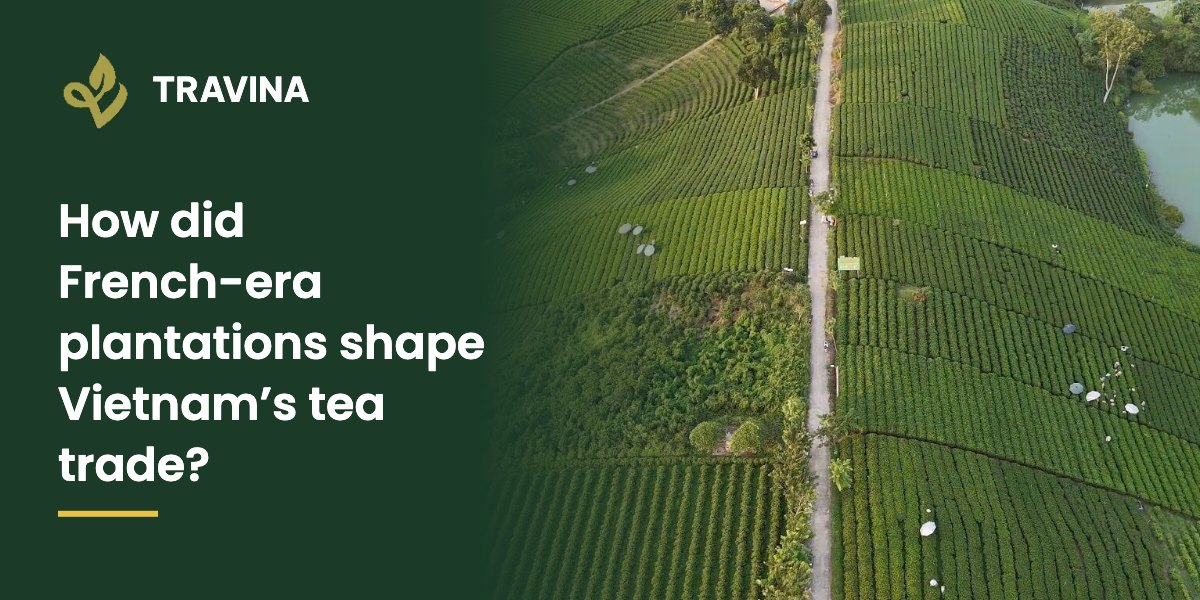
Our gardens are not on the peaks. They sit on the lower slopes and foothills, roughly 110 to 300 metres — the commune centre is about 120 metres and the highest blocks run up to around 300 metres, where the ground begins to climb into the range. That band matters for three reasons:
- Mist. Air pushed up the slope cools and condenses, so the gardens spend much of the morning under cloud. Less direct sun, slower growth, a shoot that stays tender longer.
- Day-to-night swing. Warm days and cool nights slow overnight respiration, so more of what the leaf makes in daylight stays in the leaf.
- Water. Heavy but seasonal rain on a slope is a gift and a threat at the same time. It feeds the bush and it removes your topsoil if you farm it badly.


2. The soil under the bush
The Thai Nguyen midlands are red-brown ferralitic soil: iron-rich, free-draining, and naturally on the acidic side. That is close to what Camellia sinensis wants, which is why tea took hold in this province rather than somewhere flatter and richer.
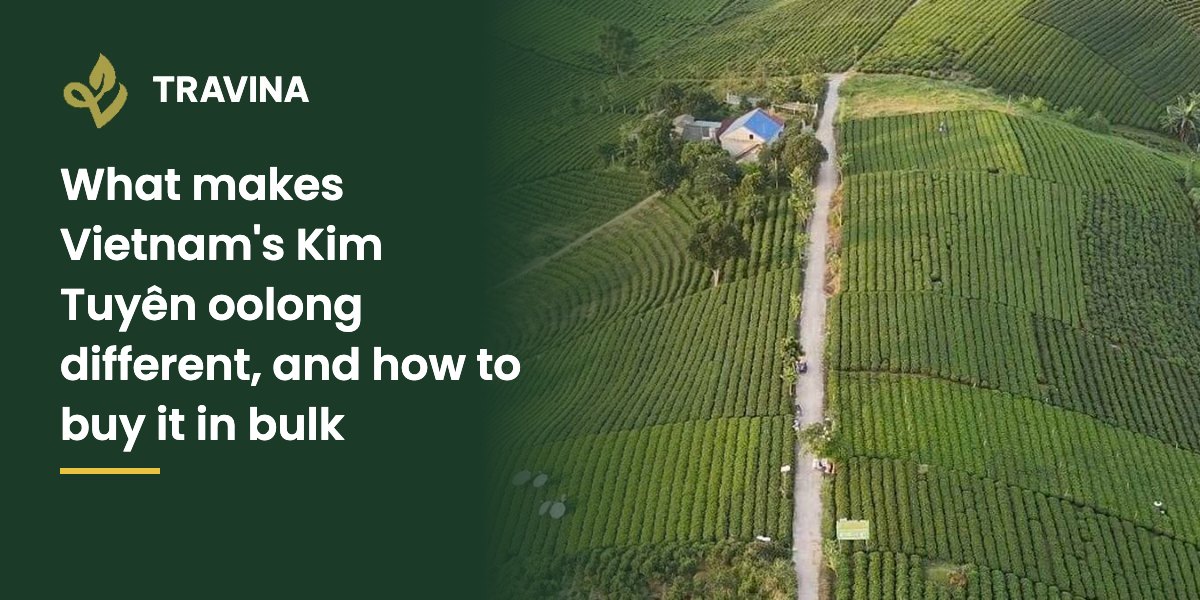
Free-draining soil on a slope has one obvious weakness. Every heavy rain that runs downhill takes a thin layer of it with you if the rows run the wrong way. Our member plots are planted along the contour rather than up and down the slope, with grass strips left between blocks. It costs planted area per hectare. It is also the reason the same blocks are still producing after decades.
We do not publish a single average soil analysis for the whole cooperative, because averaging 90 households across two communes produces a number that describes nobody’s plot. We do hold plot-level records, and a buyer evaluating a specific lot can ask for the analysis of the blocks that lot came from.

3. The province we sit inside
Context, because a foreign buyer usually meets Vietnamese tea as an anonymous commodity. Thai Nguyen province reports roughly 22,200 hectares under tea producing about 273,000 tonnes of fresh leaf a year, with 5,788 hectares VietGAP certified, 62 GPS-coded growing zones and 193 OCOP-rated products (provincial reporting, 2025). The province has set a public target of a one billion US dollar tea industry by 2030, aimed squarely at Europe, Japan and the United States (VOV, October 2025).
Against that, TRAVINA is small and deliberately so: 90 member households, 40.5 hectares, about 120 tonnes of finished tea a year. Two growing areas, one processing workshop, one lot code that resolves to a hillside.


4. The green transition, in the fields rather than in a brochure
Vietnam has a national policy frame for this: the National Strategy on Green Growth 2021 to 2030 and the Sustainable Agriculture and Rural Development Strategy. Policy is not farming. What follows is what changed on the actual blocks.
| Practice | The conventional way | What our member plots do now |
|---|---|---|
| Weed control | Herbicide spray between rows | Cut by hand and by strimmer; cut grass left as mulch |
| Pest pressure | Calendar spraying of chemical pesticide | No chemical pesticide under the 6 Không commitment; monitoring, pruning out affected flush, accepting a lower yield in a bad year |
| Fertility | Urea and compound NPK | Composted farmyard manure and soybean cake, worked in between flushes |
| Growth | Growth stimulant to force the flush | None. The bush sets the calendar |
| Soil cover | Bare earth between rows | Grass strips and contour planting to hold the topsoil |
| Winter | Push for an extra picking | Pruned and rested November to February, no picking |
Those six habits are what we call the 6 Không standard, and we have written it up in full, including what replaces each banned input and how it is verified, in the 6 Không clean tea standard. Two things are worth saying plainly here. It is our own production commitment, not an organic certification. And it currently covers 5 hectares of the 40.5 we farm, alongside 9.7 hectares across 17 households under VietGAP. We report those separately rather than implying the whole cooperative is certified.

5. Why a smallholder would agree to earn less per hectare
Dropping herbicide and forced flushes costs yield and adds labour. No grower does that for a slogan. The argument that worked here was economic, and it is worth stating in the open because it explains the whole strategy.
Vietnam is the world’s fifth largest tea producer, and around 94% of its exports are green tea. But the average export price sits at roughly USD 1,644 to 1,737 per tonne against a world average near USD 2,600 — about 55 to 65 per cent of what the rest of the world gets (WTO Center Vietnam). Vietnamese tea is not cheap because it is bad. It is cheap because it is sold anonymously, in bulk, with nothing attached to it that a buyer can verify.
The way out of that discount is not more volume. It is provenance and evidence: a named commune, a named household group, a picking date, a residue test, a standard written down. Every one of those is a reason to pay more than USD 1,700 a tonne, and none of them is available to a farm that sprays on a calendar.

6. The people who had to say yes
A cooperative cannot instruct 90 households the way a plantation instructs employees. Members own their plots. The transition happened block by block, with the households that had the most to lose going last, and it worked for three reasons: the founder’s family has grown tea in Dai Tu since 1960 and is buying from people it grew up around; fresh leaf is bought at an agreed price rather than a spot price; and the households that switched first could show the others their delivery slips.
About 62 per cent of member households are from ethnic minority communities in the Dai Tu and La Bang uplands. That is not a marketing line, it is who farms these hills, and we have written about the households and how the purchase relationship works in the ninety households behind TRAVINA tea.

7. What it costs us, honestly
- Lower yield per hectare. No forced flush and no calendar spraying means fewer kilos, especially in a wet year with heavy pest pressure.
- More labour. Weeding by hand instead of by spray is the single largest added cost.
- A shorter year. The bushes rest from November to February. We could pick through it; we do not.
- Slower certification. VietGAP audits cost money and time per household, which is why 9.7 hectares are certified and 40.5 are farmed. We are extending it, not pretending it is finished.
The trade is deliberate. A smaller, traceable, testable crop is worth more per kilo to the kind of buyer we want than a larger anonymous one.

8. Working with us
We are a producer, not a trading house. We are useful to a partner who wants the same lot twice, wants to know which hillside it came from, and wants documents rather than adjectives.
Importers and private label
Sample sets go out with the certificates, the lot origin and the harvest month attached. Volume is the honest constraint: about 120 tonnes of finished tea a year across all grades, and the tender spring grades are a small share of that. If you need a large single lot of one grade we will tell you before you plan around it.
Roasters, blenders and specialty retailers
Single-commune green tea from a named cooperative is a story you can put on a label and defend. Start with a tasting set across grades so you can place our leaf against what you already buy.
Cooperatives and processing partners
We already work with a partner facility, Phu Dat Agricultural Cooperative in Binh Thanh commune, inside the ATK Dinh Hoa historical zone. Partnership here means shared standards and shared documentation, not a badge.

Buyers who would rather see it
Dai Tu is about an hour and a half from Hanoi airport and we host visits all year. Details on visiting the gardens. Walking the rows settles more questions in an afternoon than a year of email.
9. Questions we get asked
What altitude are the gardens at?
Roughly 110 to 300 metres, on the eastern foothills of the Tam Dao range, which itself rises to 1,592 metres. We checked this against public 30-metre elevation data rather than quoting a round number: the commune centre sits at about 120 metres and the highest blocks reach around 300 metres. We give plot-level elevation and aspect on request rather than quoting one average for 90 households.
Is TRAVINA tea organic?
Not certified organic, and we do not use the word loosely. Part of the area is VietGAP certified, and 5 hectares are farmed to our stricter 6 Không commitment. Both are stated separately from the 40.5-hectare total.
What does the green transition actually mean for the cup?
Slower growth and no forced flush give a thinner, cleaner bitterness at the front and a longer sweet return at the back of the throat. It also means smaller, more variable harvests. You are buying a farming decision, not only a flavour note.
Is this the same as Tan Cuong tea?
No. Tan Cuong is a different part of the province with its own geographical indication. We grow in Dai Tu and La Bang and say so, which is explained in full in our guide to the two growing areas.
Can you supply documentation for a due-diligence file?
Yes. VietGAP certificate, growing-area code, food safety certificate, ISO 22000:2018 for the workshop and laboratory test reports on finished tea. Scans are on the certificates page.
Talk to us
If any of this is the kind of supply you are looking for, tell us the grades and volumes you are considering and we will send samples with the paperwork attached. Browse the range of teas first if it helps, or read how the leaf is handled after picking in what makes a Thai Nguyen green tea clean and sweet.
TRAVINA, Tam Tra Viet Cooperative
Dai Tu and La Bang, Thai Nguyen, Vietnam
Phone, Zalo and WhatsApp: +84 855 318 678 · Email: admin.travina@gmail.com