Almost every Thai Nguyen tea offered to a foreign buyer claims to come from Tan Cuong. Ours does not. TRAVINA grows in Dai Tu and La Bang, on the eastern slopes of the Tam Dao range, and we would rather explain that difference than blur it.

1. Where our tea actually grows, and where it does not
Thai Nguyen province has one internationally famous tea name: Tan Cuong, six communes on the western edge of the provincial capital. It is a real place and it makes real tea. The problem is that far more tea is sold as Tan Cuong than Tan Cuong could possibly produce. Anyone who has bought Vietnamese green tea at wholesale has met this.
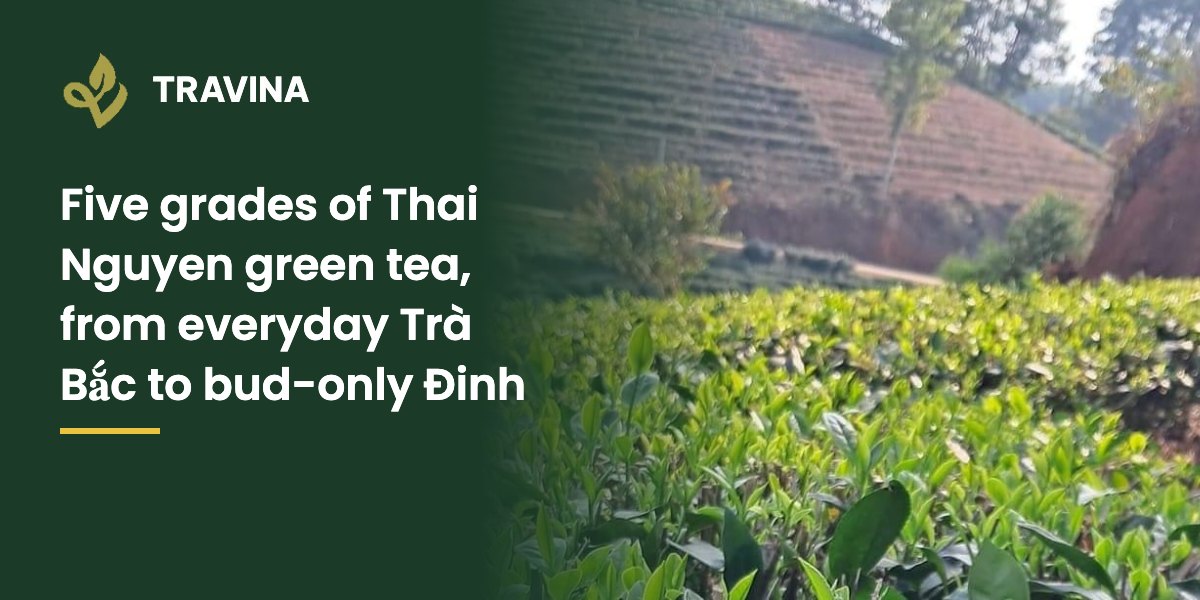
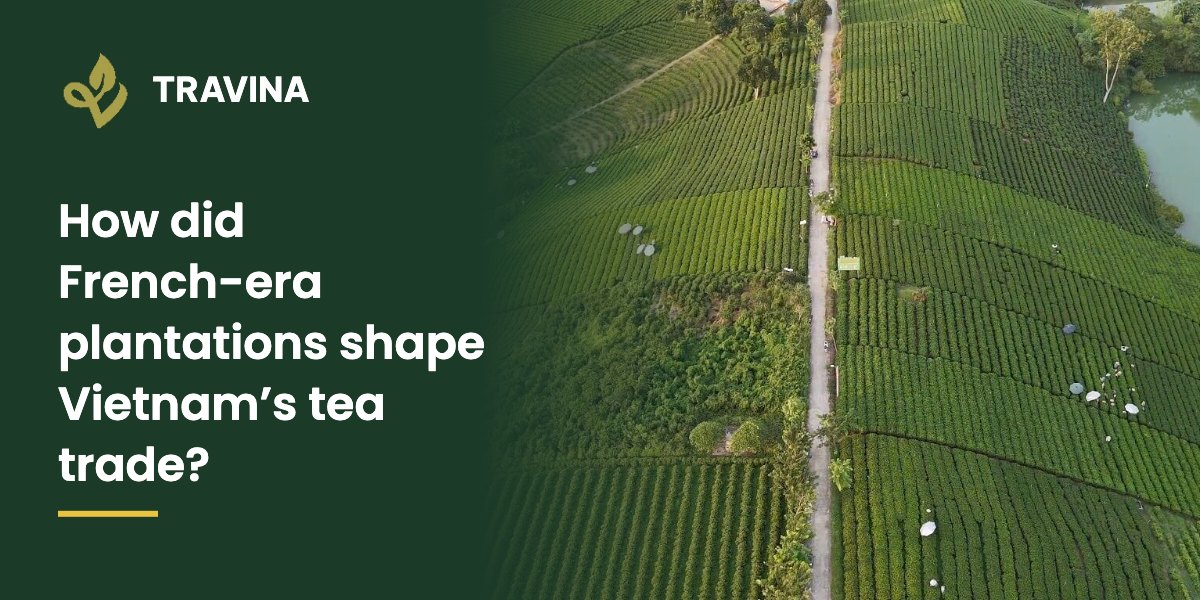
TRAVINA is a cooperative in Dai Tu, about 30 kilometres north-west of the city, with a second growing area and the processing workshop in La Bang. Both sit on the eastern slopes of the Tam Dao range, on the far side of the province from Tan Cuong, in the catchment that feeds Nui Coc Lake. Two of our gift-set teas, Tam An and Tam Thao, are genuinely made from registered Tan Cuong leaf at an older facility, and we say so on those product pages. Everything else on this site is Dai Tu and La Bang leaf. If a lot code says La Bang, La Bang is where the leaf was picked.
That is not modesty. It is the only claim we can back with a growing-area code, a VietGAP certificate and a picking date, which is what an importer actually needs in a due-diligence file.
2. Thai Nguyen in numbers, and where we sit inside it
Thai Nguyen is the tea province of northern Vietnam. Provincial reporting puts it at more than 22,000 hectares under tea, producing something in the order of 220,000 to 250,000 tonnes of fresh leaf a year, depending on the year and the source you read (see the Vietnam Economic News account of the province). Vietnam as a whole is the world’s fifth largest tea producer, but the great majority of what leaves the country is commodity black tea sold by the tonne.
Against that, TRAVINA is small on purpose: about 90 member households, 40.5 hectares of gardens, and roughly 120 tonnes of finished tea a year. We are not trying to be a bulk supplier. We are trying to be the one you can trace to a hillside. If you want the wider market picture first, we wrote it up separately in Vietnamese tea in 2026: the regions, the export numbers and the gap worth filling.
3. The eastern slopes of Tam Dao: what the land does to the leaf
Tam Dao is a long ridge running north-west to south-east, and it does three useful things to the hillsides on its eastern side.
It makes mist. Air pushed up the slope cools and condenses, so the gardens spend a good part of the morning under cloud. Less direct sun means the bush grows more slowly and the shoot stays tender for longer, which is the whole argument for hill tea anywhere in the world.
It widens the day-to-night temperature swing. Warm days and genuinely cool nights slow respiration overnight, so more of what the leaf makes during the day stays in the leaf. Growers here describe the result in the cup rather than in chemistry: a thinner, cleaner bitterness at the front and a sweetness that comes back and stays.
It holds water. The slopes drain into the Nui Coc reservoir system, and the soil is the red-brown ferralitic type common to the Thai Nguyen midlands, slightly acidic, which is what the tea bush wants. Gardens across the cooperative sit at roughly 300-500 metres above sea level. We do not publish one precise average for the whole cooperative, because averaging 90 households across two communes would flatten real plot-to-plot differences into a made-up number. We can give the elevation, aspect and soil test for a specific plot if a buyer asks, and we would rather do that.

4. Dai Tu and La Bang: one cooperative, two characters
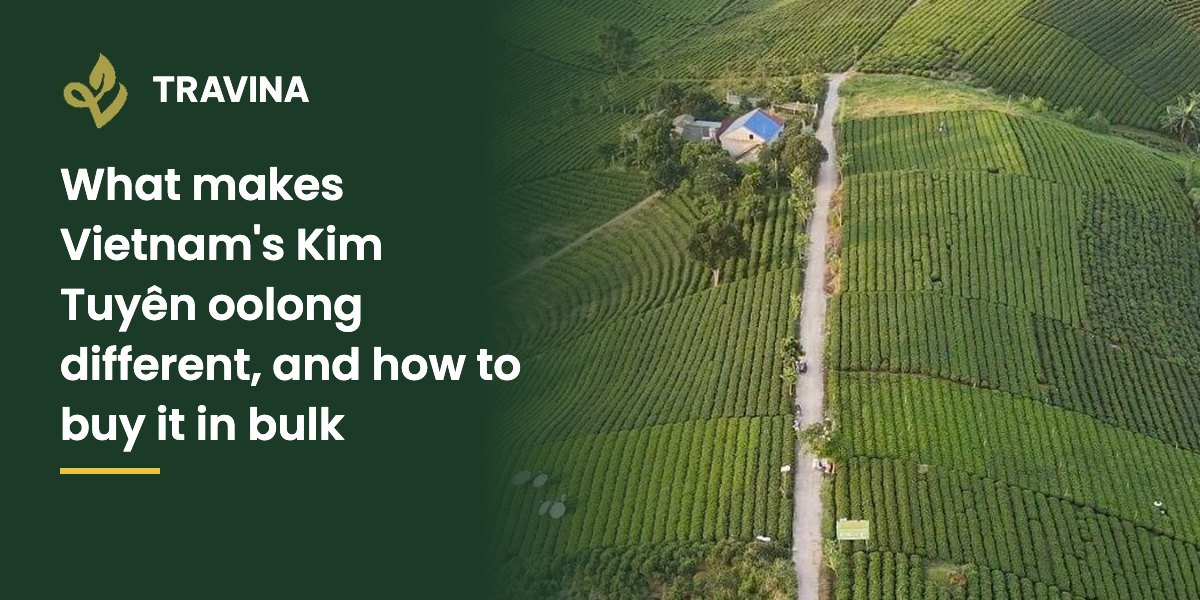
Dai Tu is the older and larger of the two areas, gentler ground, bigger contiguous blocks, and the base for most of our everyday green tea. It is where the cooperative was founded and where most member households farm.
La Bang sits higher and tighter against the mountain. The blocks are smaller, the mist sits longer, yields per hectare are lower, and the shoots come in a little slower and a little more tender. Our processing workshop is in La Bang, so leaf from these gardens reaches the pan within the hour. The bud-only and one-bud-one-leaf grades come from here.
Practically, the split matters to a buyer in one way: La Bang volume is limited. If you need a large single lot of one grade, we will tell you whether it can come from one commune or has to be blended across both, and the lot documentation will say which.


5. What is planted on these hillsides
The traditional bush of the Thai Nguyen midlands is Trung Du, a small-leaf variety that gives modest yields and the classic northern cup: firm bitterness first, long sweet finish. Across the province it is steadily being replaced with higher-yielding selections such as LDP1, Kim Tuyen and Phuc Van Tien, a shift documented in the Specialty Tea Alliance survey of Vietnamese tea.
Our gardens contain both older Trung Du blocks and newer plantings. We are deliberately not publishing a single percentage for the whole cooperative, because it would be an average across 90 households and would tell a buyer nothing useful. What we will do is state the cultivar for the blocks a given lot came from. Ask for it with the sample.
6. How the leaf is picked, and when
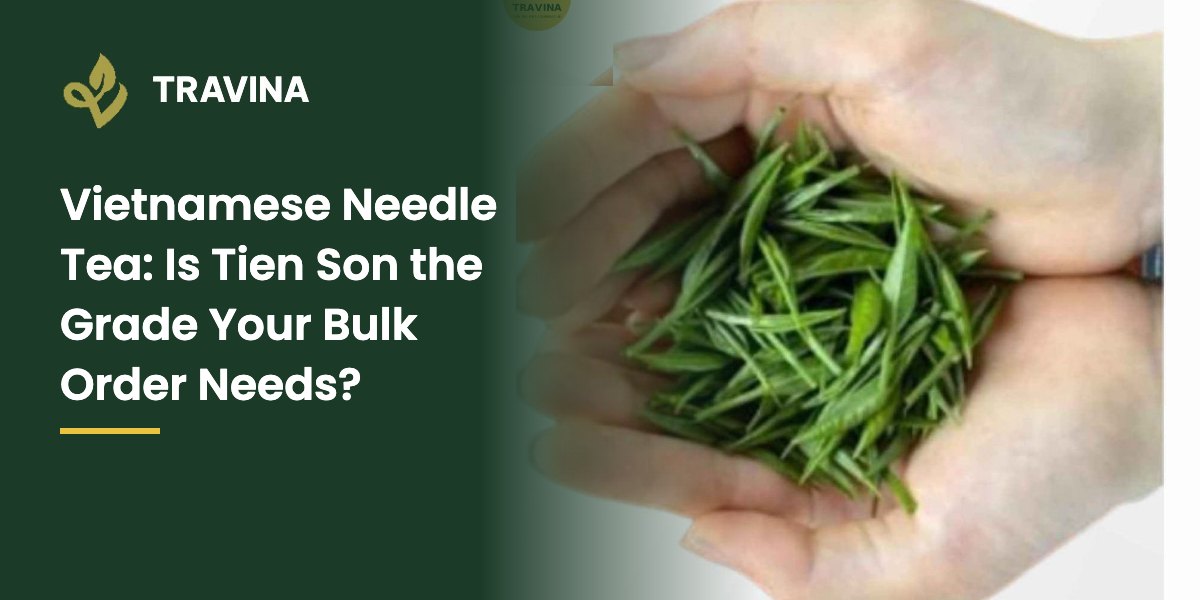
Every leaf TRAVINA processes is picked by hand. No mechanical harvesting on any line, on any grade. The picking standard depends on the grade: one bud with two leaves for everyday green tea, one bud with one leaf for the tender grades, and bud only for the top needle teas.
Picking is done in the morning and finished before the sun is hard on the slope. Leaf goes to the workshop the same day. Leaf held overnight sours, and it shows up as a cloudy liquor and a lost aroma, so the rule is fixed: pick less rather than pile up.

Our harvest calendar
This is the shape of a normal year across the cooperative, as finished tea rather than fresh leaf. Most published guides to Thai Nguyen disagree with each other about the seasons, so here is ours.
| Month | Finished tea | What comes in |
|---|---|---|
| March | 11.3 t | First spring flush, small and prized |
| April | 14.6 t | Spring proper, best tender grades |
| May | 19.6 t | Peak spring volume |
| June | 20.9 t | Highest month of the year |
| July | 17.6 t | Summer leaf, fuller and stronger |
| August | 14.0 t | Volume easing |
| September | 12.0 t | Autumn flush begins |
| October | 10.0 t | Autumn, aromatic and finer |
| Nov to Feb | rest period | Bushes pruned and rested, no picking |
Two practical consequences. If you want spring tender grades, the order needs to be placed before March. And anyone offering you fresh Thai Nguyen spring tea in December is selling you something that was made in May.
7. From the row to the pan, the same day
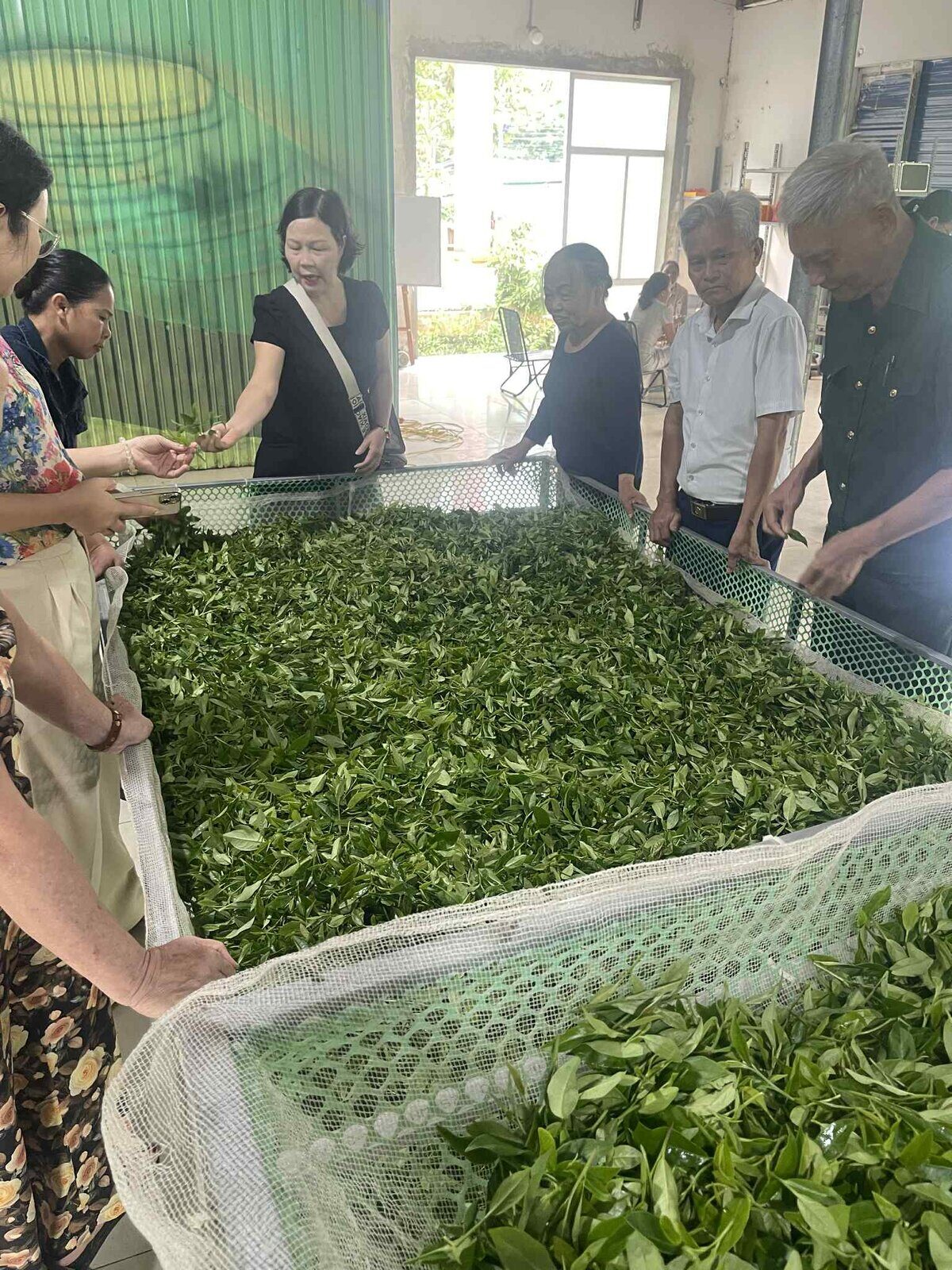
Fresh leaf arrives at the La Bang workshop, is checked, and is spread thin on withering racks to lose surface moisture. Then the ordinary sequence of a northern Vietnamese green tea: kill-green to stop oxidation, rolling to break the cell walls and shape the leaf, drying, and a final low firing to lift the aroma.
The two things worth saying about our workshop are unglamorous. First, the people: the artisans on the pans have five to ten years on the job, and pan-firing is still a judgement call that no sensor makes for you. Second, the equipment is temperature-controlled, so the fire does not run away while that judgement is being made. The workshop is certified to ISO 22000:2018.
We wrote the full step-by-step of that process, with what each stage does to the cup, in what makes a Thai Nguyen green tea both clean and sweet.

8. The paperwork a buyer can ask for
Terroir writing is cheap. Documents are not. These exist and we send them with samples:
- VietGAP certificate for the certified gardens, number DVCL-VG-TT-24-19-68, currently covering 17 member households across 9.7 hectares. We report that separately from the 40.5-hectare total rather than implying the whole cooperative is certified.
- Growing-area code tying lots back to the registered plots.
- Food safety certificate (ATTP) for the processing facility.
- ISO 22000:2018 food safety management certification for the workshop.
- Laboratory test reports on finished tea, which is what matters if you are importing into a market with pesticide residue limits.
One point of honesty, because it is the most common overclaim in this industry. Our 6 Không line is grown to a production commitment we set ourselves, six things we do not use. It is not an organic certification, and we do not describe it as one. The full set of documents, with scans, is on the certificates page.
9. Who actually farms this
The cooperative is roughly 90 member households. About 62 per cent of them are from ethnic minority communities in the Dai Tu and La Bang uplands. Fresh leaf is bought from members at an agreed price; processing, grading, packing and export sit with the cooperative. The founder’s family has been in tea here since 1960, which in practice means most of the growers are people he grew up around.
Buyers with sustainability reporting obligations usually want that stated as numbers rather than sentiment, so those are the numbers. More on the structure is on the about page, and the gardens and workshop are described in more detail under origin and factory.
10. What all of this tastes like
A Dai Tu or La Bang green tea should give you a dry leaf that is dark green with a blue-black cast rather than bright fresh green, a liquor that is clear and pale gold-green rather than vivid emerald, and a nose of young glutinous rice. In the mouth the bitterness is thin and quick, and a few seconds after swallowing the sweetness returns at the back of the throat and stays. Vietnamese drinkers call that returning sweetness hau ngot, and it is the single thing the whole region is judged on.
If a sample from us arrives, brew it the way we do so the comparison is fair: 80 to 85 degrees Celsius, about 10 grams to a standard pot, rinse quickly, first infusion 35 to 40 seconds, then add ten seconds per infusion, four to five infusions. Boiling water on tender northern leaf scalds the bud and destroys exactly the sweet finish you are trying to assess.
11. Questions buyers ask
Is Dai Tu tea the same as Tan Cuong tea?
No. Tan Cuong is a group of communes on the western side of Thai Nguyen city with its own geographical indication. Dai Tu and La Bang are on the eastern slopes of Tam Dao, a different part of the province. Both make northern-style green tea in the same tradition, but they are not the same origin and we do not label ours as Tan Cuong.
How can I verify where a Vietnamese tea really comes from?
Ask for three things together: a growing-area code, a certificate that names the actual commune and household group, and a lot code that resolves to a picking date. Any producer can say a place name. Only a producer who really grew it can put all three in the same file.
When is the spring harvest in Thai Nguyen?
In our gardens the first spring picking is in March, spring runs through May, and the largest single month is June. Bushes are pruned and rested from November to February and nothing is picked.
Is TRAVINA tea organic?
Not certified organic. Part of our area is VietGAP certified, and our 6 Không line follows a stricter self-imposed production commitment. We state both plainly rather than using the word organic loosely.
Can we visit the gardens?
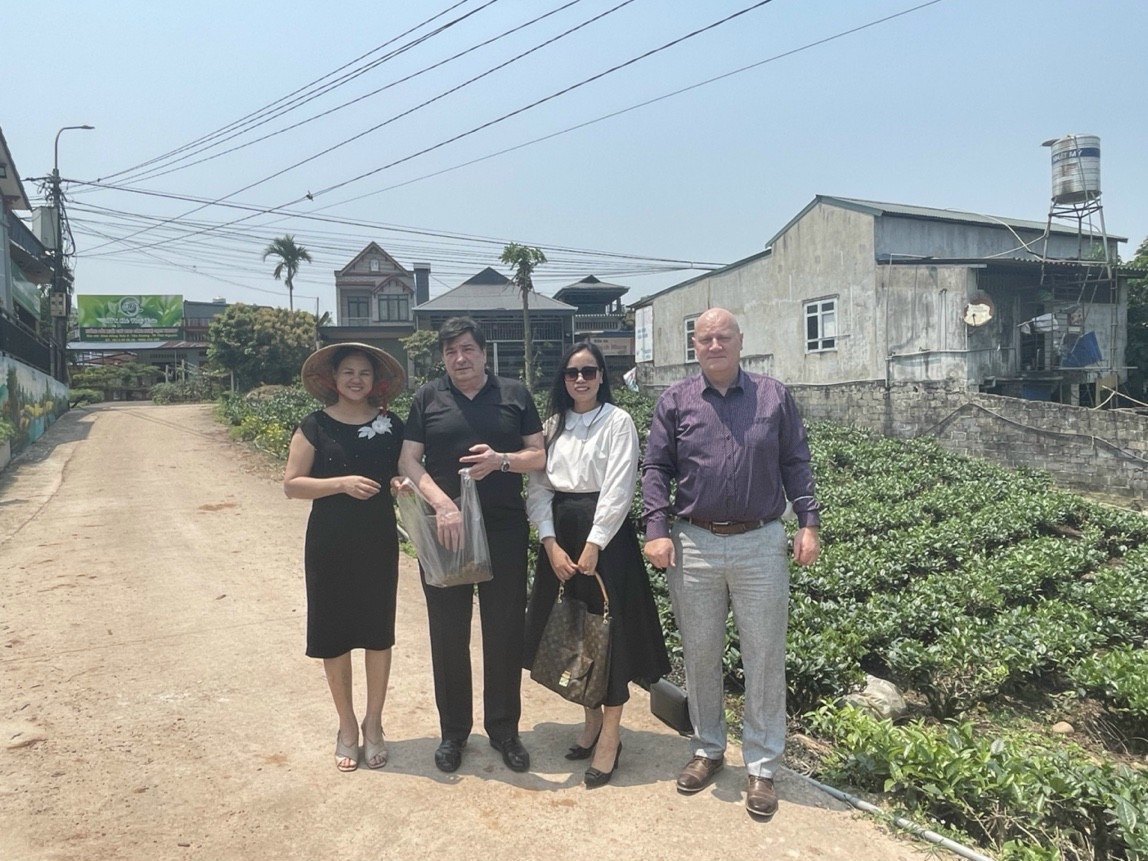
Yes. Buyers and importers regularly do, and Dai Tu is about two hours by road from Hanoi. See visiting the gardens, or write to us through the contact page.
Talk to us about a sample
If you want to taste what an eastern Tam Dao hillside does to a green tea, the shortest route is a sample set with the paperwork attached. Browse the range of teas, then tell us the grades and volumes you are looking at, and we will send samples together with the certificates, the lot origin and the harvest month.
TRAVINA, Tam Tra Viet Cooperative
Dai Tu and La Bang, Thai Nguyen, Vietnam
Phone and Zalo: 0855.318.678 · Email: admin.travina@gmail.com