A Thai Nguyen green tea should be green in the cup and sweet at the end of the sip. Neither happens by accident. Both are decided in about six hours, on one hillside, by people you could go and meet.
Ask a Vietnamese tea drinker what a good northern green tea tastes like and you get the same answer everywhere: a clean bitterness that arrives first, then leaves, and behind it a returning sweetness that stays in the throat. The Vietnamese call that returning sweetness hau ngot. It is the whole point. This is how it is produced at TRAVINA, the tea brand of Tam Tra Viet Cooperative in Dai Tu, Thai Nguyen.
1. The hillside decides more than the factory does
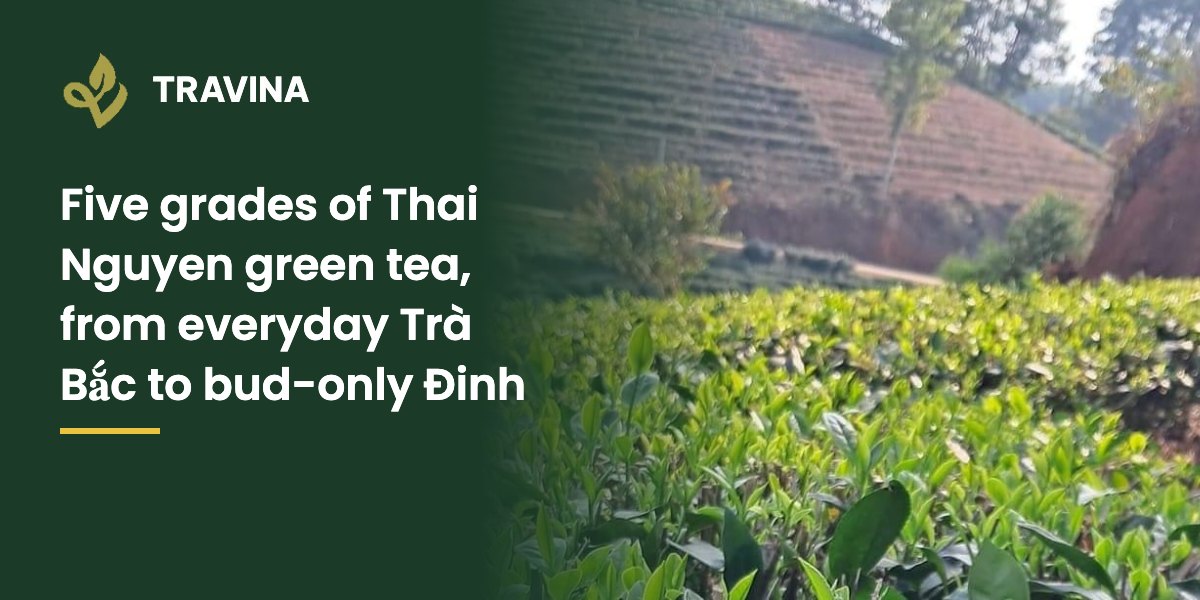
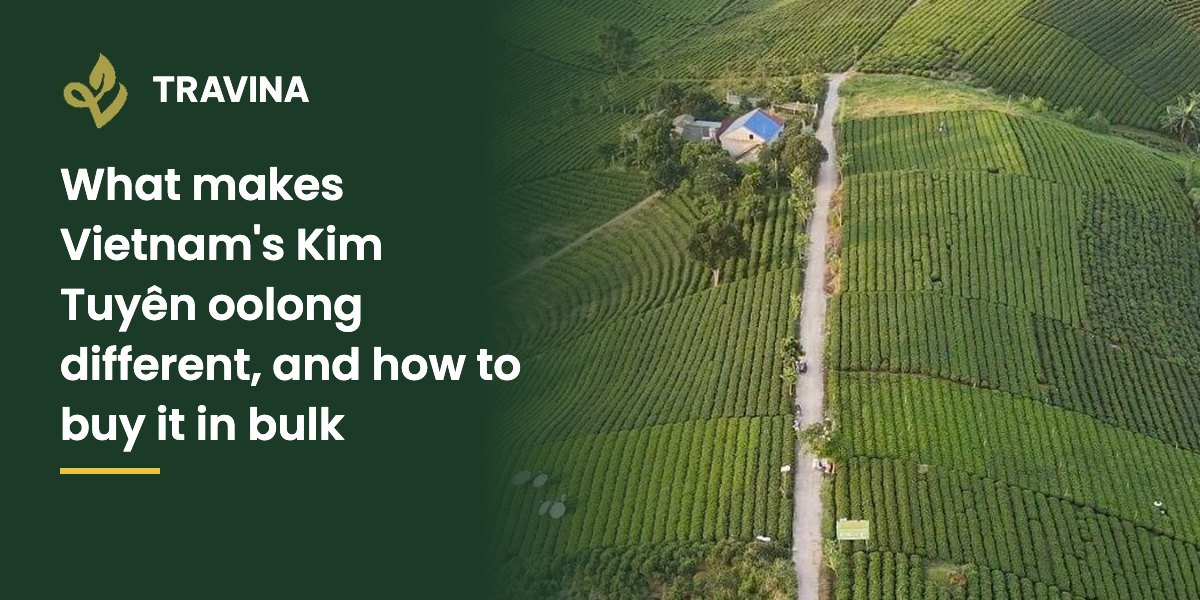
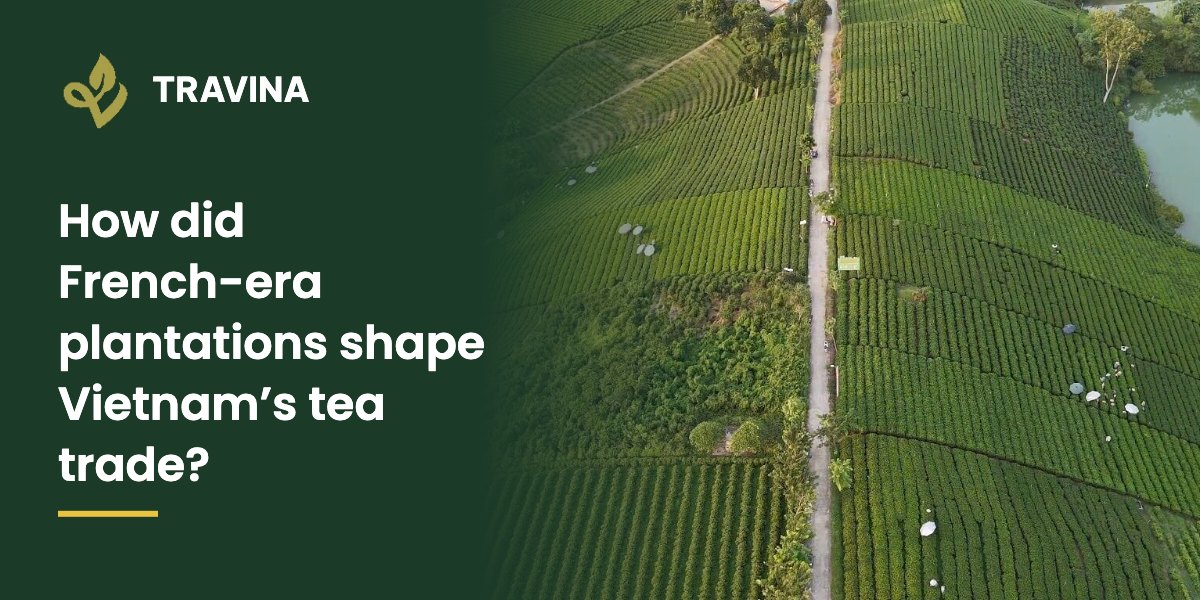
Our gardens sit on the slopes between the Tam Dao range and Nui Coc lake, with a second site in La Bang commune between Kem stream and the Cua Tu waterfalls. What matters there is not romance but temperature. Cool nights and heavy morning mist slow the bush down. A slow bush makes a smaller, thicker shoot with more amino acids relative to the compounds that read as harsh on the tongue. That ratio is what you taste later as sweetness.
No amount of skill in the workshop puts that back in if the leaf never had it. This is why we do not buy anonymous bulk leaf to make up volume.
2. One bud and two leaves, picked in the morning

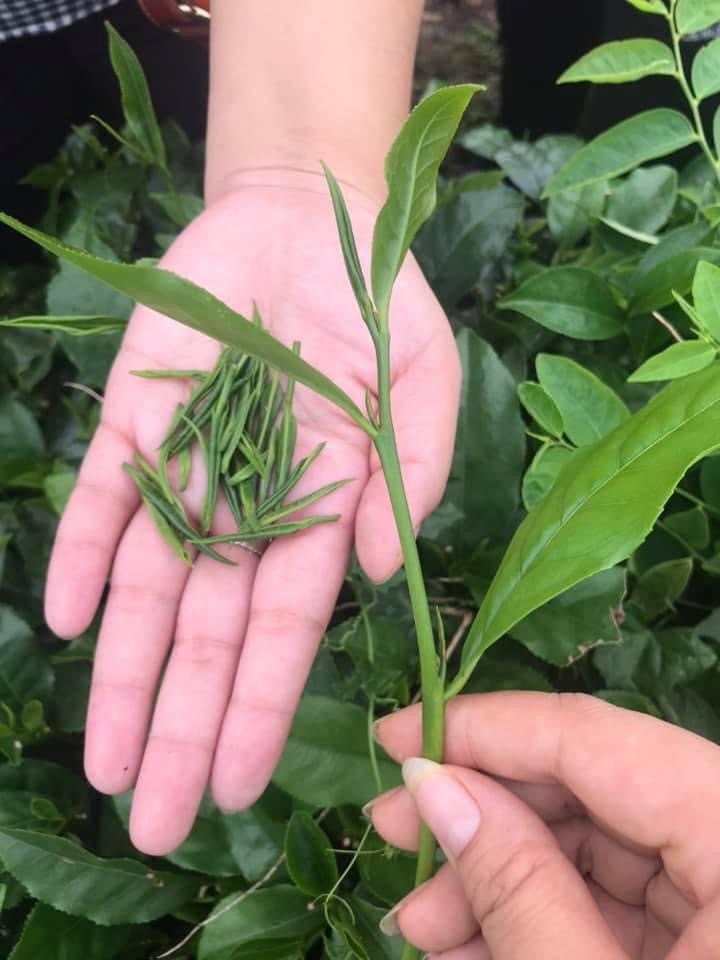
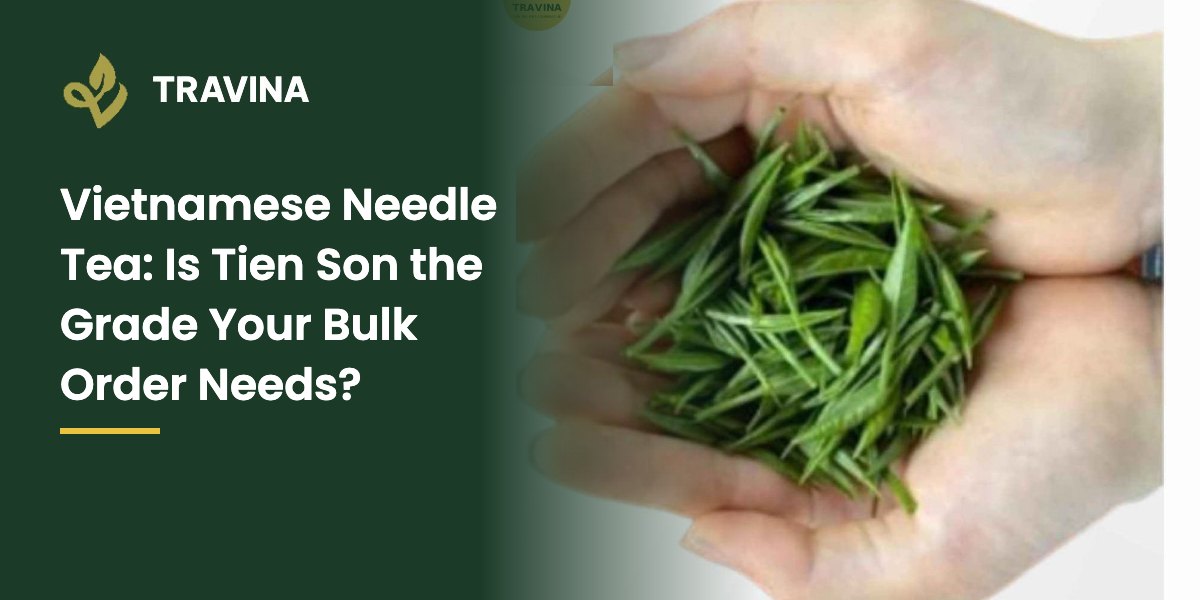
Ninety member households pick to a fixed standard: one bud with two leaves for the everyday grades, the unopened bud alone for the rarest. Picking happens early, while the leaf is still cool and firm. A shoot picked at noon in July arrives at the workshop already tired, and tired leaf makes flat tea.
Because the members are members and not day sellers, the standard holds. Nobody is trying to slip a fourth leaf into the basket to make weight.

3. From bush to pan in hours, not days
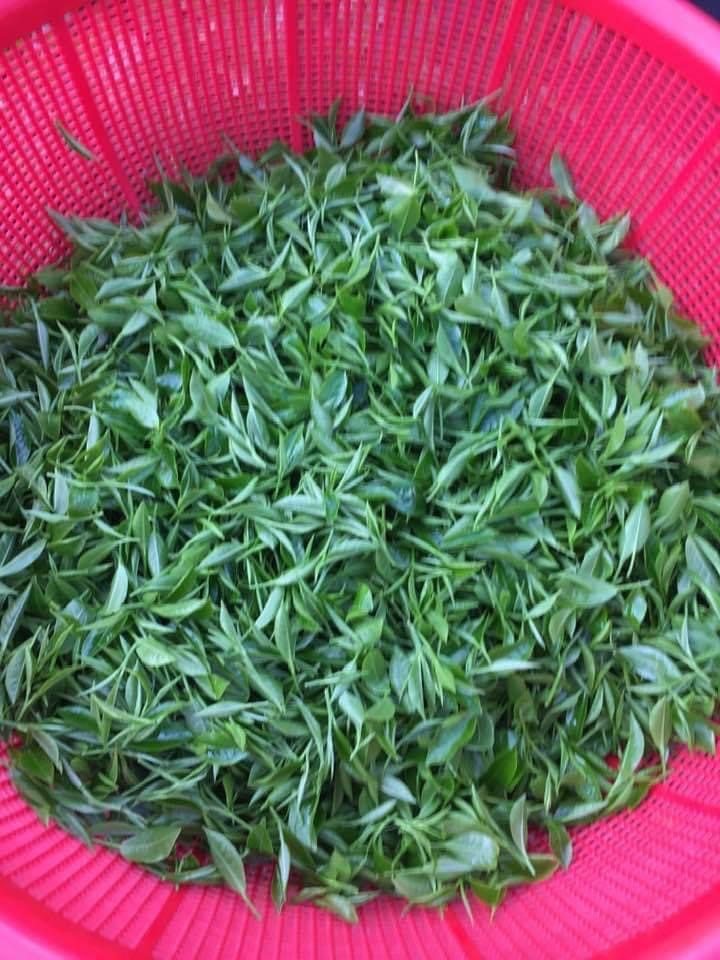

Fresh leaf starts to change the moment it leaves the bush. Left in a heap it heats, ferments and turns red at the edges, and the green is gone for good. So the leaf comes down the hill and is spread out thin to wither, in shade, moving air, no direct sun. It loses some water and softens. Nothing more is wanted at this stage.
The gap between picking and firing is the single most common place a Thai Nguyen tea is lost. Ours is measured in hours because the workshop is in the growing area, not in a city an afternoon away.
4. Fixation: the step that keeps the tea green

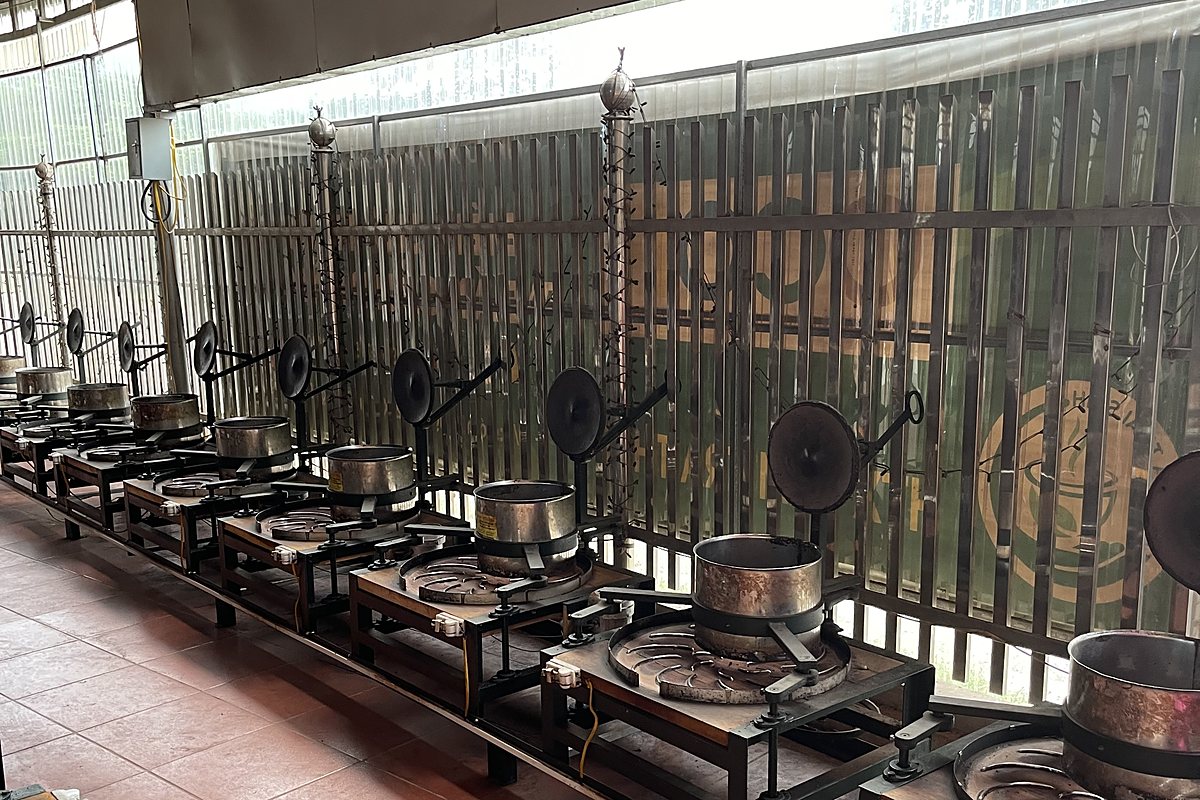
Green tea is green because the enzymes in the leaf are stopped before they can oxidise it. In Vietnamese the step is called diet men, killing the enzyme. The leaf goes into a hot rotating drum and is held there long enough to deactivate the enzymes and no longer.
Too little heat and the tea browns in storage weeks later. Too much and you get a scorched note that no brewing can hide. There is no instrument that decides this for you. The operator reads the smell and the feel of the leaf, and that judgement is why the same machine in two workshops gives two different teas.
5. Rolling, and where the curved hook comes from
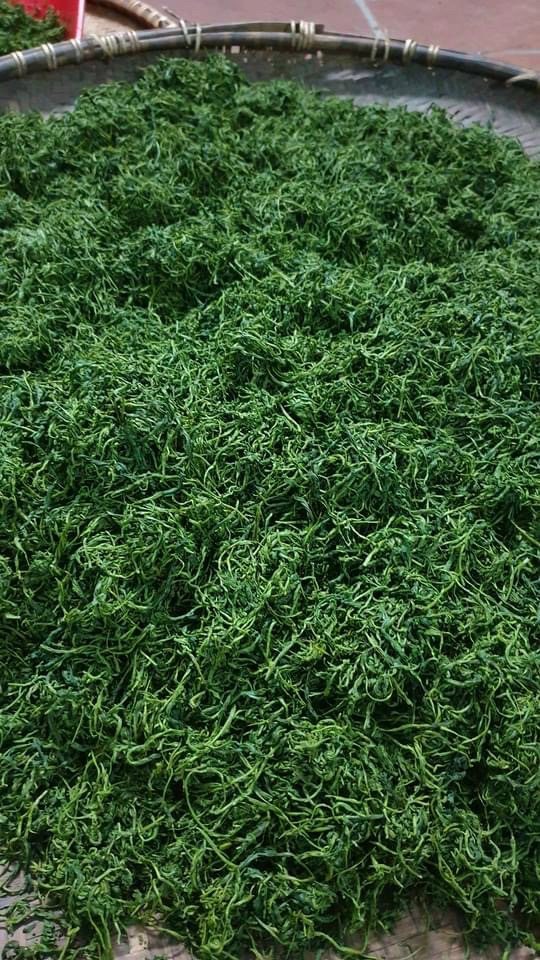
The fired leaf is rolled while still warm. Rolling breaks cell walls so the tea will give up its flavour in water, and it shapes the leaf. The tight curve that gives moc cau tea its name, the curved hook, comes from this stage. A well rolled leaf opens slowly in the cup and gives three or four honest infusions instead of everything at once.
6. Drying, sorting, and the last firing
The tea is dried down in stages until the leaf snaps cleanly rather than bends. It is then sorted by grade, and the finest lots get a final low firing that lifts the aroma just before packing. From here the tea only loses quality, so it goes into sealed packaging quickly and is kept away from light, heat, damp and any strong smell nearby.
What “clean” means here, precisely
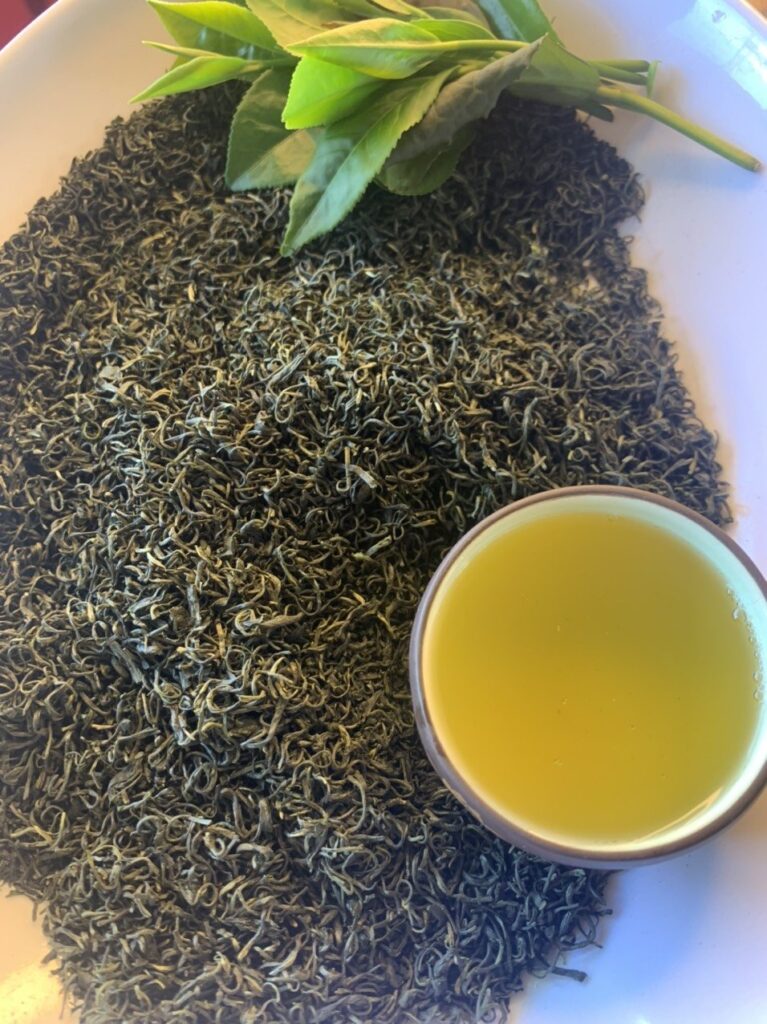
We work to a production commitment the cooperative calls 6 Không: no pesticide residues, no chemical fertiliser, no growth chemicals, no colouring, no bleaching agent, no preservative. We state plainly what that is and is not. It is a commitment we hold our members to, and it is not the same thing as an organic certification, which we do not claim.
What we can point to are documents: the cooperative holds a Certificate of Eligibility for Food Safety, and a specialty green tea sample taken at our premises has been tested by NATEK Laboratory Centre, accredited to ISO/IEC 17025:2017, on the instruction of the district agriculture and environment office. A separate VietGAP programme covers 17 households and 9.7 hectares, stated apart from the 90 households and 40.5 hectares of the whole cooperative rather than merged into one better-sounding number.
So: can a tea be delicious, green and sweet at once?

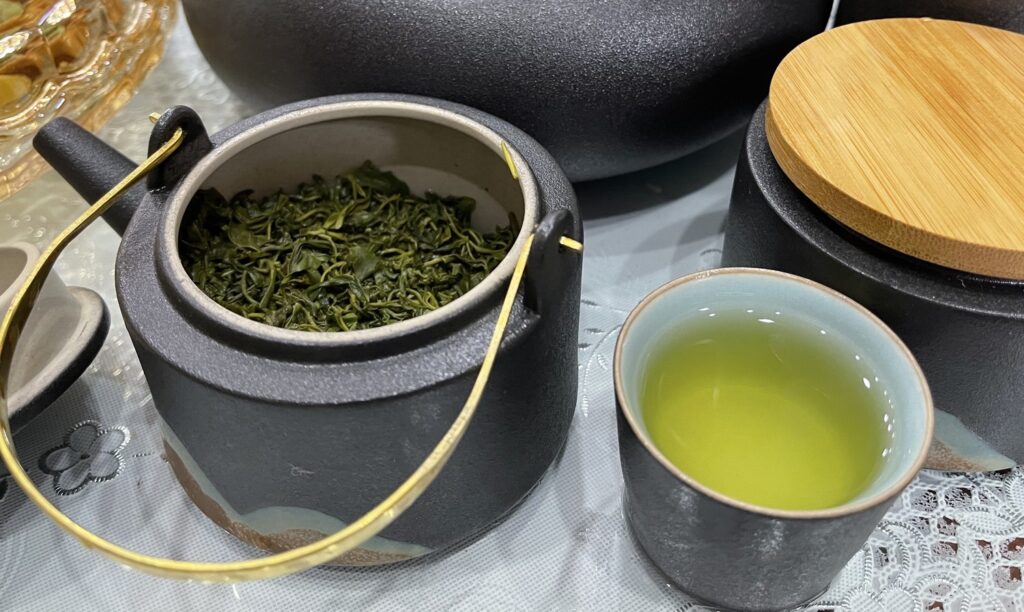
Yes, and the honest answer is that it is mostly a logistics problem dressed up as a craft problem. Grow it high and cool, pick it small and early, get it to the pan before it turns, stop the enzymes at the right moment, roll it properly, dry it fully, seal it fast. Miss any one of those and you get a tea that is green but thin, or sweet but dull, or handsome in the packet and disappointing in the cup.
You can read the same steps set out from the field side in Our Clean Tea Journey, see the growing area and the workshop on Origin and Factory, or look at the finished grades on our products page.
Better still, come and do it yourself. Visitors pick, stand beside the pan while the tea is fired, and brew what they made: visit our tea gardens. For trade enquiries, contact us.
A note on health: tea is an everyday drink, and this article describes how it is grown and made, not what it treats. We make no medical claims for our products.