Which Vietnamese teas cost the most, and why? Three kinds sit at the top of the market: West Lake lotus tea from Hanoi, which needs around a thousand lotus flowers for every kilo; the finest Thai Nguyen needle and bud teas, made from the closed tip of the shoot; and Shan tea from old trees in the northern highlands. In each case the price comes from labour, scarcity and skill rather than from packaging. This article gives the price ranges reported in the Vietnamese press, explains what drives them, and flags the record prices that cannot be verified.
Reported price ranges at a glance
The figures below are prices reported by Vietnamese newspapers for the domestic market, not TRAVINA prices. They vary by year, seller and grade.
| Tea | Reported price | Source |
|---|---|---|
| West Lake (Quang An) lotus tea, traditional method | About 7–10 million VND per kg (roughly 280–400 USD at 2024 exchange rates) | Nhân Dân, July 2024 |
| Thai Nguyen needle tea (chè đinh), top grades | 2.5–3.5 million VND per kg in a 2021 survey; up to 3–8 million VND in 2022 reports; some above 10 million | Thời báo Tài chính Việt Nam; Nhân Dân; Báo Pháp Luật |
| Thai Nguyen bud teas (tôm nõn), premium | About 600,000–1.5 million VND per kg (2021 survey) | Thời báo Tài chính Việt Nam |
| Everyday Thai Nguyen green tea | About 250,000–350,000 VND per kg (2021 survey) | Thời báo Tài chính Việt Nam |
| Shan tea from old trees, Bac Ha (Lao Cai) | About 100 USD per kg of dry tea, mostly exported | VnBusiness, December 2019 |
West Lake lotus tea: a thousand flowers per kilo
Hanoi’s lotus tea is scented, not flavoured. Green tea is layered with the tiny white anthers from inside lotus flowers, known as “lotus rice” (gạo sen), left to absorb the scent, then dried, and the process is repeated. According to Nhân Dân, about one kilo of lotus rice is needed for one kilo of tea, and collecting that much takes at least 1,000 carefully chosen flowers, with 100 to 200 more in July. Báo Lào Cai put the figure at 1,000 to 1,400 flowers per kilo and described five to seven rounds of scenting and drying over one to two weeks.
The flowers are expensive in their own right: a single “tea lotus” bloom sold for 70,000 to 100,000 VND in 2024. In Quang An, more than 30 families keep the craft and together make about 500 kg of traditional lotus tea a season. In 2024 the Ministry of Culture listed “the traditional craft of scenting lotus tea in Quang An” as national intangible cultural heritage (Decision 2316/QĐ-BVHTTDL).
Thai Nguyen needle and bud teas: only the tip of the shoot
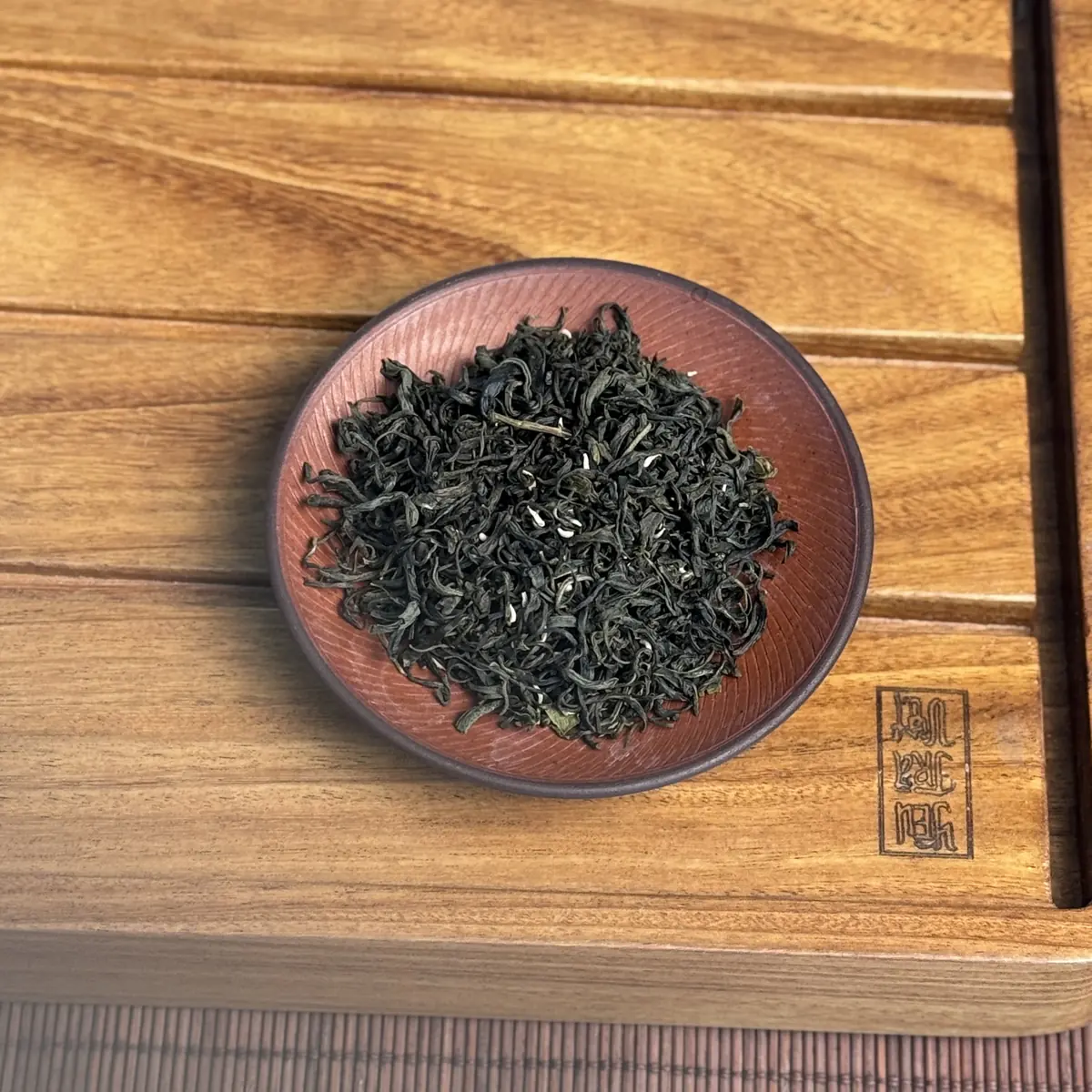
Thai Nguyen’s most expensive green teas are made from the youngest part of the shoot. Needle tea (chè đinh) uses only the closed terminal bud, which dries into a thin, needle-like shape; bud teas (tôm nõn) use the bud with at most one young leaf. Picking only the tip multiplies the number of shoots needed for a kilo and cuts each garden’s yield, and the leaf has to be roasted with great care so the small buds do not scorch.
In a 2021 survey in the Tan Cuong area, reported by Thời báo Tài chính Việt Nam and the Ministry of Industry and Trade, everyday tea sold for 250,000 to 350,000 VND per kg, premium bud tea for 600,000 VND to 1.5 million, and top needle tea for 2.5 to 3.5 million. Nhân Dân reported in 2022 that some high-grade needle teas reached 3 to 8 million VND per kg, and Báo Pháp Luật quoted a provincial official saying that prices for the best teas had risen from around 200,000–250,000 VND before 2011 to 5–7 million, with some above 10 million.
Our own top grades are Tien Vua needle tea and Tien Son needle tea, both from La Bang; see also our needle tea guide.
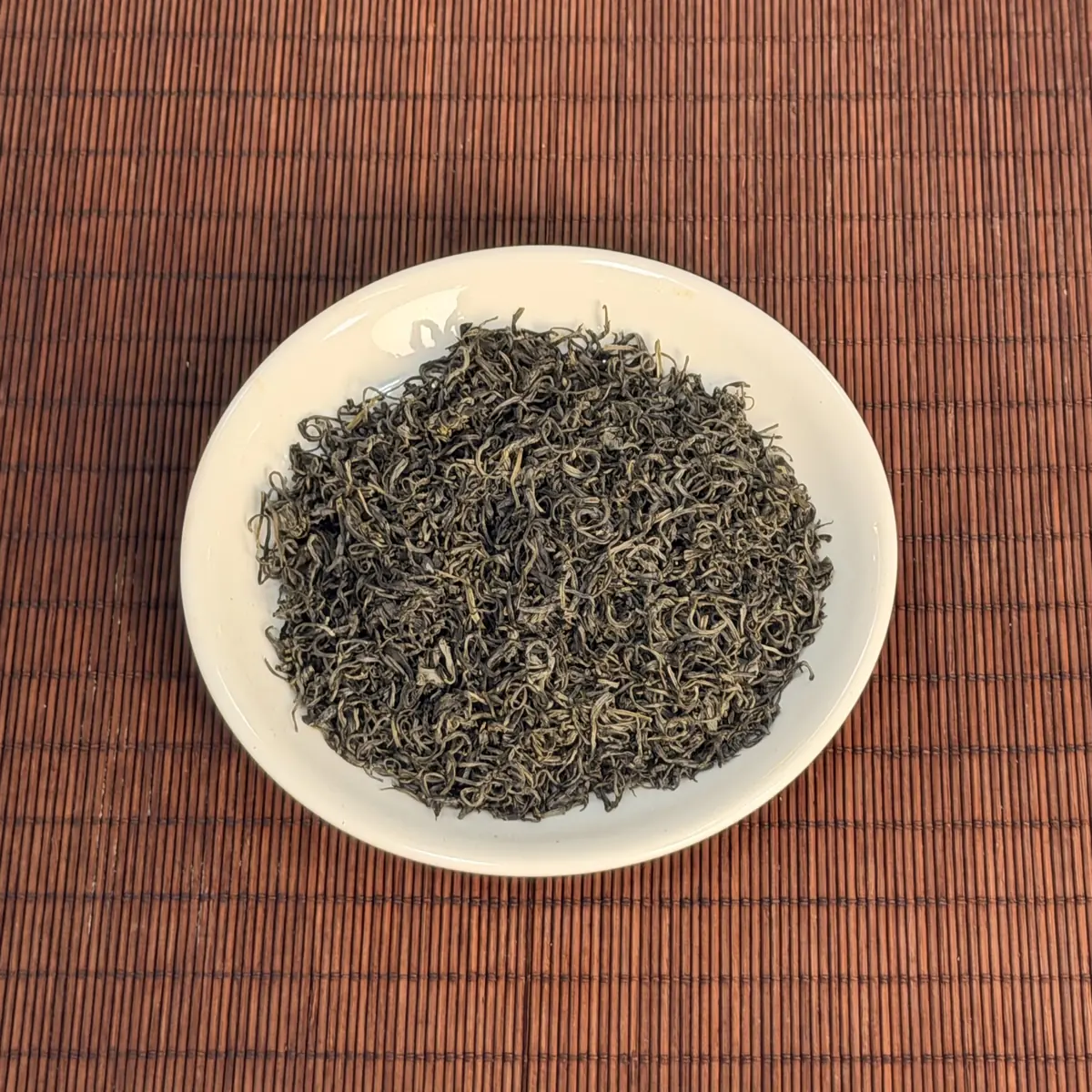
Shan tea from old trees: altitude and scarcity
In the northern highlands, tea from old Shan trees fetches high prices because the trees are scattered, tall, slow-growing and hard to pick. VnBusiness reported in 2019 that a cooperative in Bac Ha, Lao Cai, exported about 90% of its output at about 100 USD per kg of dry tea, buying fresh leaf from members at 300,000 VND per kg. At Ta Thang, Báo Lào Cai reported in 2023 that buyers paid 350,000 VND per kg for fresh buds from old trees, against 40,000 VND for ordinary one-bud-two-leaf picking. At Ta Xua in Son La, VietnamPlus reported fresh leaf at 80,000 to 100,000 VND per kg in 2026.
What about the record prices?
Stories of extraordinary prices circulate online. In 2020 VietNamNet reported a “Bach Long” tea from about 50 to 60 wild trees high in the Hoang Lien Son range selling for up to 680 million VND per kg, with only two or three kilos a year. We could find no second source for this figure, and no auction record for Vietnamese tea in the mainstream Vietnamese press. Treat such numbers as anecdotes, not market prices.
What really drives the price
- Labour per kilo. Bud-only picking, hand scenting with lotus anthers, or climbing old trees all take many hours for each kilo of finished tea.
- Raw material that cannot be scaled. There are only so many lotus ponds on West Lake and so many old trees on a mountain.
- Skill. Roasting tiny buds or scenting tea five to seven times without losing freshness depends on experienced hands.
- Season and gifting. Demand peaks before Tet, when fine tea is a traditional gift, and the best lotus tea can only be made in summer.
- Trust. Buyers pay more where origin and method can be checked. A high price without documents is a risk, not a guarantee.
Frequently asked questions
What is the most expensive tea in Vietnam?
Among teas sold regularly, traditional West Lake lotus tea and top Thai Nguyen needle teas are usually the highest priced, at several million VND per kilo. Claims of hundreds of millions per kilo come from single reports we could not verify.
Why does lotus tea need so many flowers?
Because only the anthers inside each flower are used, and about one kilo of anthers is needed to scent one kilo of tea. That takes roughly 1,000 to 1,400 flowers.
Is expensive Vietnamese tea always better?
Not always. Price reflects labour and scarcity, but quality also depends on freshness, storage and honest grading. Ask for the grade, the harvest date and test reports.
Does TRAVINA publish prices for these teas?
No. We quote buyers individually, in USD on EXW terms, based on grade, quantity and season. Please use our contact page.
Can I buy West Lake lotus tea from TRAVINA?
Yes. We offer West Lake lotus tea and the anther-scented West Lake Hundred-Petal Lotus Anther-Scented Tea.
Sources
- Nhân Dân (special report), “Trà ướp sen Tây Hồ”, 2 July 2024: special.nhandan.vn
- Báo Lào Cai, Quang An lotus tea becomes national heritage, 14 August 2024: baolaocai.vn
- Thời báo Tài chính Việt Nam, Thai Nguyen tea price survey (about December 2021): thoibaotaichinhvietnam.vn
- Nhân Dân, “Đệ nhất danh trà”, 12 October 2022: nhandan.vn
- Báo Pháp Luật Việt Nam, Thai Nguyen tea prices, 2022: baophapluat.vn
- VnBusiness, Shan tea in Bac Ha, 26 December 2019: vnbusiness.vn
- Báo Lào Cai, Ta Thang ancient tea, 7 October 2023: baolaocai.vn
- VietnamPlus, Ta Xua Shan tea, 12 September 2026: vietnamplus.vn
- VietNamNet, “Vietnam’s special tea”, 2 December 2020 (single-source report): vietnamnet.vn
Looking for specialty grades? Contact TRAVINA for samples of our lotus and needle teas.