
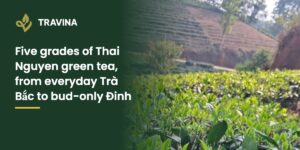
Five grades of Thai Nguyen green tea, from everyday Trà Bắc to bud-only Đinh
Five Thai Nguyen green tea grades for buyers: Trà Bắc, Đặc Sản, Móc Câu, Nõn Tôm and Đinh, with plucking standard, leaf, liquor, taste and which suits HoReCa, retail and gifts.
Details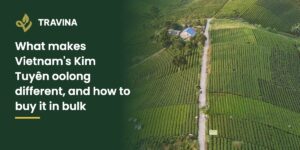
What makes Vietnam’s Kim Tuyên oolong different, and how to buy it in bulk
What Kim Tuyên (Jin Xuan) oolong is, where Vietnam grows it, the oxidation ranges buyers use and the bulk specs to agree, plus samples of Ô Long Đông Tam Đảo from La Bằng.
Details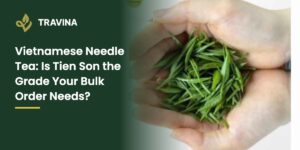
Vietnamese Needle Tea: Is Tien Son the Grade Your Bulk Order Needs?
Vietnamese needle tea made from the single unopened bud: how Tien Son, one grade below Tien Vua, differs in feeding, pickings per year and body, and why buyers use it for volume and private label.
Details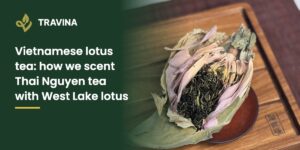
Vietnamese lotus tea: how we scent Thai Nguyen tea with West Lake lotus
How TRAVINA scents Thai Nguyen tea with West Lake lotus in Hanoi: whole-flower vs lotus-rice methods, the short May–July season, aroma and shelf life, gift packs and how importers book.
Details
What do scientists find in Vietnamese tea leaves? Catechins, caffeine and genetic diversity
Five peer-reviewed studies on Vietnamese tea: wide variation in caffeine and catechins, green and purple midland tea, wild versus cultivated teas, and high genetic diversity in Shan trees. Chemistry and genetics only.
Details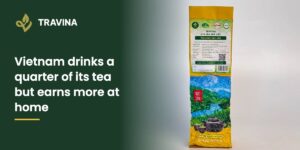
Vietnam drinks a quarter of its tea but earns more at home. Why?
In 2022 Vietnam sold about 48,000 tonnes of tea at home for about 325 million USD and exported 146,000 tonnes for 237 million USD. How a quarter of the volume earns more, and what it means for importers.
Details
Why does Vietnamese tea sell below the world average price?
Vietnamese tea exports average about 1.7 USD/kg, 55–65% of the world average, while the same tea retails for 7–20 USD/kg at home. Five reasons for the gap and what is closing it.
Details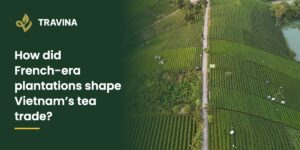
How did French-era plantations shape Vietnam’s tea trade?
Plantations from 1884, research stations in 1917–1918, Indochina’s first tea factory in 1925, Paris buyers and the Bao Loc black tea industry: how the colonial period shaped Vietnam’s tea trade.
Details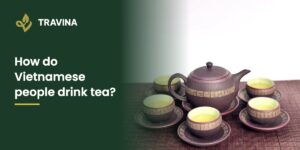
How do Vietnamese people drink tea? From street-side iced tea to the wedding tray
Strong green tea in small cups for every guest, iced tea on the pavement, fresh tea in summer, and tea on the altar at Tet and at engagements: a short guide to how Vietnam drinks tea.
Details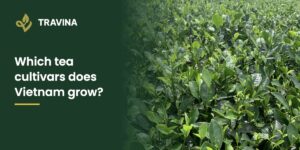
Trung du, Shan, LDP1, Kim Tuyen: which tea cultivars does Vietnam grow?
More than 170 cultivars, but most gardens use a handful: old midland and Shan tea, improved cultivars from the Phu Ho institute such as LDP1, LDP2 and PH8, and introduced cultivars such as Kim Tuyen.
Details