Which Vietnamese teas have a protected geographical indication? We could verify four: Shan tuyet Moc Chau in Son La (2010), one green tea area of Thai Nguyen (2017), Shan tuyet Ha Giang (2018) and Phinh Ho Shan tea in the former Yen Bai province (2021). A geographical indication (GI) means that only producers inside a defined area, meeting set standards, may use the name. There is no official national total that we could confirm, and some other names are protected in a different way, as collective marks. This guide lists the verified GIs and explains what they mean on a label.
Verified tea geographical indications
| Name | Area (province now) | Registered | Scope |
|---|---|---|---|
| Shan tuyet Moc Chau | Moc Chau and Van Ho, Son La | 2010; announced as protected in Thailand in 2018 | 7 communes of Moc Chau and 6 of Van Ho (pre-2025 units) |
| Tan Cuong | West of Thai Nguyen city, Thai Nguyen | September 2017 | 6 communes, more than 1,400 ha of tea |
| Shan tuyet Ha Giang | Former Ha Giang, now Tuyen Quang | 16 August 2018 (certificate No. 00069 according to a 2021 study) | 44 communes in 6 districts and the city |
| Phinh Ho Shan tea | Tram Tau, former Yen Bai, now Lao Cai | Decision 5158/QĐ-SHTT, reported December 2021 (certificate No. 00112) | Phinh Ho and Lang Nhi communes |
Geographical indications in Vietnam are registered by the Intellectual Property Office under the Ministry of Science and Technology. The communes named above are the ones listed at the time of registration; many have since been merged under the 2025 administrative reform.
Shan tuyet Moc Chau: the first
Moc Chau’s Shan tuyet was the earliest tea GI we found, registered in 2010 for an area covering seven communes of Moc Chau and six of Van Ho. In 2018 Vietnamese media reported that the decision protecting the Moc Chau Shan tuyet GI had been announced in Thailand, one of the first examples of a Vietnamese tea name being protected abroad.

Thai Nguyen: one GI and one collective mark
In September 2017, one well-known green tea area west of Thai Nguyen city received a GI covering six communes and more than 1,400 hectares of tea. Separately, the name “Chè Thái Nguyên” (Thai Nguyen tea) is protected as a collective mark, which VnEconomy reported is registered in six markets: the United States, China, Taiwan, Russia, Japan and South Korea. A collective mark belongs to an association and can be used by its members under agreed rules; a GI belongs to the area and can be used by any qualifying producer there.
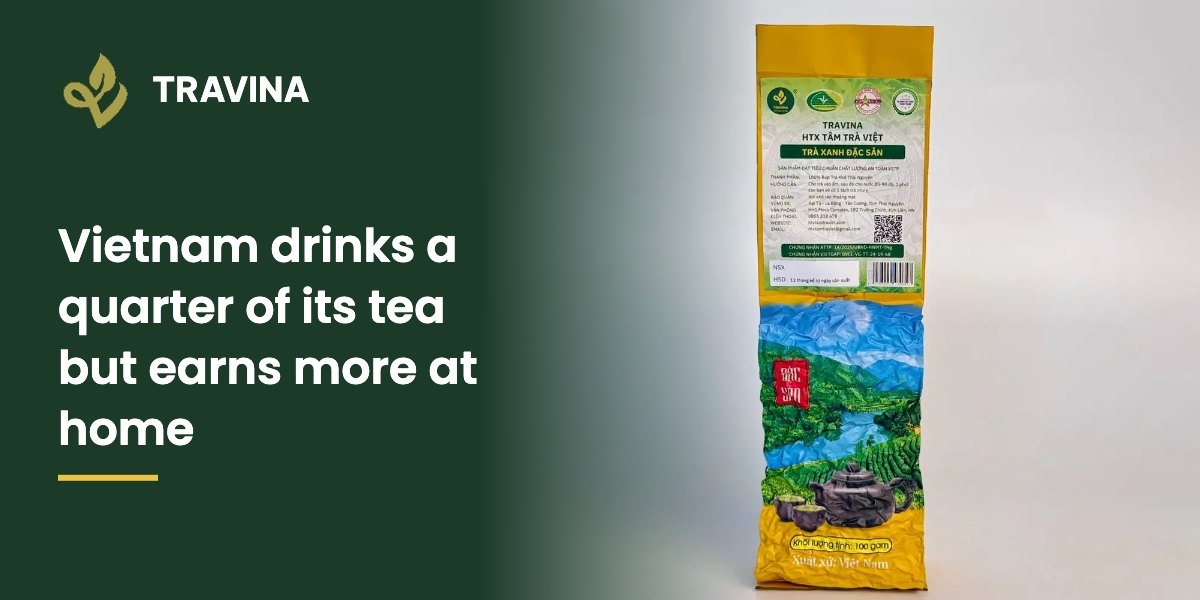
TRAVINA’s gardens are in Dai Tu and La Bang, outside the 2017 GI area. We sell our tea under its own origin and under the TRAVINA trademark (No. 542996), and we hold documents for the collective mark that we can show buyers. See our certificates and licences.
Shan tuyet Ha Giang: the largest area
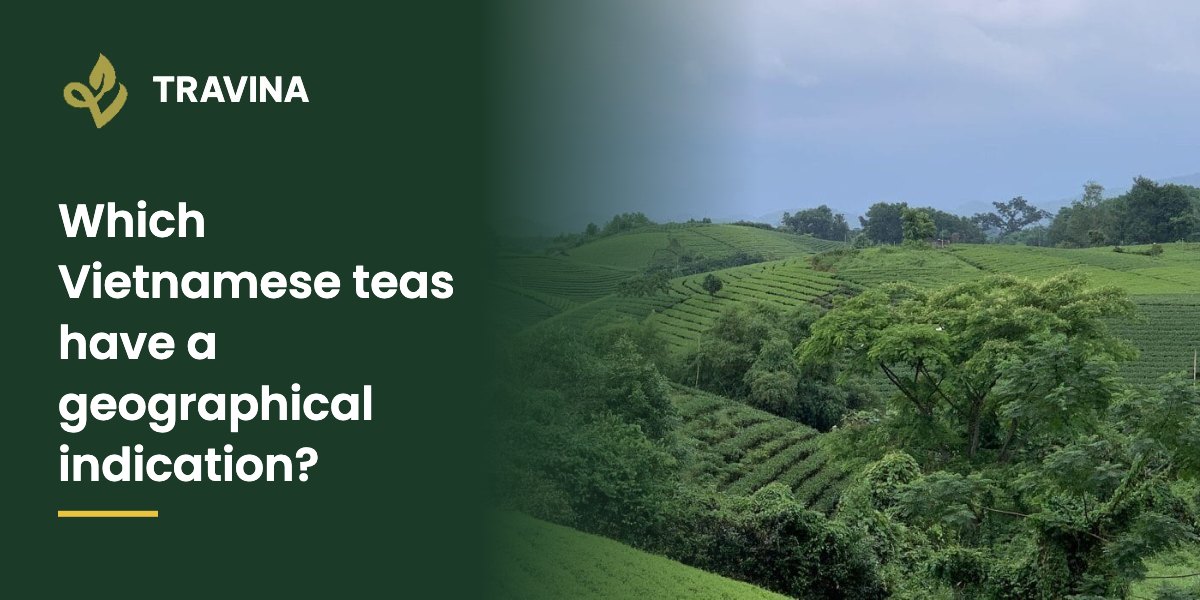
The Shan tuyet Ha Giang GI, registered in August 2018 and presented at a ceremony on 1 December 2018, covers 44 communes in six districts and the provincial city of what was then Ha Giang province. It is the largest tea GI area we found, matching the province’s role as Vietnam’s biggest Shan tea region, with about 7,200 hectares of old Shan tea according to a 2021 study.
Phinh Ho: a small mountain GI
Phinh Ho Shan tea, from Tram Tau in the former Yen Bai province, was protected by Decision 5158/QĐ-SHTT, reported in December 2021, covering the communes of Phinh Ho and Lang Nhi. It shows that GIs are not only for famous provinces: small highland communities can protect their names too. Note that this Phinh Ho in Yen Bai is different from Phin Ho in Hoang Su Phi, Ha Giang, which is also known for old tea.
What a GI means for a buyer
- Use of the name is restricted. Only producers in the area who meet the conditions may use it. Ask for proof of the right to use a GI on any product labelled with it.
- Protection abroad is separate. A Vietnamese GI is protected in Vietnam; protection in other countries depends on separate registration or agreements, as with Moc Chau in Thailand.
- A GI is not a grade. It does not tell you whether a lot is everyday tea or a top grade. Ask for the grade, the harvest and test reports as well.
- No GI does not mean poor tea. Many good teas come from areas without a GI; their origin should simply be stated honestly.
Frequently asked questions
How many Vietnamese teas have a geographical indication?
We verified four: Shan tuyet Moc Chau (2010), the 2017 Thai Nguyen GI, Shan tuyet Ha Giang (2018) and Phinh Ho Shan tea (2021). We could not find an official national total.
Is “Thai Nguyen tea” a geographical indication?
“Chè Thái Nguyên” is a collective mark. Within the province, one area west of the provincial city has its own GI.
Are Vietnamese tea GIs protected in China?
We did not find a record of a Vietnamese tea GI registered in China. The collective mark “Chè Thái Nguyên” is reported to be protected there.
Does TRAVINA use a GI on its labels?
No. Our tea comes from Dai Tu and La Bang and is sold under its own origin and the TRAVINA trademark.
Sources
- Tạp chí Công Thương, Shan tuyet Moc Chau GI, 23 June 2016: tapchicongthuong.vn
- VnBusiness, Moc Chau GI announced in Thailand, 9 April 2018: vnbusiness.vn
- Thời báo Tài chính Việt Nam, the 2017 Thai Nguyen GI (about December 2021): thoibaotaichinhvietnam.vn
- Nhân Dân, Ha Giang receives Shan tuyet GI, 1 December 2018: nhandan.vn
- Pham Thi Tram and Nguyen Thi Hang, Shan tea in Ha Giang, Journal of Human Geography Research 3(34), 2021: vjol.info.vn
- Thời báo Tài chính Việt Nam, Phinh Ho Shan tea GI, 20 December 2021: thoibaotaichinhvietnam.vn
- VnEconomy, “Chè Thái Nguyên” protected in six markets, 5 August 2025: vneconomy.vn
Need clear origin documents? Contact TRAVINA and we will send the paperwork with every quote.