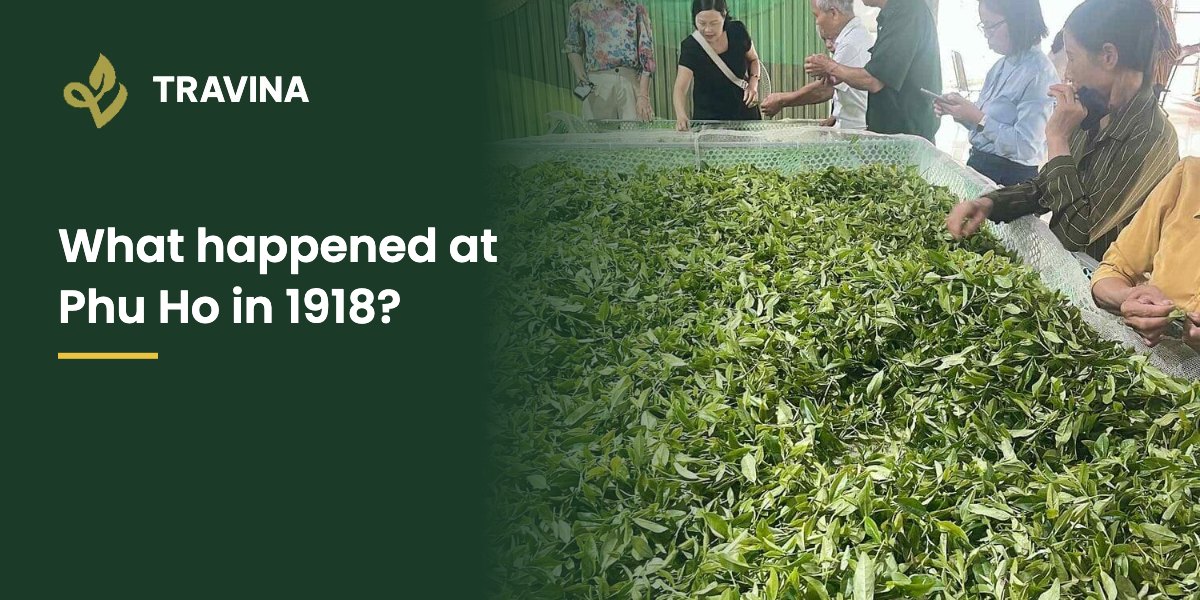
What happened at Phu Ho in 1918, and why does it still matter for Vietnamese tea? In 1918 the colonial government of Indochina opened an agricultural research station at Phu Ho, in Phu Tho province, with a clear brief: find the best tea varieties for northern Vietnam. In 1925 the first tea factory in Indochina was built there. More than a century later, the same site is home to the institute that breeds most of the improved tea cultivars now planted in Vietnam, including the cultivars behind much of today’s Thai Nguyen tea. If you drink Vietnamese tea, there is a good chance its plant has a Phu Ho pedigree.
Phu Ho at a glance
| Year | Event | Source |
|---|---|---|
| 1911 | An earlier tea station at Thanh Ba closes | Colonial report, 1927 |
| 1917–1918 | Botanist Auguste Chevalier sets up four experimental stations; Phu Ho and Pleiku specialise in tea | O. Tessier, Annales HSS, 2013 |
| 1918 | Phu Ho station created, tasked with finding the best tea varieties for Tonkin | Colonial report, 1927 |
| 1925 | First tea factory in Indochina built at Phu Ho, with British machinery; extra budget and staff for the station | VnBusiness 2023; colonial report 1927 |
| 1927 | Phu Ho’s output, about 2,000 kg a year, bought entirely by the Paris tea house Dammann | P. Braemer, 1927 |
| 2006 | The Tea Research Institute and three other centres merge into NOMAFSI, based in Phu Tho | Decision 08/2006/QĐ-BNN |
| 2018–2022 | Six new tea cultivars recognised and six more released for production | NOMAFSI, 2023 |
A colonial station with a narrow brief
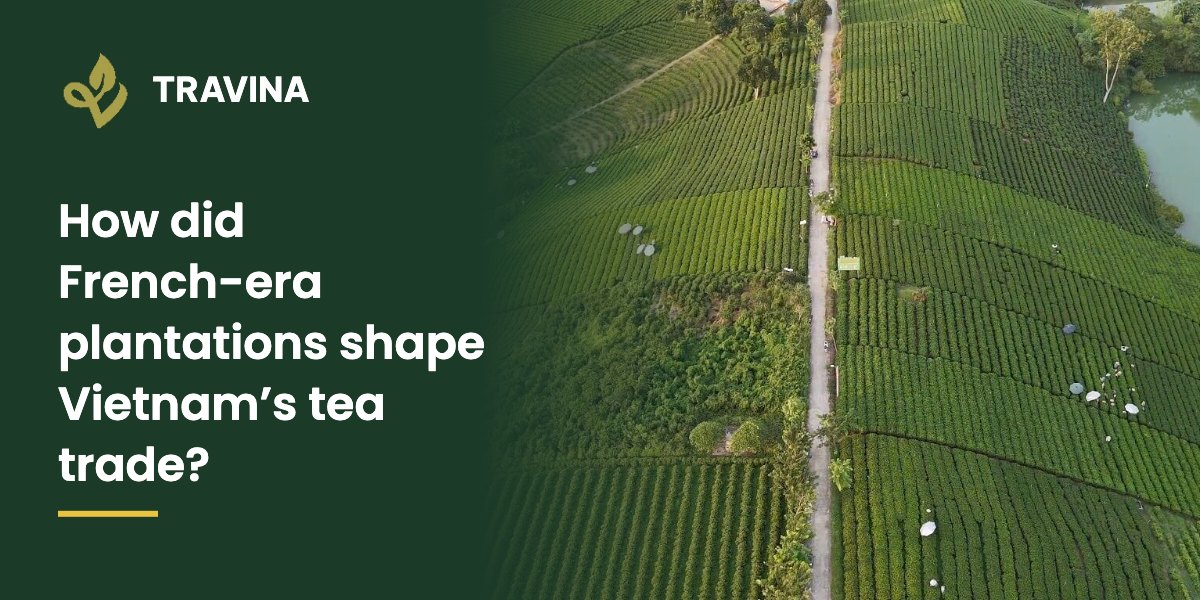
A 1927 report by P. Braemer, head of agricultural services in Tonkin, sets out the station’s purpose in plain terms: from its creation in 1918, Phu Ho was to “find the best tea varieties that can be grown in Tonkin”. Tea research there resumed in 1919, after an earlier station at Thanh Ba had closed in 1911, and in 1925 the station received more money and staff. The same report gives a sense of the scale of the trade at the time: northern Vietnam imported 340,000 kg of tea from China in 1925 and exported 150,000 kg, and Phu Ho’s own small output of about 2,000 kg a year was bought entirely by Dammann in Paris.
The historian Olivier Tessier of the French School of the Far East (EFEO) places Phu Ho in a wider programme: under Governor-General Albert Sarraut, the botanist Auguste Chevalier opened four experimental stations in 1917–1918, two of which, Phu Ho and Pleiku, specialised in tea. Tessier also cautions that colonial reports of a “tea revolution” in Phu Tho overstated what was happening on the ground: Indochina’s tea area fell from about 13,000 hectares in 1935 to 6,100 hectares in 1938.
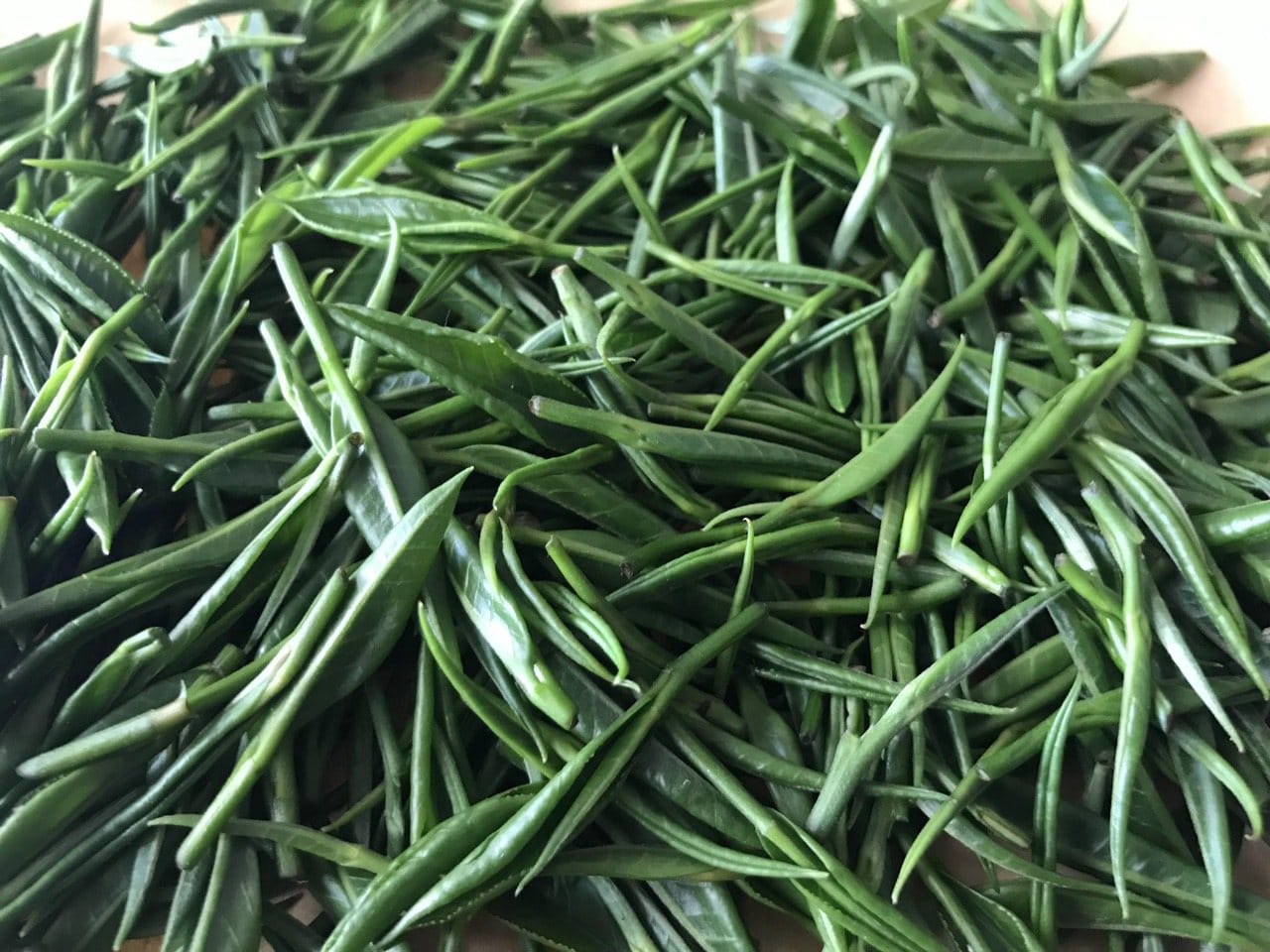
The first tea factory in Indochina
In 1925 the French built Indochina’s first tea factory at Phu Ho, with machinery imported from Britain, according to VnBusiness. Part of its output went to Britain and France. Fifteen years later, on 6 December 1940, Vietnam’s first tea cooperative was founded nearby in Thanh Ba with 50 growers. Phu Tho remains one of Vietnam’s main black tea provinces today.
From station to institute
The station’s work was later carried on by Vietnam’s Tea Research Institute. In 2006, Decision 08/2006/QĐ-BNN merged it with three other research centres to form the Northern Mountainous Agriculture and Forestry Science Institute (NOMAFSI), headquartered in Phu Tho and part of the Vietnam Academy of Agricultural Sciences. NOMAFSI keeps a tea gene bank of 406 accessions. Between 2018 and 2022 it had six new cultivars officially recognised (HBS, TRI5.0, PH276, LP18, CNS141 and CNS183) and six more released for production (PH21, VN15, LCT1, TC4, PH12 and PH14), according to its deputy director in 2023.
The cultivars that came out of Phu Ho
| Cultivar | Origin | Why it matters |
|---|---|---|
| LDP2 | Cross between Da Bach Tra (from China) and PH1 (Assam type), selected from a 1980 hybrid | Planted on more than 10,000 hectares; a workhorse of northern green tea |
| PH8 | Bred at the institute, recognised in 2015 | More than 4,600 hectares by around 2022 |
| TRI777 | A Shan-group tea originally from Moc Chau, taken to Sri Lanka and brought back in 1977 | Parent of TRI5.0, developed by gamma irradiation |
| PH10 | Selected from a collection imported from China in 2000, recognised in 2014 | Example of the institute’s work with imported material |
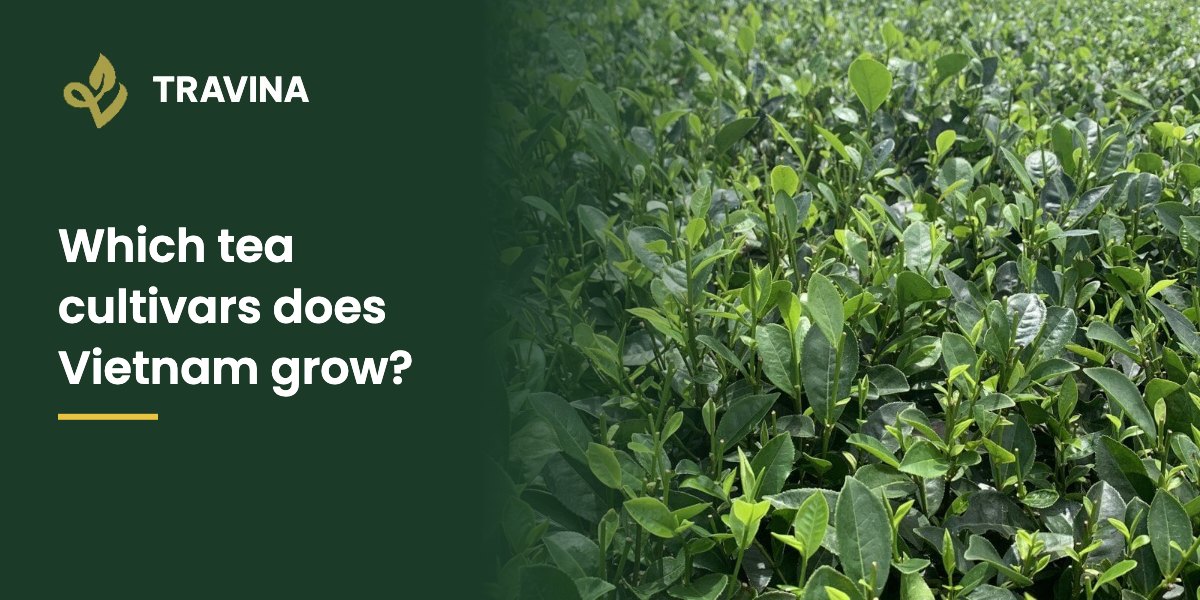
Improved cultivars now cover about 54% of Vietnam’s tea area, and more than 80% in Thai Nguyen. In Thai Nguyen, the main cultivars used for replanting have included LDP1, Phuc Van Tien, Kim Tuyen, Thuy Ngoc and TRI777, according to Nhân Dân (2018), alongside old midland (Trung du) bushes. We describe Vietnam’s main cultivars in more detail in a separate article.
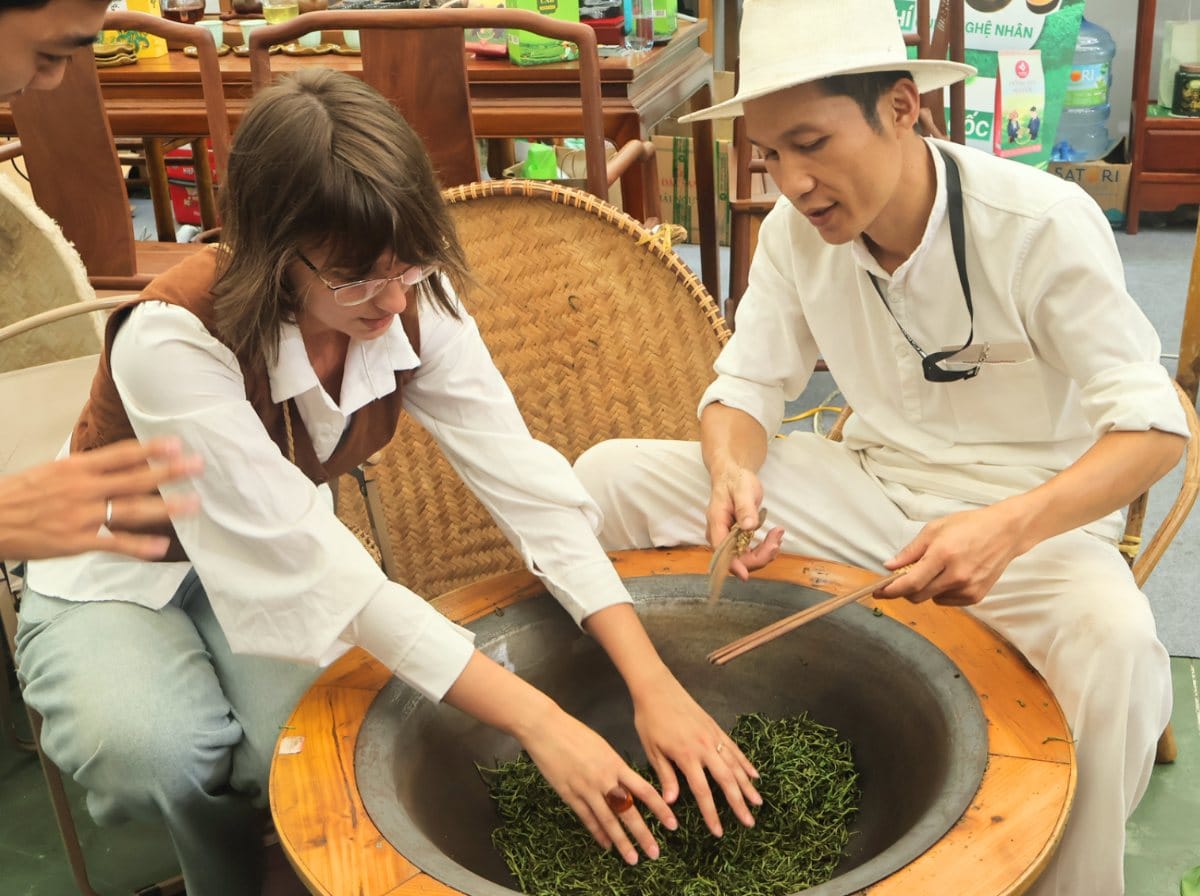
Why it matters to buyers
Phu Ho is the reason much of Vietnam’s tea is planted with cultivars selected for northern conditions rather than random seedlings, and the reason Vietnamese growers can choose between high-yield cultivars for bulk tea and specialty cultivars for fine green and oolong teas. When you ask a supplier which cultivar a lot comes from, you are asking a question that a century of work at Phu Ho has made answerable. See also how long Vietnam has been drinking tea and who grows and makes Vietnam’s tea.
Frequently asked questions
When was the Phu Ho tea station founded?
In 1918. Some recent articles give 1891, but the 1927 colonial report and later historians agree on 1918.
Where was Vietnam’s first tea factory?
At Phu Ho, Phu Tho province, built in 1925 with British machinery.
What is NOMAFSI?
The Northern Mountainous Agriculture and Forestry Science Institute, formed in 2006 from the Tea Research Institute and three other centres. It is Vietnam’s main tea breeding institute.
Which Vietnamese cultivars came from Phu Ho?
Many of the improved cultivars planted in northern Vietnam, including LDP2, PH8 and TRI5.0, were developed or selected by the institute.
Sources
- P. Braemer, “Tonkin: relance du thé”, L’Éveil économique de l’Indochine, 8 May 1927: entreprises-coloniales.fr
- O. Tessier, “Colonial Misrepresentation of the ‘Tea Revolution’ in the Province of Phu Tho (Tonkin), 1920–1945”, Annales HSS (English edition), 2013: cambridge.org
- VnBusiness, the first tea factory and cooperative, 17 May 2023: vnbusiness.vn
- Decision 08/2006/QĐ-BNN on NOMAFSI, 6 February 2006: caselaw.vn
- Báo Nông nghiệp (English edition), new tea varieties, interview with NOMAFSI’s deputy director, 26 July 2023: van.nongnghiepmoitruong.vn
- Báo Pháp Luật, the LDP2 cultivar, 5 February 2011: baophapluat.vn
- Nhân Dân, new tea cultivars in Thai Nguyen, 23 June 2018: nhandan.vn
- Vietnam Journal of Agricultural Science and Technology (VAAS), TRI777, TRI5.0 and PH10: tapchi.vaas.vn
Want to know the cultivar behind your tea? Contact TRAVINA; we can tell you the cultivar and garden for each lot we quote.