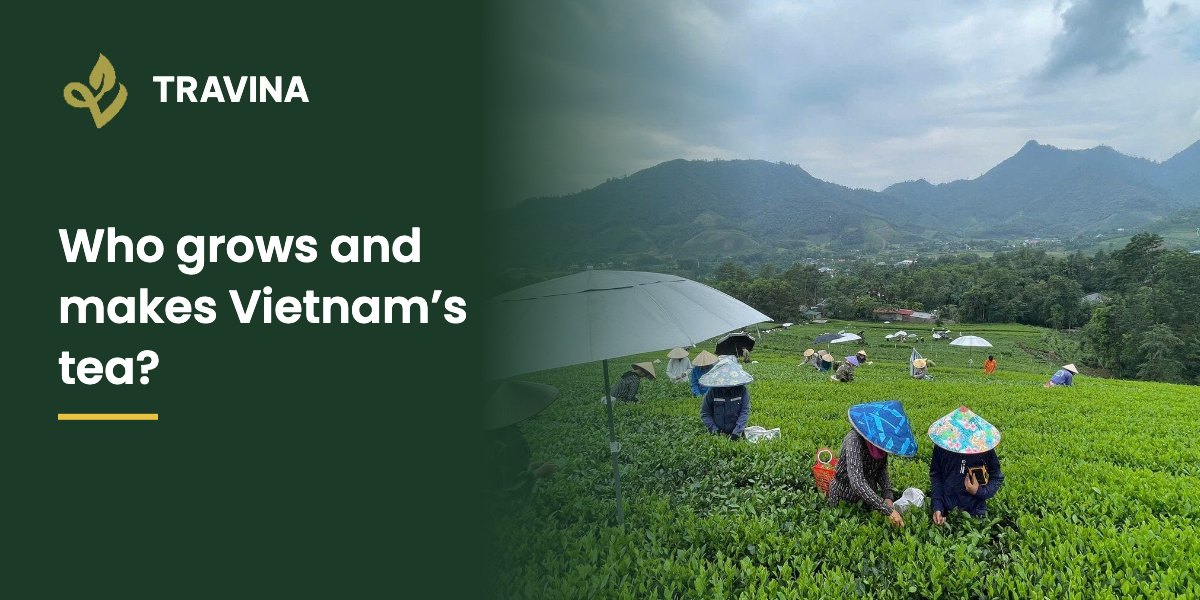
Who actually grows and makes Vietnam’s tea? Mostly very small farmers. The average tea-growing household in Vietnam farms about 0.2 hectares, and households, not plantations, hold most of the country’s roughly 122,000 hectares of tea. Their leaf goes to thousands of family workshops, a few hundred factories and a growing number of cooperatives. For a buyer, this structure explains both the strengths of Vietnamese tea and the questions worth asking before an order.
Who is who in Vietnamese tea
| Group | What the numbers say | Source |
|---|---|---|
| Tea area | About 121,900 ha in 2024, down from a peak of 133,600 ha in 2015; improved cultivars cover about 54% of it | Báo Chính phủ, February 2026 |
| Fresh leaf harvest | About 1.154 million tonnes in 2024 | Báo Chính phủ, February 2026 |
| Smallholder farms | About 0.2 ha per household on average; households hold about 65% of the tea area | Báo Chính phủ 2026; VnEconomy, January 2024 |
| Family workshops and small firms | Around 600 small and medium enterprises and more than 10,000 households process green tea; traditional units make up to half of Vietnam’s green tea | Department of Crop Production, November 2024 |
| Industrial factories | 257 industrial-scale tea processors with a design capacity of 5,200 tonnes of fresh leaf a day and about 220,000 workers | VnEconomy, January 2024 |
| Raw-material links | Only about 10% of factories have their own or tightly linked growing areas | Báo Chính phủ, February 2026 |
A country of small gardens
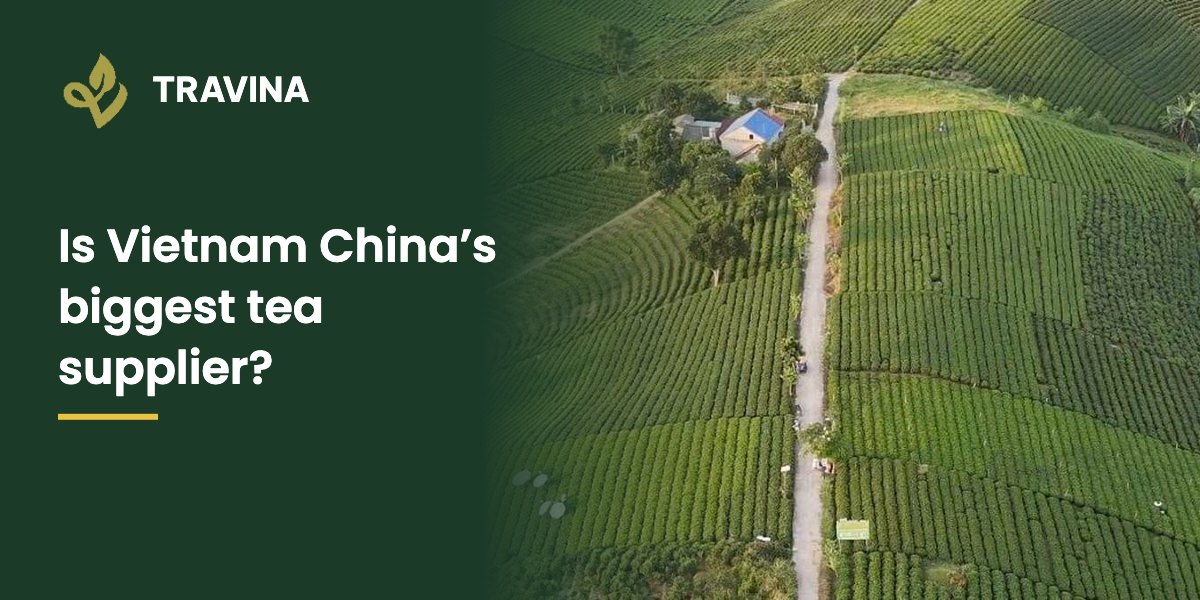
Most Vietnamese tea is grown on hillside plots a family can walk around in a morning. At 0.2 hectares, an average household garden is about a quarter of the size of a football pitch; many are terraced slopes behind the house. Families pick by hand several times a season, and either process the leaf themselves or sell it fresh the same day to a collector, a workshop or a factory.
This has two consequences. The first is diversity: the same province can produce very different teas from garden to garden, depending on cultivar, altitude, picking standard and the skill of whoever roasts the leaf. The second is fragmentation: a factory buying from hundreds of small gardens has to work hard to know what each one sprayed, when it picked and how the leaf was handled. Vietnamese policy has pushed for certified growing standards, and in Thai Nguyen province alone close to 6,000 hectares had VietGAP certification by 2025, according to provincial figures reported by VnBusiness.
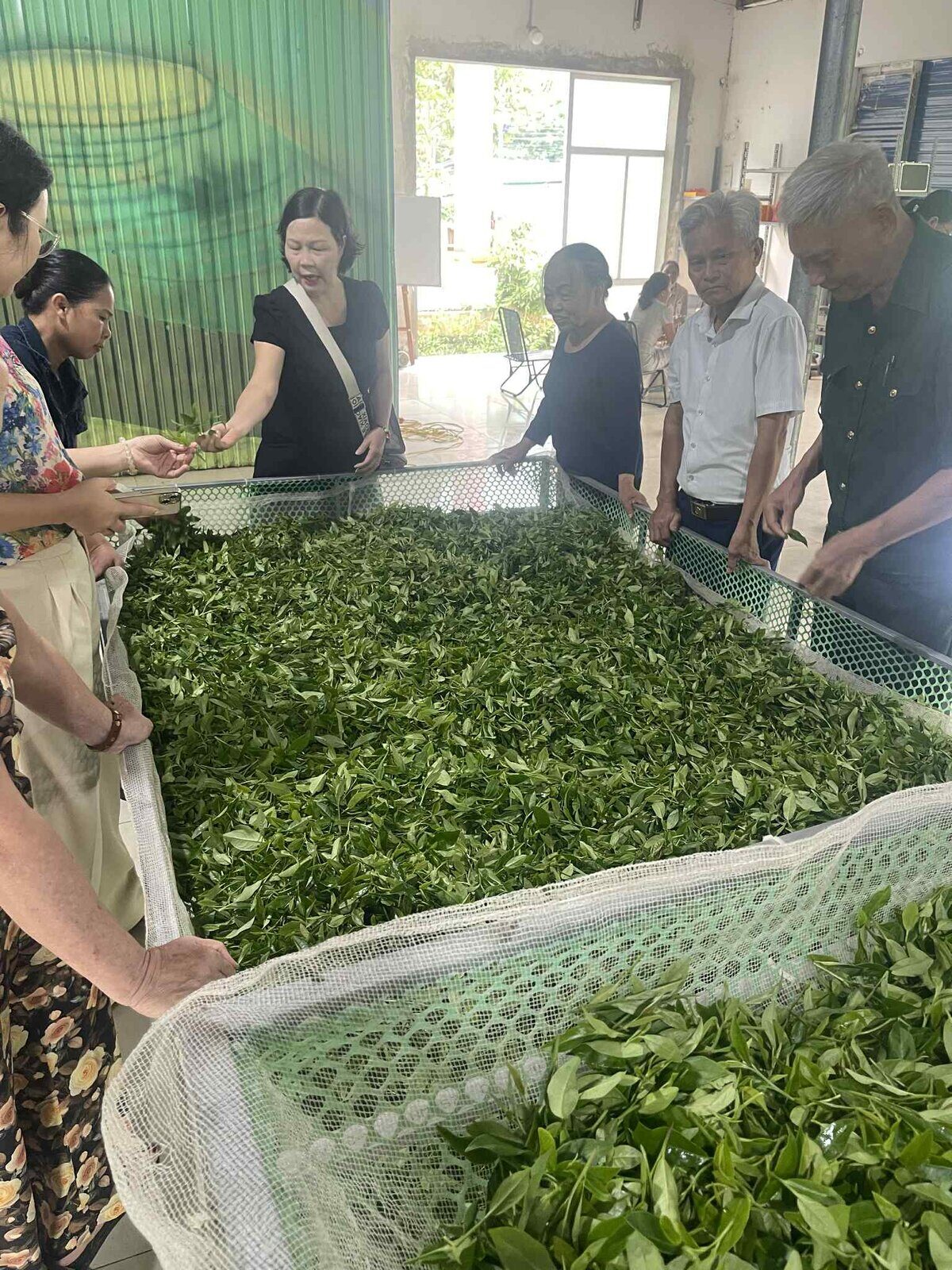
Family workshops: the backbone of green tea
Green tea, the style Vietnam is best known for, is still largely made in family workshops. Vietnam’s Department of Crop Production reports more than 10,000 households and about 600 small and medium firms processing green tea, and estimates that traditional units produce up to 50% of the country’s green tea. In Thai Nguyen, many households own a small electric or wood-fired rotating drum, roast in the evening after the day’s picking and sell dry tea to traders or directly to customers.
The strength of these workshops is flavour and flexibility. The weakness is consistency: one batch can differ from the next, and few workshops can provide test reports, food safety certificates or export documents on their own.
Industrial factories and the export trade
Industrial factories handle much of the black tea and bulk green tea that Vietnam sells abroad. The 257 industrial processors counted by the agriculture ministry can handle 5,200 tonnes of fresh leaf a day. A ministry assessment cited by VnEconomy found that only about 20% of these plants fully met standards, around 60% met them partly, and about 20% were makeshift. Combined with the fact that only around one factory in ten controls its own growing area, this helps explain why Vietnamese tea sells abroad at about 1,700 USD per tonne, well below the world average.

Cooperatives: from 1940 to today
Cooperatives are not new in Vietnamese tea. According to VnBusiness, the country’s first tea cooperative was set up on 6 December 1940 in Thanh Ba, Phu Tho, with 50 tea growers. Today cooperatives sit between the family garden and the factory: members keep their own land, but agree on growing rules, share processing equipment and sell under one name. For a buyer, a cooperative can offer something neither a single household nor an anonymous factory easily can: a known group of gardens, common standards, and one counterparty for documents and contracts.
What this means when you buy Vietnamese tea
| If you buy from | You usually get | Ask for |
|---|---|---|
| A trader or collector | Low prices, mixed origins | Origin of each lot, test reports from an accredited lab |
| A family workshop | Distinctive flavour, small volumes | Batch consistency, food safety paperwork, export capability |
| An industrial factory | Large, consistent volumes of standard grades | Where the leaf comes from, certification scope, residue testing |
| A cooperative | Named gardens, shared rules, one contract | Member list and area, certificates, how members are checked |
How TRAVINA is organised
TRAVINA is the brand of Tam Tra Viet Cooperative in Dai Tu and La Bang, Thai Nguyen province. The cooperative has 90 member households farming 40.5 hectares, roughly 0.45 hectares per household, and produces about 120 tonnes of dry tea a year. A group of 17 households on 9.7 hectares holds VietGAP certification (code DVCL-VG-TT-24-19-68), and our processing facility at La Bang is certified to ISO 22000:2018. Members follow our “Six-No” clean tea rules, a production commitment rather than an organic certification, which we explain in the Six-No clean tea standard.
You can meet the households in our member households, see the gardens in Dai Tu and La Bang, follow the processing in how Thai Nguyen green tea is made, and read the documents in our certificates and licences.
Frequently asked questions
How big is a typical tea farm in Vietnam?
Very small. Government figures put the average at about 0.2 hectares per household, and smallholders hold around 65% of the national tea area.
How many tea factories does Vietnam have?
The agriculture ministry counts 257 industrial-scale tea processors, plus around 600 small and medium firms and more than 10,000 households that process green tea. Different reports use different definitions, so totals vary.
Who makes most of Vietnam’s green tea?
Traditional household and small-workshop processing accounts for up to half of Vietnam’s green tea, according to the Department of Crop Production.
Why does the structure of the industry matter to buyers?
Because traceability depends on it. With many small gardens supplying one processor, a buyer needs to know which gardens are behind a lot and how they are checked.
When was Vietnam’s first tea cooperative founded?
On 6 December 1940 in Thanh Ba, Phu Tho province, with 50 tea growers, according to VnBusiness.
Can I visit TRAVINA’s member gardens?
Yes. Buyers can visit the gardens and the processing facility in Thai Nguyen; see tea tours or write to us through the contact page.
Sources
- Báo Chính phủ, republished by Thương hiệu & Công luận, 28 February 2026: thuonghieucongluan.com.vn
- VnEconomy, “Xuất khẩu chè sa sút vì chậm đầu tư vào chế biến sâu”, 11 January 2024: vneconomy.vn
- Department of Crop Production, interview in Báo Nông nghiệp (English edition), 5 November 2024: van.nongnghiepmoitruong.vn
- VnBusiness, Thai Nguyen tea after the province merger, 10 July 2025: vnbusiness.vn
- VnBusiness, Vietnam’s first tea cooperative, 17 May 2023: vnbusiness.vn
Looking for a traceable supplier? Contact TRAVINA and we will send the garden, grade and document details for the teas you are interested in.