“Clean tea” is the emptiest phrase in this industry. Anyone can print it. So here is ours written down as six specific prohibitions, with what replaces each one, what it costs us, and how a buyer checks whether we are telling the truth.

1. Why anyone worries about this at all
Search for tea and pesticides in English and you land in a decade-old argument. It began with Greenpeace testing programmes in 2012 to 2014: in the Chinese survey, 18 samples from 9 manufacturers all carried at least three pesticides, and 12 of the 18 carried banned ones. In the Indian survey, 46 of 49 samples carried residues of at least one of 34 active ingredients and 60 per cent carried ten or more.
Those findings were real. What followed them was not always. The viral “eight teas with deadly pesticides” posts that still circulate were substantially overstated, and the current regulatory picture is far better than the panic suggests. The European Food Safety Authority’s report on 2024 monitoring found 98.8 per cent of samples within legal limits, with exceedance around 5.5 per cent for imported products under increased border controls (EFSA).
So the honest position is neither panic nor dismissal. Residues in tea are a real and measurable variable, they are regulated, and the only thing that settles the question for a given lot is a test on that lot. Our answer to it starts earlier, in the field.
2. The six prohibitions, and what replaces each one
6 Không is not a certification. It is a production commitment we set ourselves and hold our member households to. The value of it is that each line is specific and falsifiable, unlike “natural” or “clean”.
| We do not use | What we do instead | What it costs |
|---|---|---|
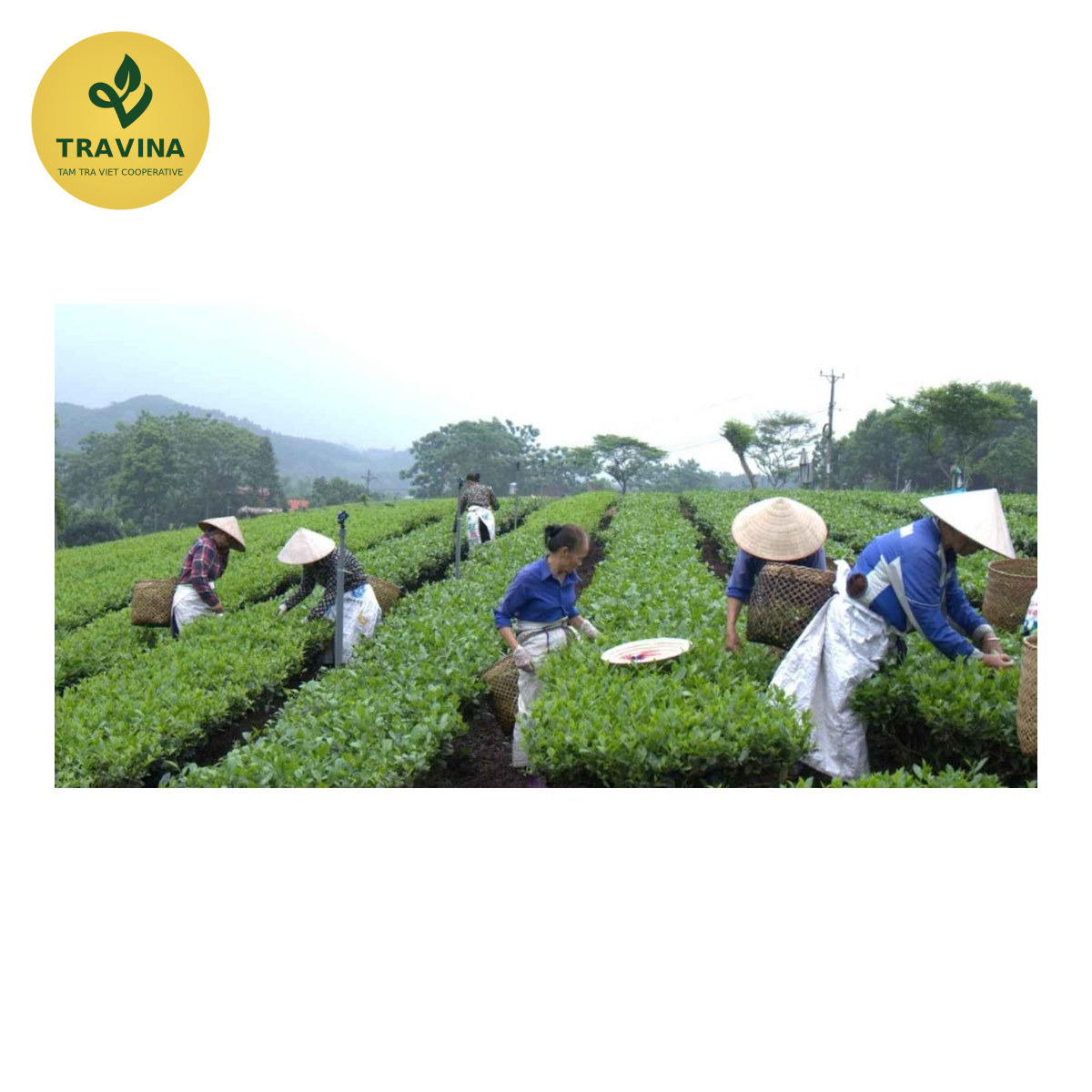
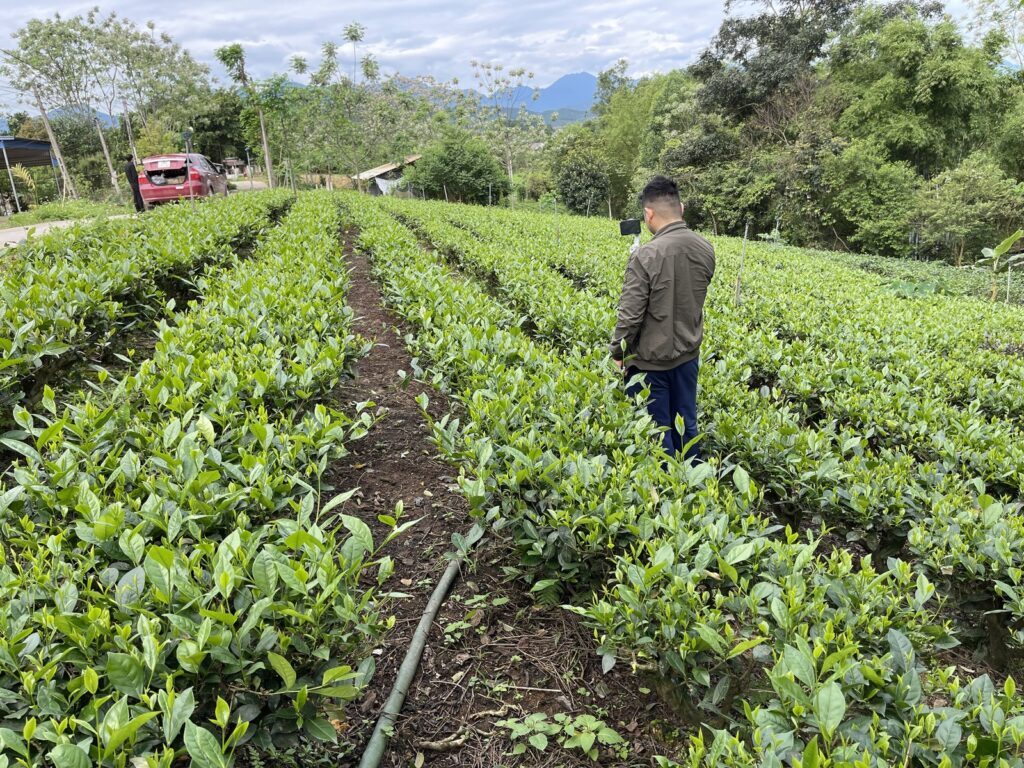
| 1. Herbicide | Weeds cut by hand and strimmer between rows; the cuttings stay as mulch | The largest single labour cost we carry |
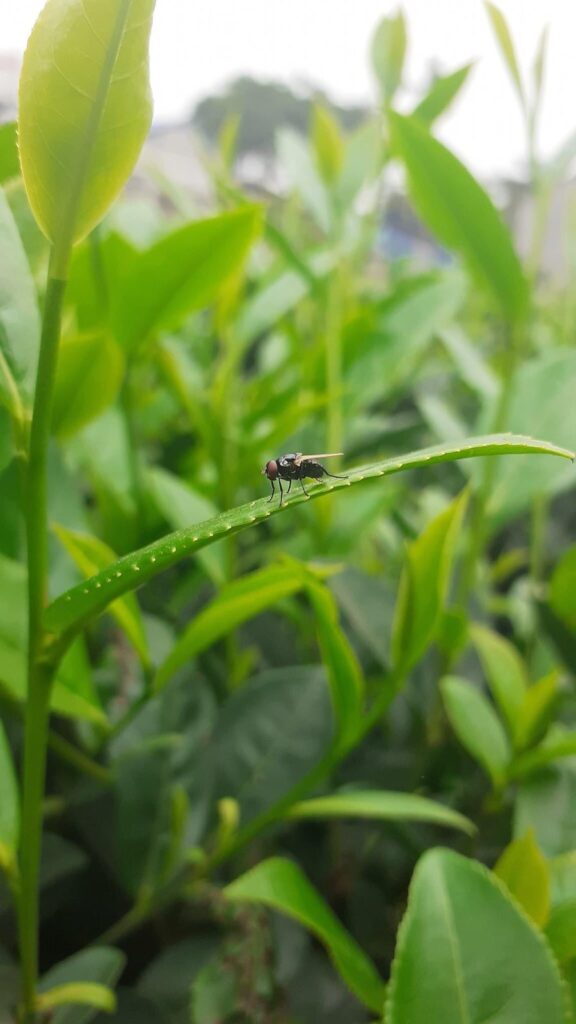
| 2. Chemical pesticide | Monitoring, pruning out affected flush, and accepting a smaller crop in a bad year | Yield, unpredictably, in wet seasons |
| 3. Chemical fertiliser | Composted farmyard manure and soybean cake worked in between flushes | Slower response, more handling, more storage |
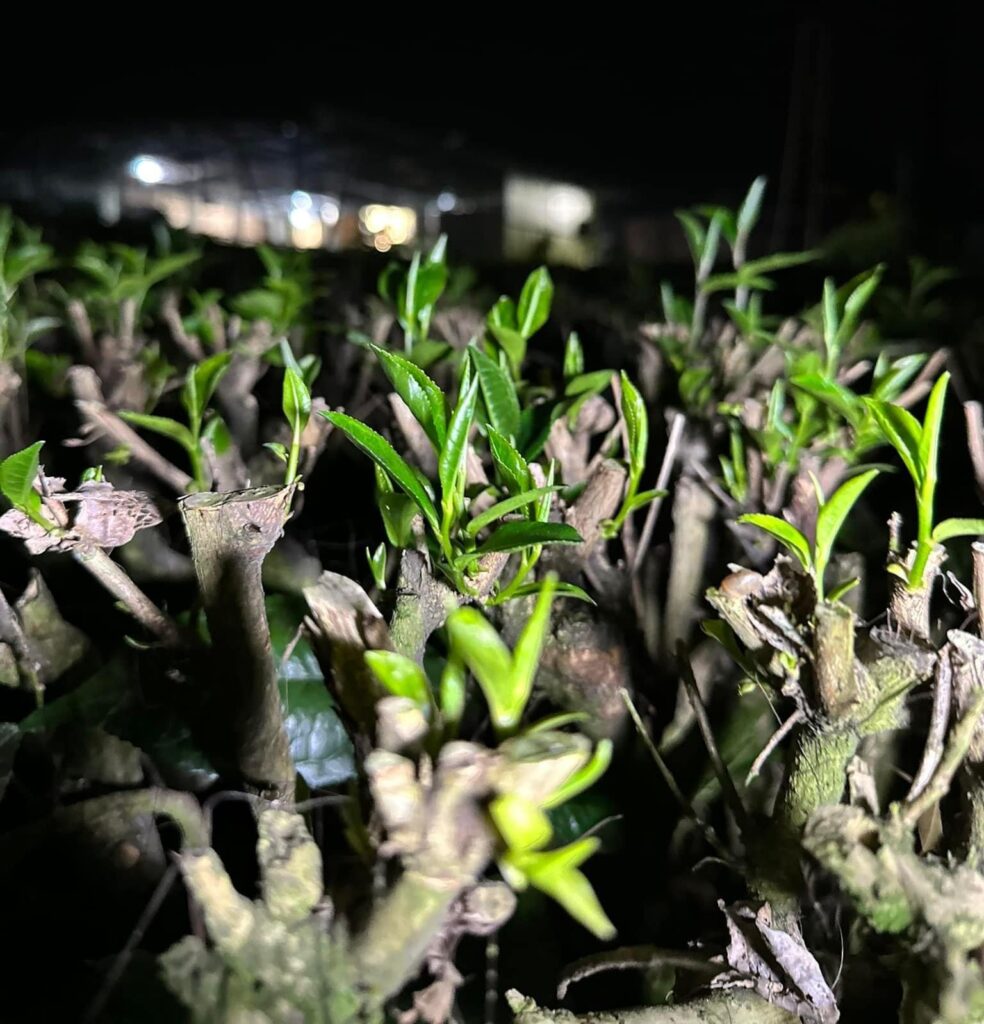
| 4. Growth stimulant | Nothing. The bush sets its own calendar and rests November to February | Fewer pickings per year than a forced garden |
| 5. Artificial flavouring | Scenting only with real flowers in season, mainly lotus, jasmine and pomelo blossom | Scented teas can only be made for a few weeks a year |
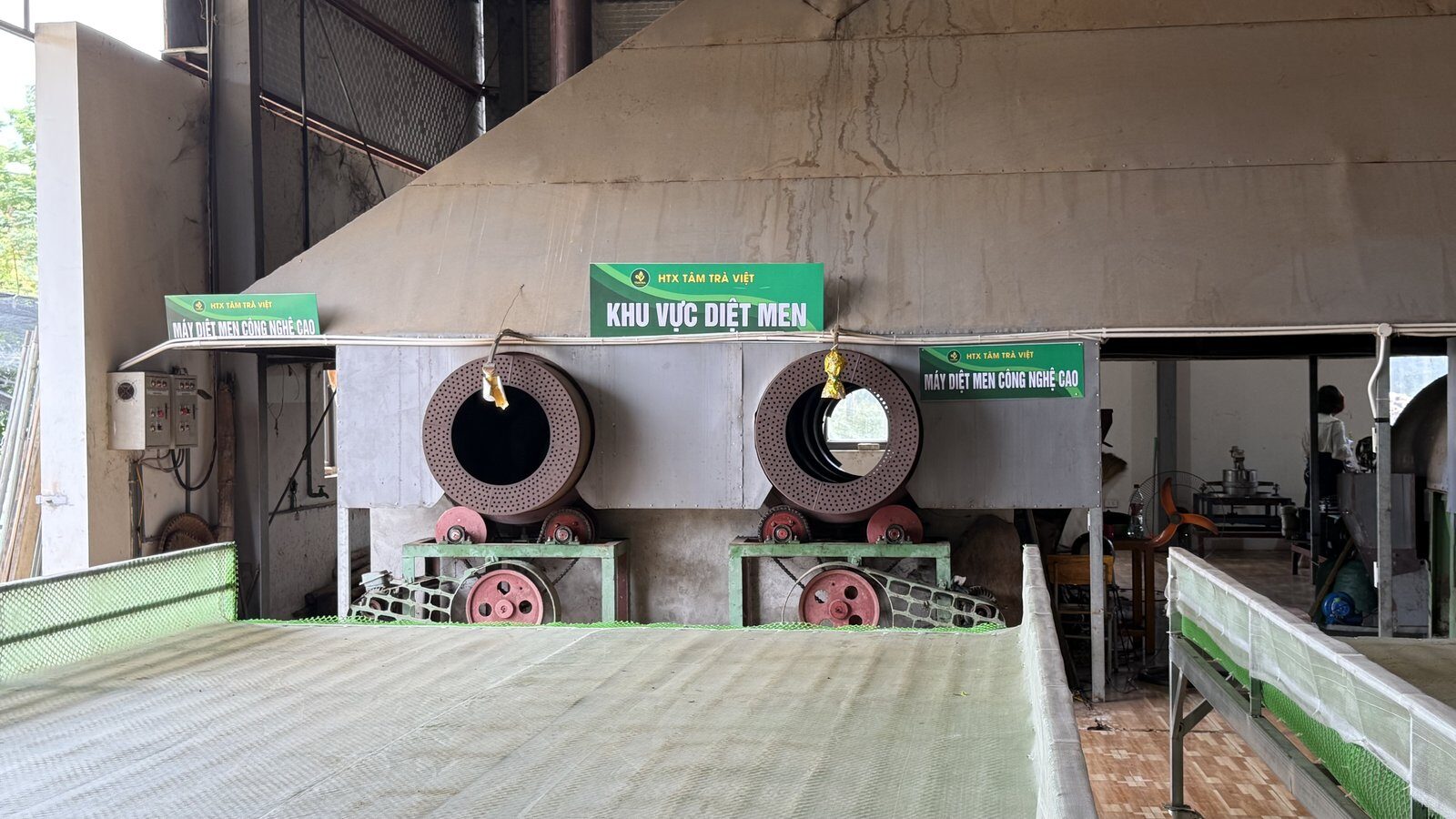
| 6. Preservative | Correct drying, vacuum packing and cold storage for finished lots | Cold-store capacity, and shorter shelf life than a treated tea |
Read the right-hand column before the left. Every prohibition is only as real as the substitute behind it, and every substitute costs something. A producer who claims all six and reports no cost is not doing all six.
3. Why we are not organic certified, and will not pretend to be
This is the first question a serious buyer asks, so here is the answer without spin.
Organic certification is a paid, audited, multi-year process. For a cooperative of 90 smallholder households it means a conversion period on every plot, a per-household audit cost, and a documentation burden carried by families who farm a hectare or two each. Some of our members could absorb that. Most could not, and a standard that only the largest households can afford would split the cooperative rather than lift it.
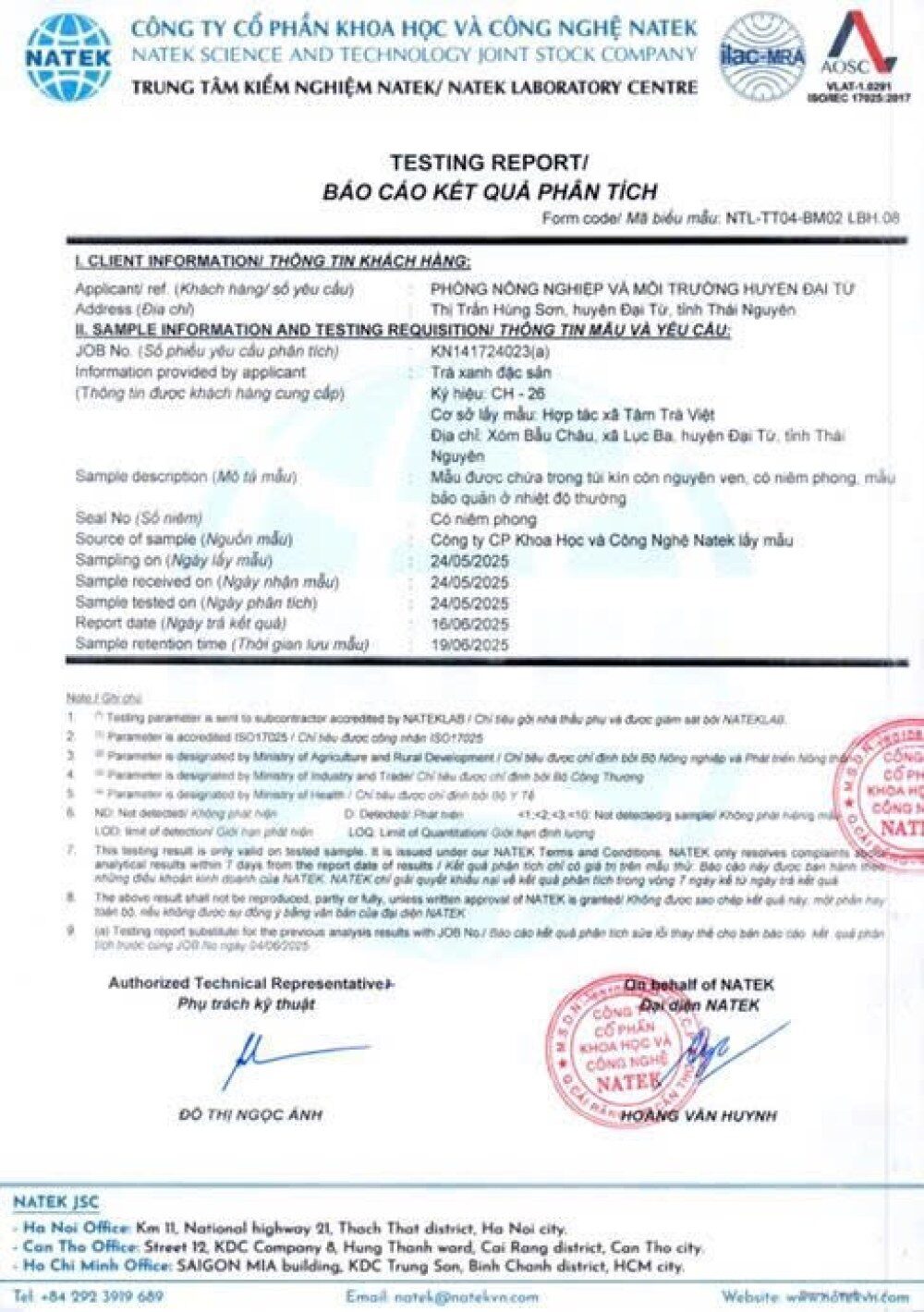
What we did instead was set a rule that costs money in the field rather than in audit fees, apply it to every member, and then buy the third-party evidence that actually matters to an importer: VietGAP certification on part of the area, a growing-area code, a food safety certificate, ISO 22000:2018 on the workshop, and laboratory residue testing on finished tea.
So, plainly: TRAVINA tea is not certified organic. 6 Không is stricter than conventional practice and is not a substitute for an organic label. Anyone who tells you their uncertified tea is “basically organic” is asking you to take their word for something they have not had checked.
Where the standard stands today
- 40.5 hectares farmed in total across Dai Tu and La Bang
- 5 hectares under the full 6 Không commitment
- 9.7 hectares across 17 member households under VietGAP, certificate DVCL-VG-TT-24-19-68
We publish those three numbers separately, in that order, every time. Reporting the certified figure as if it were the whole farm is the most common overclaim in Vietnamese tea and we are not going to make it.
4. How a buyer verifies any of this
A standard nobody can check is a slogan. Four things make 6 Không checkable:
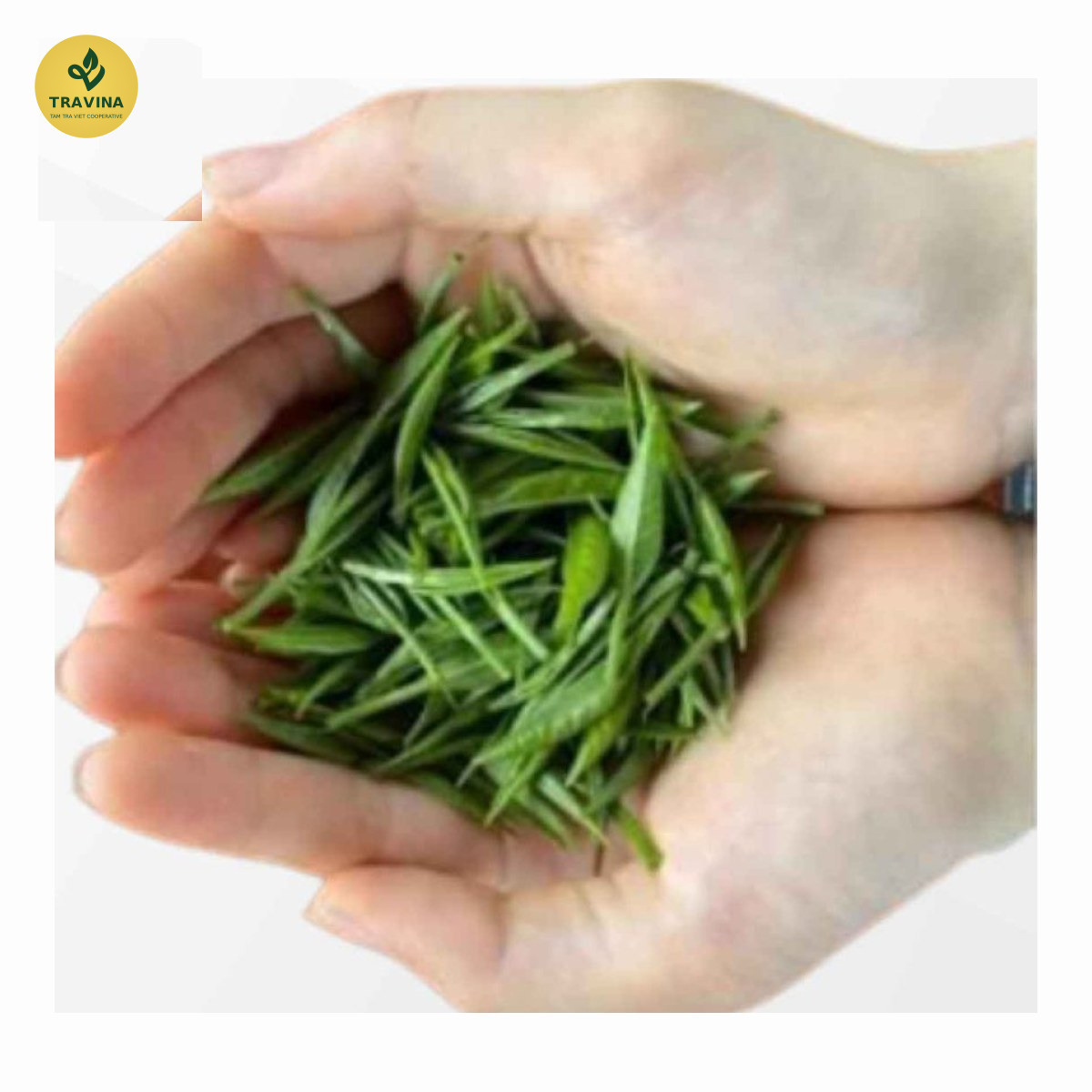
- Residue testing on finished tea. Our laboratory work is done at the Tea Research and Development Centre, NOMAFSI. Reports go out with samples. This is the only evidence that speaks directly to what is or is not in the leaf.
- Traceability to the block. Every lot resolves to a household group and a picking date through the growing-area code. If a test raises a question, we can tell you which hillside to look at.
- Cultivation record books. Each member household keeps one. It is the boring document that makes a spray-free claim auditable rather than rhetorical.
- Come and look. The gardens are an hour and a half from Hanoi airport and open all year. Herbicide use is visible from the path: a sprayed row has a dead bare strip under the bushes, and ours does not.
On limits, the governing framework for the European market is Regulation (EC) No 396/2005, under which a substance with no specific MRL set for tea defaults to the limit of quantification, 0.01 mg/kg. We do not publish per-substance limits here because they change; a buyer should check the current values in the EU Pesticides Database against the test report for the lot in front of them.
5. What the standard has produced so far
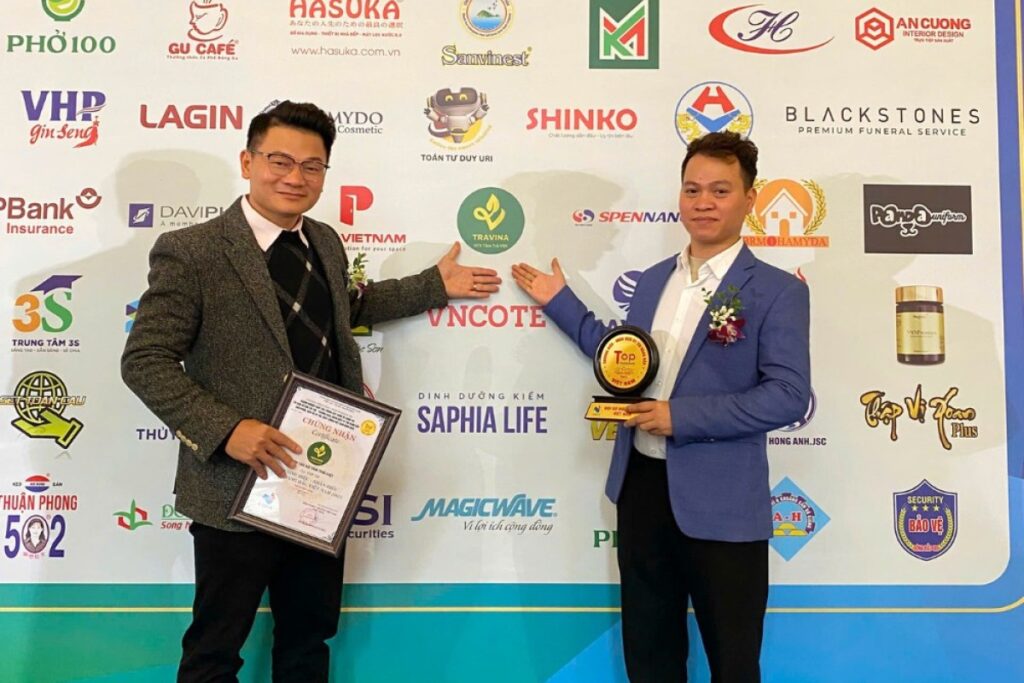
Awards are not evidence of residue levels. They are evidence that people who taste tea for a living have judged this tea against its peers, which is a different and still useful thing.
- Top 10 Vietnamese Beverage Brands 2025, Vietnam Intellectual Property Association, 28 December 2025
- High-Quality Product and Service 2024, VATAP, 29 November 2024
- Second Prize, Golden Hands Tea Processing 2025, Thai Nguyen Department of Agriculture and Environment
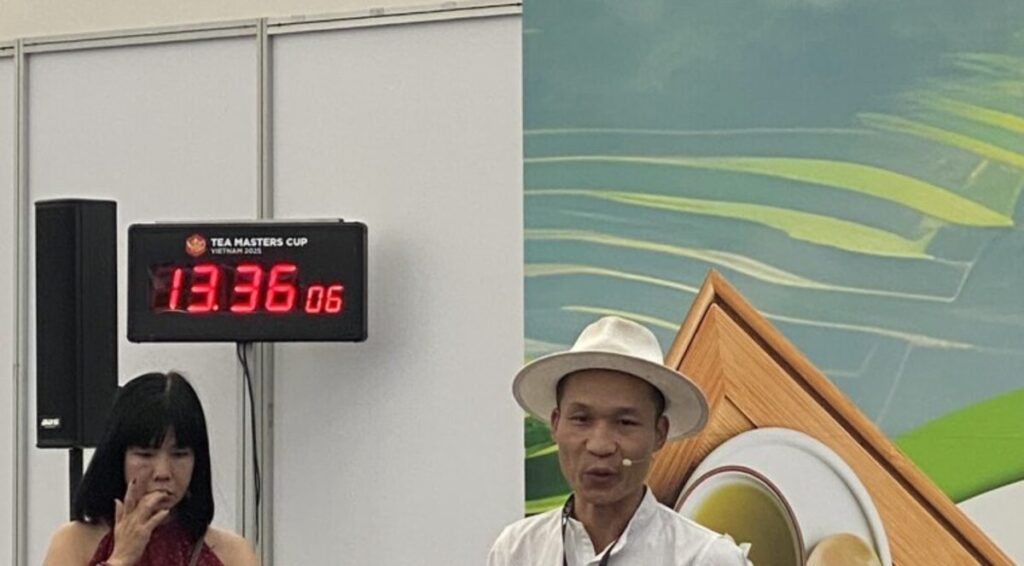
- Tea Masters Cup Vietnam 2025 — the cooperative sent artisan Pham Hoang Giang to compete
- Registered trademark TRAVINA no. 542996, and the collective mark “Che Thai Nguyen”
The commercial result matters more than the trophies. 6 Không is what makes it possible to sell a named, traceable, testable tea instead of anonymous bulk leaf, and that is the difference between Vietnam’s average export price and a price worth farming for.
6. Where 6 Không does not help you
Four honest limits, because a standard with no stated boundary is advertising:
- It is not a legal claim. Nothing on this page substitutes for your own import testing.
- It says nothing about heavy metals. Those come from soil and air, not from spraying, and are tested separately.
- It covers 5 hectares, not all 40.5. Ask which blocks a lot came from.
- It cannot protect against a neighbour’s drift. Buffer rows and testing are how that is managed, not a promise.
7. Questions we get asked
Is pesticide-free tea the same as organic tea?
No. Organic is a certified scheme covering inputs, conversion periods and audits. Pesticide-free is a description of practice. Ours is written down as six named prohibitions and backed with residue testing, but it is not a certification and we never present it as one.
Do pesticide residues actually end up in the brewed cup?
Only a portion of any residue on dry leaf transfers into the infusion, and how much depends on the substance. That is a reason to test, not a reason to relax. We would rather the residue not be on the leaf in the first place.
Can you supply a residue test report for our lot?
Yes. Laboratory reports on finished tea go out with samples, and we can arrange testing against a specific buyer panel where a market requires it.
What does “6 Không” mean in Vietnamese?
It is sau khong, literally “6 Không s”. It is a producer commitment used by a number of Vietnamese growers; ours is the version set out in the table above, applied to our member households.
Which TRAVINA teas come from the 6 Không blocks?
The Trà Sạch 6 Không line, and the tender grades that draw on those blocks. Tell us which grade you are considering and we will state the block and the standard it was farmed to.
Ask for the test report
The fastest way to judge a clean-tea claim is to read a laboratory report next to a cup. Tell us the grades and volumes you are looking at and we will send samples with the certificates and the lot origin attached. See the range of teas, the certificates we hold, the growing areas, or what changed in the fields to make this standard possible.
TRAVINA, Tam Tra Viet Cooperative
Dai Tu and La Bang, Thai Nguyen, Vietnam
Phone, Zalo and WhatsApp: +84 855 318 678 · Email: admin.travina@gmail.com