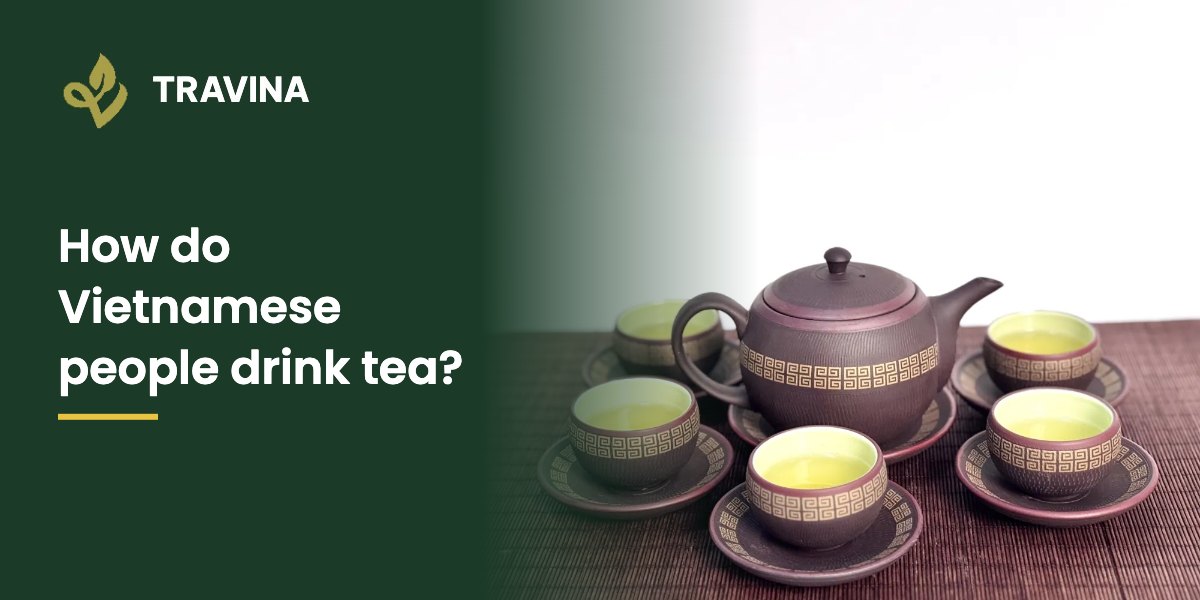
How do Vietnamese people drink tea? Strong, hot and often, in small cups, from a pot that is refilled all day; iced from a plastic stool on the pavement; scented with lotus or jasmine for special days; and always offered first to a guest. Tea is also part of the most important family rituals: it stands on the ancestral altar at New Year, travels with the groom’s family at an engagement and is served to mourners at funerals. Vietnamese newspapers like to say that “a cup of tea is the start of a conversation”. This is a short guide to the everyday and ceremonial ways Vietnam drinks tea.
Tea in Vietnamese life at a glance
| Setting | How tea is drunk | Source |
|---|---|---|
| At home and in offices | A pot of green tea is made for every visitor; the first cup goes to the guest | VTC News, 2023 |
| On the pavement | Iced tea (trà đá) at small stalls, drunk daily by people of every background | VOV, 2017 |
| In summer | Fresh green tea brewed from fresh leaves | SGGP, 2019 |
| At New Year (Tet) | Tea on the ancestral altar; the family’s first pot of the year | SGGP, 2019 |
| At engagements | The groom’s family brings tea and cakes; a pair of fine teas in red paper on each family’s altar | SGGP, 2021 |
| At funerals | Tea served to visitors; offerings often include tea | SGGP, 2021 |
The pot that never empties
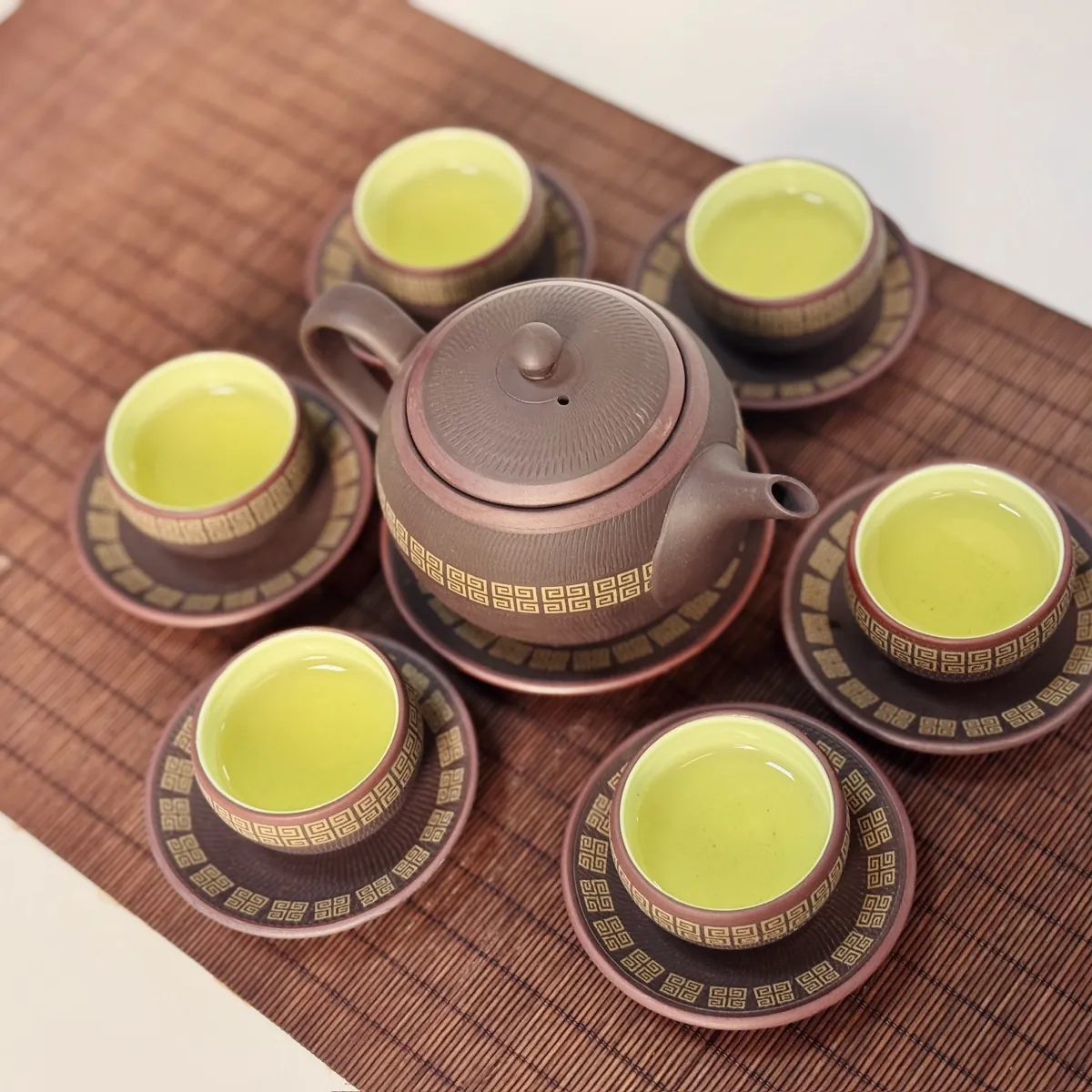
In a northern Vietnamese home, tea is less a drink than a habit of hospitality. When someone arrives, the host rinses small cups with hot water, brews green tea in a small pot and pours the first cup for the guest. Conversation follows the tea. VTC News describes the saying “chén trà là đầu câu chuyện”, “the cup of tea is the start of the conversation”, and notes that tea is present at weddings, death anniversaries and the start of the new year. The custom has deep roots: an 8th-century Chinese text already described people in the Giao region serving a tea-like drink first to guests.
Northern Vietnamese tea is usually brewed strong and drunk in small cups, often green tea from Thai Nguyen. In Hanoi, lotus- or jasmine-scented tea is kept for guests and special occasions.
Iced tea on the pavement
The most visible form of Vietnamese tea culture is trà đá, iced tea, sold from small stalls on the pavements of Hanoi and other cities. VOV describes it as a daily habit for Hanoians and a place “suitable for anyone”; one researcher calls it “iced tea culture, pavement culture”. An architect writing in VnExpress in 2025 described the pavement as “the extended living room of society”. For visitors, a glass of iced tea on a low plastic stool is often their first taste of Vietnamese tea.
Fresh green tea
In the countryside, many families drink chè tươi: fresh tea leaves boiled or steeped in a pot, especially in summer. Le Quy Don noted the folk habit of drinking fresh green tea as early as 1773, according to VTC News. It is the simplest form of tea in Vietnam and still common in tea-growing areas like Thai Nguyen.
Tea in rituals
At Tet, the host brews tea and places it on the ancestral altar, and the family drinks the first pot of the year together while wishing grandparents long life. At an engagement, the groom’s family brings tea and cakes to the bride’s family, and a pair of fine teas wrapped in red paper stands on each family’s altar. At funerals, tea is served to visitors and is a common offering. The custom of offering tea and wine to the ancestors on New Year’s Eve is already recorded in a Vietnamese chronicle of around 1335. We look at tea gifts in more detail in what tea Vietnamese people give at Tet.
How much tea do Vietnamese people drink?
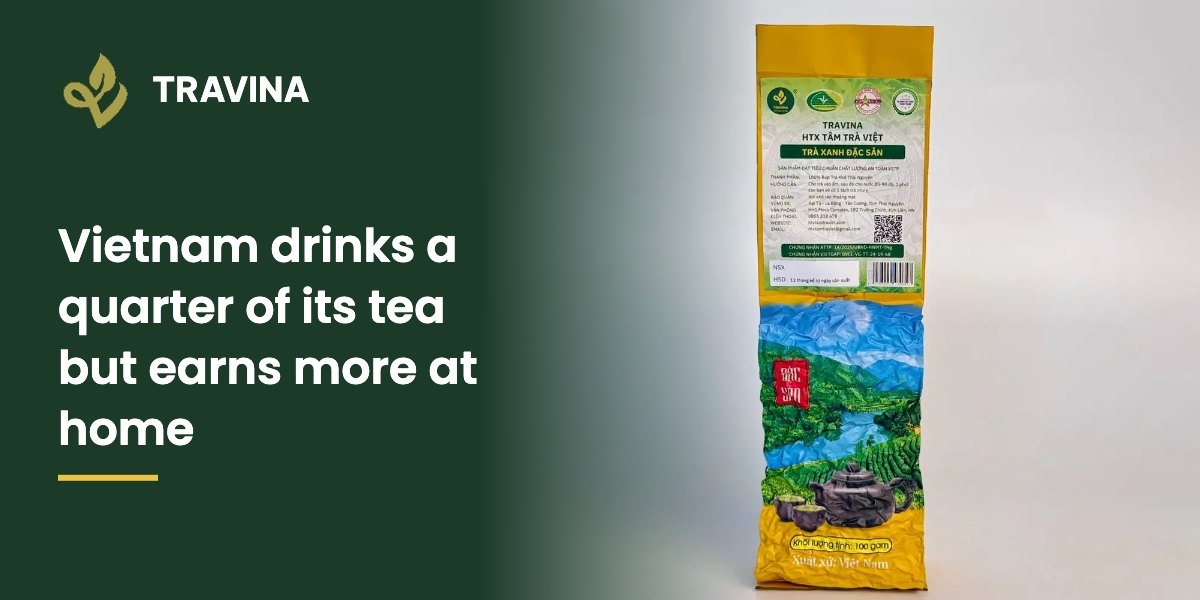
Official figures show that Vietnam consumed about 48,000 tonnes of tea at home in 2022, roughly a quarter of its output, while exporting about 146,000 tonnes. Divided by the population, that is roughly half a kilo per person per year (our calculation). Yet the domestic market was worth more, about 325 million USD against 237 million USD for exports, because Vietnamese drinkers pay more per kilo for the green teas they like.
Tips for visitors and buyers
- Accept the first cup when it is offered; it is a gesture of welcome.
- Expect strong green tea in small cups; ask for a lighter brew if you prefer.
- Try iced tea on the pavement and lotus tea in a Hanoi tea house to see two ends of the same culture.
- If you sell Vietnamese tea abroad, these customs are part of the story your customers will enjoy.
Frequently asked questions
What is the most common tea in Vietnam?
Green tea, especially from Thai Nguyen and the northern hills. Iced tea from street stalls is usually made with green tea too.
What is trà đá?
Iced tea sold cheaply at pavement stalls, especially in Hanoi; a daily habit for many city dwellers.
Why do Vietnamese people serve tea to guests first?
Because offering tea is the basic gesture of hospitality, a custom described in writing for more than a thousand years in the region.
Is tea used in Vietnamese weddings?
Yes. At an engagement the groom’s family brings tea and cakes, and fine tea wrapped in red paper is placed on both families’ altars.
Can I experience Vietnamese tea culture with TRAVINA?
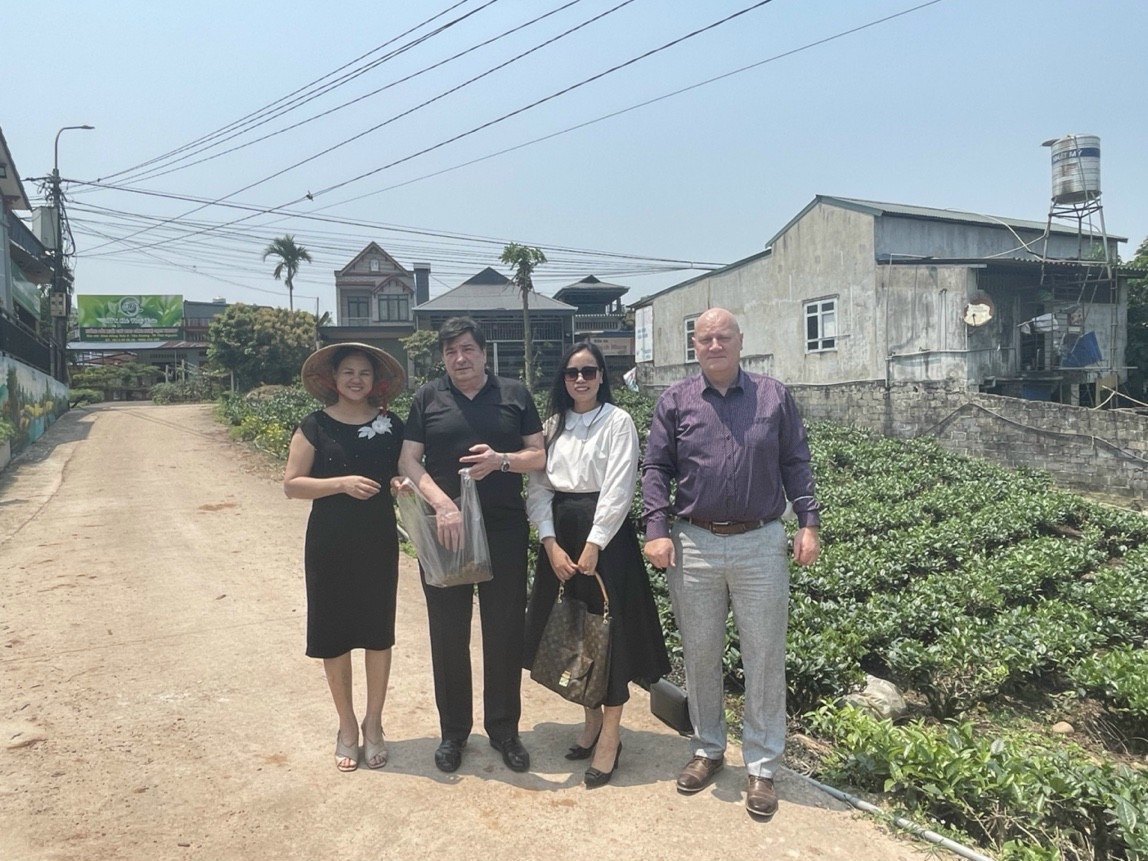
Yes. We host buyers and visitors at our gardens in Thai Nguyen; see tea tours or contact us.
Sources
- VTC News, Vietnamese tea culture, 22 January 2023: vtcnews.vn
- SGGP, Nguyen Ngoc Tuan, tea at Tet, 3 February 2019: sggp.org.vn
- SGGP, Nguyen Ngoc Tuan, the place of tea in rituals, 11 February 2021: sggp.org.vn
- VOV, Hanoi’s pavement iced tea, 11 January 2017: vov.vn
- VnExpress, “Trà đá và mạng xã hội vỉa hè”, 27 June 2025: vnexpress.net
- Department of Crop Production, Báo Nông nghiệp (English edition), 5 November 2024: van.nongnghiepmoitruong.vn
- Le Tac, An Nam Chi Luoc, Hue University 1961 (digital edition 2001): quangduc.com
Want to share Vietnamese tea culture with your customers? Contact TRAVINA for teas and stories you can use.